Titan International (TWI): Supplier Relationships and Procurement Signals Investors Need to Know
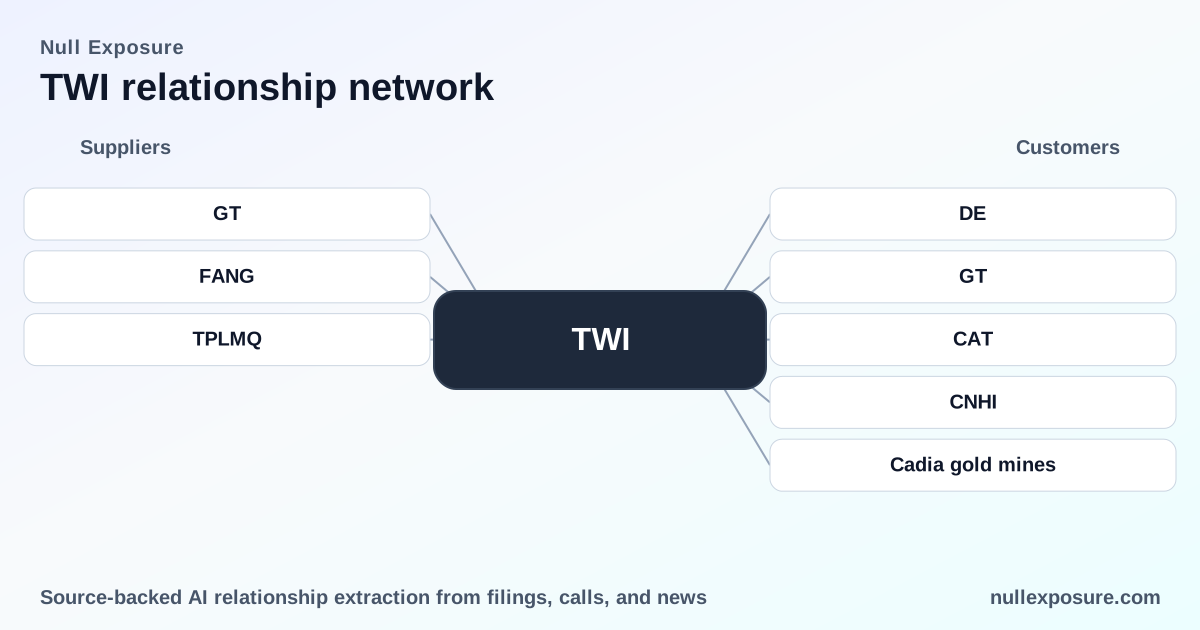
Titan International manufactures and sells wheels, tires, undercarriage systems and related components for off-highway and agricultural applications and monetizes through OEM contracts, aftermarket sales, licensing and distribution partnerships. Revenue is driven by product sales across geographic markets and by fee-based licensing/distribution agreements that extend Titan’s footprint without equivalent capital intensity. For investors evaluating supplier exposure, recent commercial moves with Goodyear, Triangle and Diamondback change the mix of revenue channels and the company’s procurement posture. For a deeper supplier-risk view and relationship intel, visit https://nullexposure.com/.
How Titan’s business model converts manufacturing into cash flow
Titan operates as a vertically integrated manufacturer and distributor: it buys raw steel and rubber, fabricates wheels and undercarriage systems, and sells finished wheels and tires to OEMs and end users. The P&L shows $1.828 billion revenue (TTM) with a gross profit of $242.4 million and adjusted EBITDA of $89.5 million, producing a lean margin profile and negative EPS that reflects cyclical product pricing and raw-material cost exposure. Market multiples (EV/EBITDA 10.32; Price/Book 0.91) underline an industrial valuation that rewards margin recovery and volume stability.
Key commercial drivers:
- OEM and aftermarket sales provide recurring revenue streams tied to equipment cycles.
- Licensing and distribution agreements expand product reach with lower incremental capital.
- Procurement of steel and rubber on short-term contracts creates operational flexibility but raises input-cost volatility.
For background on how supplier and licensing arrangements affect revenue composition, see https://nullexposure.com/.
Recent supplier and partner announcements — what’s public right now
Titan has publicly extended and established commercial ties that reshape its distribution and licensing positions in off-highway tires and assemblies.
Goodyear — licensing expansion into off-highway segments
Titan announced an expansion of its licensing agreement with Goodyear that broadens the footprint of Goodyear-branded off-highway products sold or serviced under Titan’s arrangements, enhancing Titan’s access to OEM-branded channels in specialty segments. (Chemanalyst, March 10, 2026 — FY2025 coverage: https://www.chemanalyst.com/NewsAndDeals/NewsDetails/titan-international-broadens-goodyear-footprint-into-diverse-off-highway-segments-36312)
Diamondback — U.S. distribution for Diamondback-branded OTR tires
Titan Tire agreed to distribute Diamondback-branded OTR tires in the United States, adding an additional brand to Titan’s U.S. commercial portfolio and creating a sales channel that leverages Titan’s distribution network. (RubberNews, March 10, 2026 — FY2026 coverage: https://www.rubbernews.com/tire/tb-titan-triangle-distribution-deal/; TireBusiness, March 10, 2026 — FY2026 coverage: https://www.tirebusiness.com/specialty-otr-tires/tb-titan-triangle-distribution-deal/)
Triangle — U.S. distribution for Triangle-brand OTR tires
Titan Tire will also distribute Triangle-brand OTR tires in the U.S., positioning Titan as a multi-brand distributor for off-the-road tires and allowing cross-selling to existing dealer and OEM relationships. (RubberNews, March 10, 2026 — FY2026 coverage: https://www.rubbernews.com/tire/tb-titan-triangle-distribution-deal/; TireBusiness, March 10, 2026 — FY2026 coverage: https://www.tirebusiness.com/specialty-otr-tires/tb-titan-triangle-distribution-deal/)
Takeaway: the Goodyear licensing expansion and the Triangle/Diamondback distribution deals increase Titan’s revenue mix toward lower‑capex, channel-driven sales and improve gross revenue diversification by brand without materially altering capital intensity.
If you want consolidated visibility into partner-level exposure across suppliers and distributors, explore more at https://nullexposure.com/.
Procurement constraints and what they imply for risk and contracting posture
Company disclosures and filings reveal a procurement model with specific characteristics that shape operational risk:
- Short‑term contracting posture for raw materials. Titan purchases steel and rubber on non‑long‑term contracts, exposing margins to commodity price swings — this is a deliberate posture that trades price risk for sourcing flexibility (evidence in company filings referencing customary short-term purchase arrangements).
- Global supplier footprint. Titan’s procurement plan deliberately includes international steel and rubber suppliers to secure competitive pricing and quality, reducing single-region concentration but increasing exposure to cross-border supply-chain dynamics.
- Manufacturer role and integrated supply relationships. Titan directly purchases and processes raw steel and maintains relationships with steel mills and processors, signaling operational control over critical inputs.
- Active supplier-financing programs and mid‑range supplier exposure. A subsidiary participates in supplier financing programs, with confirmed obligations reported at $13.2 million as of December 31, 2024 — consistent with a supplier spend band in the $10m–$100m range and indicating working-capital interdependence with key suppliers.
These constraints form a company-level signal: Titan’s contracting is short-dated and globally diversified, supplier relationships are operationally critical, and financing linkage to suppliers is material but not outsized.
What this means for investors: risk, opportunity, and key monitors
The combined signals — licensing expansion, new distribution agreements, short-term raw material contracts, and supplier financing — create a mixed investment profile:
- Upside: licensing and distribution deals increase market access and reduce the per-dollar capex needed to grow revenue; multi-brand distribution increases channel leverage.
- Downside: short-term raw-material contracts increase earnings volatility when commodity prices spike; current profitability metrics (negative EPS, thin operating margins) require either margin recovery or sustained top-line growth to justify valuation.
- Balance sheet and market context: institutional ownership is high (86%), EV/EBITDA sits near 10.3, and analyst consensus pricing sits around $11.75 — investors should watch margin trends, inventory and payables movements, and supplier-financing balances as leading indicators.
For an investor-ready breakdown of supplier counterparties and exposure mapping, start your diligence at https://nullexposure.com/.
Bottom line: what to watch next and practical steps
Titan is shifting toward a blended model of manufacturing and brand/distribution partnerships that reduce capital intensity but increase reliance on commercial agreements and raw-material price management. Investors should track: (1) quarterly commentary on licensing revenue and distribution volumes; (2) commodity-driven margin movements tied to short-term steel and rubber purchases; and (3) supplier-financing balances and their implications for working capital.
Actionable next steps:
- Monitor quarterly filings for changes in supplier-financing obligations (reported $13.2M at Dec 31, 2024).
- Watch sales volume and margin disclosure for Goodyear-branded and Triangle/Diamondback distribution lines.
- Reassess valuation if operational margins recover or if distribution deals materially increase recurring revenue.
For further supplier-level intelligence and structured relationship reports, visit https://nullexposure.com/ for full analysis and sourcing.