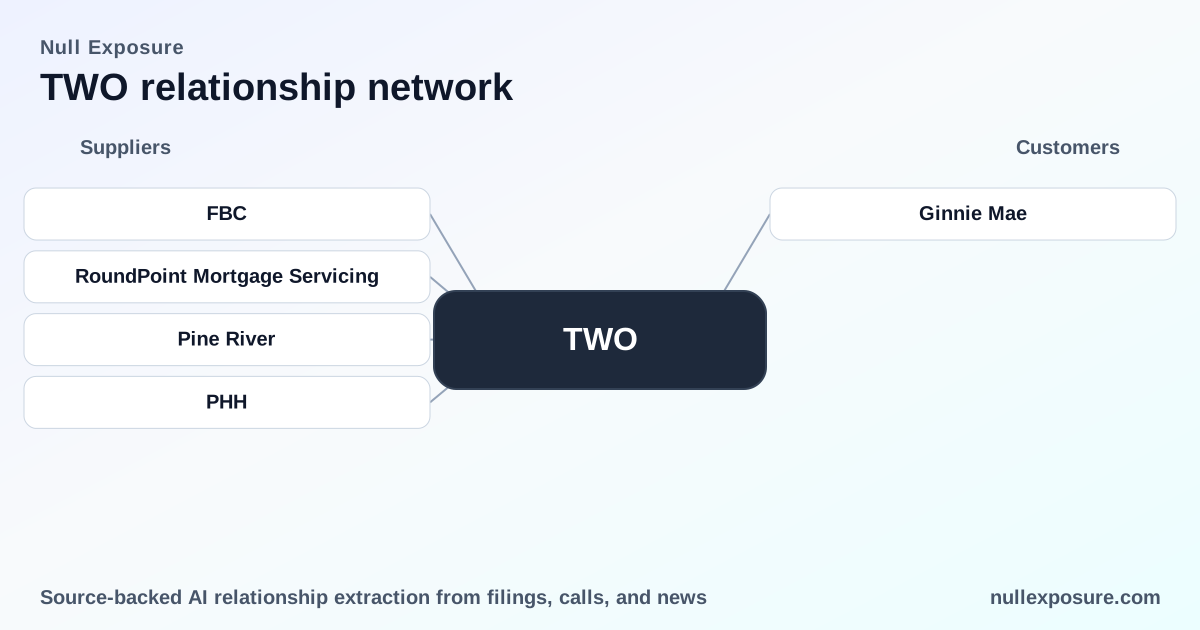
Two Harbors (TWO): How the REIT leverages MSRs and servicing scale to generate yield
Two Harbors Investments Corp is a mortgage REIT that acquires mortgage-related assets—chiefly agency RMBS and mortgage servicing rights (MSRs)—and monetizes them through spread capture and fee income by outsourcing servicing to its RoundPoint subsidiary. The firm finances portfolio holdings through a blend of short- and long-term repurchase agreements, acquires MSRs via bulk and flow purchases, and extracts return from both asset spread and servicing economics. For a strategic, relationship-level view of counterparties and operational constraints, visit https://nullexposure.com/.
Business model in plain English: where the cashflow comes from
Two Harbors operates as a hybrid mortgage credit manager and MSR consolidator. It holds agency RMBS to earn spread between asset yield and funding costs and purchases MSRs to capture servicing fees and ancillary income. The company does not service loans directly; it relies on RoundPoint to perform servicing, which turns MSR ownership into a fee revenue stream while keeping operational servicing functions off Two Harbors’ balance sheet.
Key operating characteristics:
- Contracting posture: Two Harbors finances agency RMBS through both short-term and long-term repurchase agreements, signaling active leverage management and sensitivity to repo market conditions.
- Channel and acquisition strategy: MSRs are accumulated through flow and bulk purchases and recapture on refinances, indicating a mix of recurring and opportunistic sourcing.
- Geographic footprint: Corporate and administrative presence across Minnesota, New York, South Carolina and Texas shows a U.S.-centric operational structure.
- Outsourcing and criticality: The company’s servicing model depends on RoundPoint as the primary service provider, making that relationship operationally critical even if servicing is contracted rather than kept in-house.
These characteristics together reveal a firm that trades funding and operational execution risk for scalable fee capture. Learn more about supplier relationships and credit signals at https://nullexposure.com/.
Supplier and counterparty relationships that matter now
This section covers every supplier relationship flagged in our sources. Each entry is a concise, plain-English take with the cited source.
Flagstar Bank — MSR bulk purchase
Two Harbors’ Matrix Financial Services subsidiary executed a purchase of agency MSRs from Flagstar Bank, highlighting the firm’s strategy of buying MSRs as banks reduce their servicing footprints. According to HousingWire (FY2013), the transaction is an example of Two Harbors’ subsidiary stepping into secondary-market MSR acquisition opportunities. Source: https://www.housingwire.com/articles/28353-two-harbors-subsidiary-to-buy-agency-msrs-from-flagstar/.
PHH Mortgage — flow or targeted MSR deals
Matrix also executed an MSR acquisition involving PHH Mortgage, reflecting active sourcing across originators and servicers to build scale. HousingWire (FY2013) documents Matrix’s deal with PHH Mortgage as part of the same acquisition wave that targeted agency MSRs. Source: https://www.housingwire.com/articles/28353-two-harbors-subsidiary-to-buy-agency-msrs-from-flagstar/.
RoundPoint Mortgage Servicing — outsourced servicing and a strategic acquisition
Two Harbors and its subsidiary acquired RoundPoint Mortgage Servicing, a move that vertically integrates MSR ownership with a captive servicer, enabling fee capture and operational control. The acquisition was reported at a $10.5 billion valuation in industry coverage (MPA, FY2022), and RoundPoint now handles substantially all servicing functions for the loans underlying Two Harbors’ MSR portfolio. Source: https://www.mpamag.com/us/mortgage-industry/industry-moves/two-harbors-investment-names-new-chief-investment-officer/417639.
Pine River — legal and contingent liability exposure
Two Harbors is facing a material contingent liability tied to a dispute with Pine River that management has recognized as a balance-sheet risk, including a reported $139.8 million contingency and an additional prejudgment interest amount referenced in recent coverage. National Mortgage News (FY2025) highlights the company’s exposure, which translates to tangible downside to free cash flow if settled or adjudicated against Two Harbors. Source: https://www.nationalmortgagenews.com/news/roundpoint-mortgage-parent-two-braces-for-legal-charge.
What the relationship map means for investors
Two Harbors’ supplier and counterparty map is compact but consequential: MSR sellers (banks and servicers) are sources of the company’s growth, RoundPoint is the operational hub converting MSRs into fee income, and litigation counterparties like Pine River represent idiosyncratic downside. These dynamics produce three clear investment implications:
- Revenue diversification through fees and spread: Owning MSRs and agency RMBS simultaneously creates layered revenue — asset yield plus servicing fees — reducing pure spread exposure relative to a plain RMBS holder.
- Operational concentration: Outsourcing servicing to RoundPoint centralizes operational execution; that makes RoundPoint’s performance and legal posture material to Two Harbors’ economics.
- Funding sensitivity: The reliance on both short- and long-term repurchase agreements imposes funding and liquidity risk, so repo market stress or adverse funding repricing directly compresses net interest spread.
Constraints and company-level signals investors should price in
The public disclosures provide direct signals about Two Harbors’ operating posture rather than discrete supplier weaknesses. Key company-level constraints to model into forecasts:
- Contract mix includes short-term and long-term repo liabilities, producing rollover and duration risk on funding.
- MSR acquisition strategy uses flow and bulk purchases, indicating a mix of predictable and opportunistic cash needs as originator supply fluctuates.
- Administrative operations are spread across multiple U.S. states (Minnesota, New York, South Carolina, Texas), underscoring a domestic operating footprint and potential regional staffing considerations.
- Two Harbors does not directly service mortgage loans; it contracts servicing to RoundPoint, making that third-party relationship critical to operational continuity and regulatory compliance.
These are company-level signals to incorporate in credit and operational stress tests.
If you want a deeper supplier-risk scorecard or an interactive map of Two Harbors’ counterparties, start here: https://nullexposure.com/.
Bottom line and investor action steps
Two Harbors’ model is execution- and funding-sensitive: profitability depends on successful MSR integrations, RoundPoint’s servicing performance, and access to repo markets at acceptable rates. Material legal contingencies, such as the Pine River exposure, increase near-term balance-sheet risk and should be factored into valuation and dividend sustainability scenarios.
For investors and operators evaluating counterparties or stress-testing exposure to MSR concentrations, Two Harbors presents both a diversified cashflow mix and concentrated operational dependencies—an attractive yield vehicle if repo access and servicing operations remain stable, and a higher-risk holding if litigation or funding stress materializes.
To evaluate supplier-level exposure across your portfolio or to commission a bespoke counterparty report, visit https://nullexposure.com/ and get tailored insight.