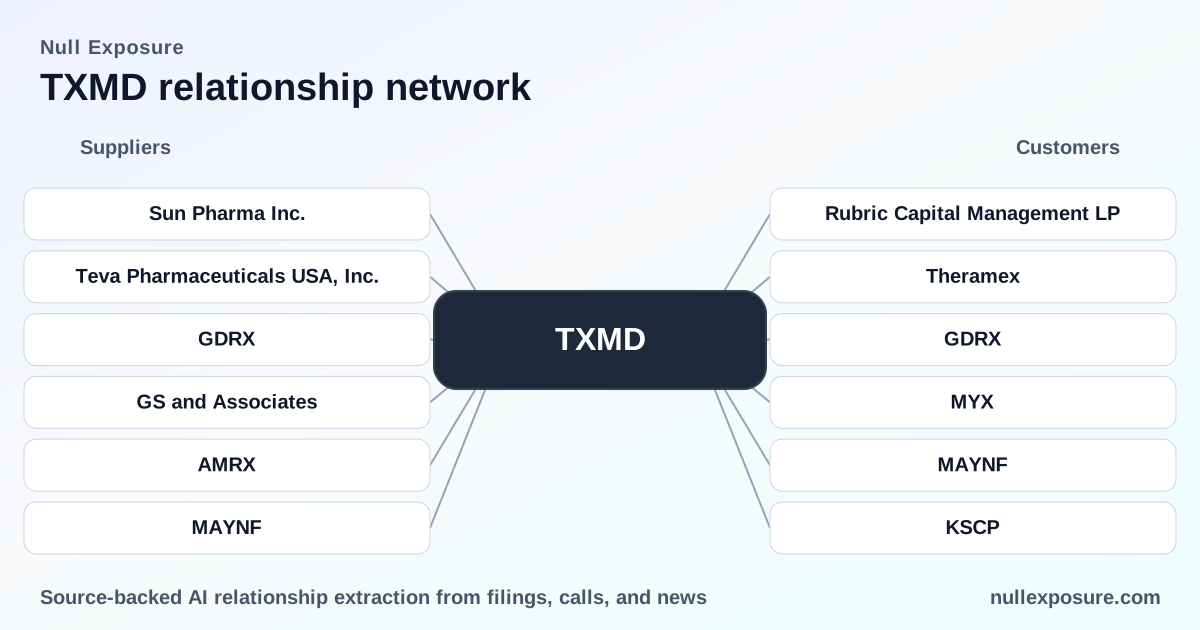
TherapeuticsMD (TXMD) — supplier landscape and what it means for investors
TherapeuticsMD operates as a women’s healthcare drug developer and commercial partner that monetizes through product sales, licensing arrangements and third‑party commercialization relationships; revenue comes from marketed specialty products while the company contracts with established generics manufacturers and channel/service partners to produce and distribute those products. Investors should view TXMD’s supplier network as a hybrid of manufacturing counterparties exposed to ANDA/Paragraph IV risk and service partners that drive commercial reach and field productivity. Explore a deeper supplier risk map at https://nullexposure.com/.
Why supplier relationships matter to TXMD investors
TherapeuticsMD’s operating model relies on licensing and external manufacturing plus a sales infrastructure that is amplified by vendors and digital channel partners. That mix means manufacturing counterparties are a direct source of competitive and regulatory exposure, while marketing and analytics vendors are drivers of near‑term revenue productivity. The FY2024 disclosures show a pattern: references to Paragraph IV certification letters highlight ongoing generic challenges, while the earnings‑call commentary points to investments in channel and field analytics to defend sales. Visit https://nullexposure.com/ for a consolidated view of supplier signals.
Relationship-by-relationship breakdown — what each link means for risk and operations
-
Sun Pharma Inc. — The FY2024 Form 10‑K records that Sun Pharma submitted an ANDA that prompted a Paragraph IV certification notice in June 2024, indicating potential generic litigation and downward price pressure for affected products. According to TherapeuticsMD’s FY2024 10‑K filing, the Sun Pharma ANDA generated a Paragraph IV notice in June 2024.
-
Teva Pharmaceuticals USA, Inc. — Teva submitted an ANDA that produced a Paragraph IV notice referenced by TXMD related to IMVEXXY in February 2020, signaling longstanding generic challenge dynamics in TXMD’s product portfolio. This is described in TherapeuticsMD’s FY2024 Form 10‑K, which recounts the February 2020 IMVEXXY notice.
-
GoodRx (GDRX) — Management discussed that variable costs for vitaCare services under GoodRx ownership are now incorporated into marketing and selling expenses, reflecting a commercial channel relationship that shifts variable economics into TXMD’s operating expense line. This operational detail appears in the company’s public earnings commentary (Q4 2021 earnings call transcript published March 2022 on Fool.com).
-
GS and Associates — TherapeuticsMD noted a partnership with GS and Associates to deploy targeting analytics for the field force, representing an investment in sales productivity and data‑driven targeting of high‑value prescribers. That disclosure was made during the Q4 2021 earnings call (Fool.com transcript, March 10, 2022).
-
Amneal Pharmaceuticals (AMRX) — The FY2024 10‑K recounts that Amneal submitted an ANDA that triggered a Paragraph IV notice in March 2020 concerning BIJUVA, highlighting another competitor API/manufacturer filing that creates generic entry risk for a branded product. See TherapeuticsMD’s FY2024 Form 10‑K for the March 2020 reference.
-
Mayne Pharma (MAYNF) — The 10‑K flags that Mayne Pharma (and the Population Council where applicable) has obligations to satisfy FDA study requirements, and if those obligations are not met it could limit licensees’ ability to sell the product and materially impact TXMD revenue. This operational dependency is discussed in TherapeuticsMD’s FY2024 Form 10‑K.
Operational signals and constraints investors should weigh
The relationship disclosures produce several actionable signals about TXMD’s supplier posture:
-
Contracting posture: TXMD operates with a license/partner model and outsources key functions; its suppliers and licensees perform manufacturing and regulatory obligations while TXMD controls commercialization. That structure places the company in a dependent contracting posture where regulatory performance by licensees directly affects revenue recognition and market access.
-
Concentration and criticality: The supplier mix includes multiple large generics firms (Teva, Sun Pharma, Amneal) plus service partners (GoodRx, GS and Associates) and a strategic licensee (Mayne). Supplier concentration is moderate; criticality is product‑specific — certain licensees/manufacturers are critical to individual product sales and regulatory compliance, while analytics and channel partners are critical to sales productivity.
-
Maturity and counterparty quality: Counterparties named are established industry players, implying mature, creditworthy vendors but also sophisticated competitors in the generic space. The presence of Paragraph IV notices signals a mature IP/legal dynamic rather than startup uncertainty.
-
Regulatory and litigation exposure: Multiple Paragraph IV notices in the record track direct exposure to generic filings and potential litigation. Generic competition is an explicit operating risk embedded in the supplier footprint.
There were no supplier constraint excerpts returned in the supplier relationship data pulled for this review, so there are no additional disclosed supplier constraints to reconcile beyond the operational signals above.
What this means for investors and operators
-
For investors: TXMD’s upside relies on commercial execution and the durability of branded franchises against generic ANDA filings. The presence of multiple Paragraph IV notices elevates downside risk for affected product revenue streams, while partnerships with GoodRx and analytics vendors support margin and reach improvements.
-
For operators: Maintain active oversight of licensee regulatory performance and fortify commercial channels. Legal preparedness and contingency planning for generic launches should be prioritized, and continued investment in targeted field analytics is a pragmatic lever to preserve prescriber relationships.
If you are mapping supplier risk across a broader portfolio or preparing diligence on commercial counterparties, see full supplier intelligence at https://nullexposure.com/.
Bottom line and recommended next steps
TherapeuticsMD’s supplier roster combines manufacturing/license exposure that creates regulatory and price risk with commercial and analytics partners that support revenue resilience. Investors should stress‑test valuation scenarios for product revenues facing Paragraph IV filings while credit analysts should focus diligence on counterparty performance clauses and indemnities in license and manufacturing agreements.
For a consolidated view of supplier relationships and to map these exposures across cases, visit https://nullexposure.com/.