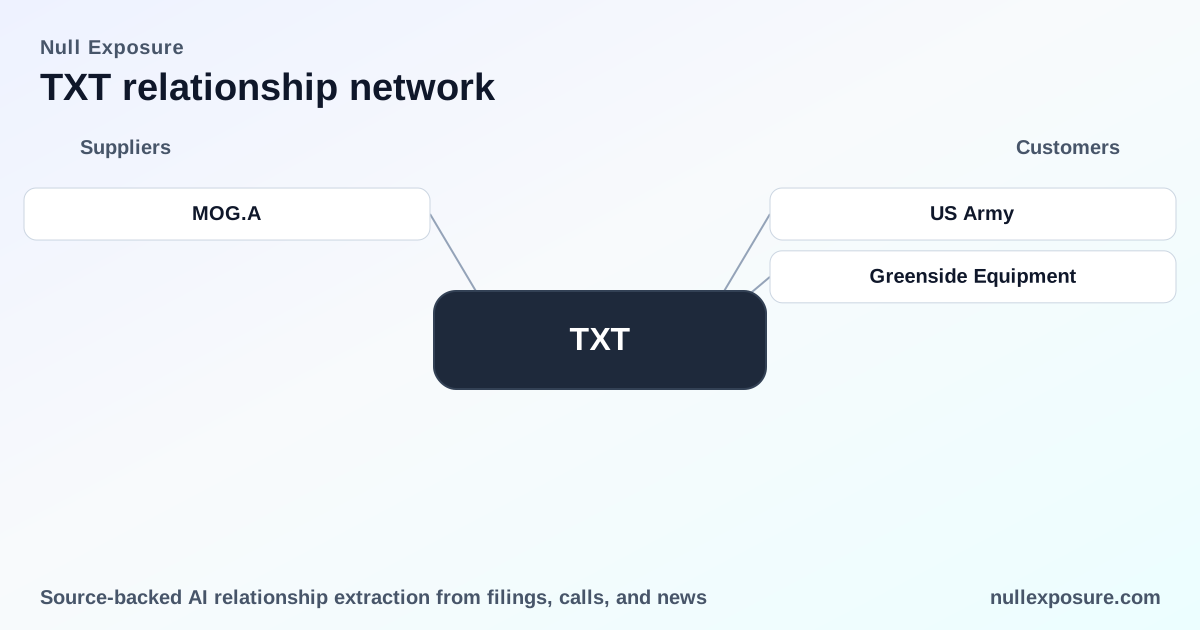
Textron (TXT) as a Supplier Partner: Contract Dynamics, Working Capital Signals, and the Moog Link
Textron is an industrial conglomerate that monetizes through aircraft and defense platforms, aftermarket services, and component supply—Bell Textron and Textron Aviation drive high-margin defense and aftermarket revenue while engines and specialty vehicles supply recurring parts and service cash flows. For investors and operators assessing Textron as a buyer and counterparty, the company’s supplier posture is defined by large program contracts, concentrated supplier engineering relationships, and active working-capital management that smooths cash flow around long production cycles.
For a quick vendor-risk readout and indexed supplier mappings, visit the NullExposure homepage: https://nullexposure.com/
Why supplier relationships matter for Textron investors
Textron’s revenue mix—civil and military aircraft sales plus defense contracts—translates into supplier relationships that are often strategic, timing-sensitive, and contractually rigid. Program awards shift supplier revenue materially; at the same time, Textron’s capital intensity and production cadence create pressure on cash conversion that the company manages with supplier financing and extended payment terms. These behaviors are not operational footnotes; they are active financial levers that affect liquidity, supplier resilience, and program delivery risk.
Key business model drivers
- Large, multi-year defense programs (Bell V‑280/V‑280 Valor, etc.) that create concentrated, high-criticality supplier linkages.
- Significant aftermarket and service revenue that depends on supplier continuity and parts availability.
- Working-capital strategies (supplier financing) that smooth cash flow but introduce counterparty and rollover risk.
Visit https://nullexposure.com/ for supplier relationship intelligence and monitoring.
The Moog relationship: one clear, high-signal partnership
Moog Inc. — Moog has been placed under contract with Bell Textron to supply components and systems for the U.S. Army’s Future Long Range Assault Aircraft (FLRAA), the Bell V‑280 Valor. This is a program-level supplier award that ties Moog into a high-priority defense platform and signals downstream production and sustainment revenue opportunities for both companies. According to an ASDNews report originally published August 2023 and surfaced in monitoring in March 2026, Moog announced the contract placement with Bell Textron (FY2026 monitoring). Source: ASDNews (reporting on Moog/Bell contract activity, orig. Aug 2023; surfaced Mar 2026).
Why this matters: the V‑280 program is emblematic of Textron’s defense-led supplier relationships—contracts are program-specific, create long lead times for parts, and concentrate revenue in select suppliers whose performance directly affects Textron delivery schedules.
Supplier-financing constraint: a clear statement of contracting posture
Textron disclosed a financing arrangement with one of its suppliers for a maximum amount of $200 million that extends payment terms up to 190 days from receipt of goods and allows the supplier to be paid earlier by a financial institution; the arrangement expires in April 2027. This disclosure is a company-level signal of short-term supplier financing activity and reflects an explicit working-capital strategy. (Disclosure noted in company filings/constraints for FY2026.)
Implications for investors and operators:
- Contracting posture: Textron uses supplier financing to extend payment windows and preserve liquidity, indicating active management of the cash conversion cycle.
- Maturity and rollover risk: the facility’s April 2027 expiration creates a clear near-term financing event—monitor for renewal terms that could alter credit exposure or increase costs.
- Criticality and concentration: while the disclosed facility is with “one of our suppliers,” the arrangement’s size ($200M) suggests material dependence on that supplier or a group of suppliers and a non-trivial counterparty credit exposure to the financing institution.
- Operational effect: extended terms ease Textron’s near-term cash needs but shift payment certainty to the financing provider and the supplier; supplier liquidity and willingness to accept financed payments become factors in program continuity.
How these signals fit together: operating-model constraints and risk posture
The Moog contract and the supplier-financing disclosure together reveal a consistent operational story:
- Concentrated program exposure: program-level contracts like the V‑280 generate concentrated supplier dependencies; delivery or quality issues propagate quickly into Textron’s cost of goods sold and delivery schedules.
- Active working-capital leverage: the documented supplier financing shows Textron balances production cadence against liquidity by outsourcing payment timing to a finance partner, reducing near-term cash outflows at the cost of counterparty and renewal risk.
- Short-term contractual profile: the supplier financing is explicitly short-term (facility expires April 2027), suggesting Textron’s supplier relationships are negotiated in discrete financial windows rather than permanent supply-chain commitments.
- Maturity signal: reliance on supplier financing at scale is typical for industrials managing cyclical demand; investors should treat the April 2027 maturity as a discrete monitoring point that can reprice Textron’s working-capital economics.
Practical takeaways for investors and operators
- Monitor program awards and supplier wins—contracts like the Moog/Bell placement are real revenue drivers and directly affect parts flow and margin profiles.
- Treat supplier financing as a lever, not a free option—it improves short-term liquidity but introduces rollover and counterparty risk that can surface in credit-sensitive environments.
- Watch concentrated suppliers—a $200M financing facility tied to “one supplier” signals potential single-supplier criticality that bears stress-testing in scenario analysis.
- Track the April 2027 maturity—renewal terms will reveal whether Textron can refinance on similar terms or faces higher costs, with margin and liquidity implications.
Key takeaways:
- Moog contract underscores program-level supplier concentration.
- Supplier financing is material ($200M) and short-term (expires April 2027), exposing Textron to rollover and counterparty risk.
- Operational continuity depends on both supplier performance and the financing market’s willingness to support extended payment terms.
For deeper supplier mappings and continuous monitoring of counterparty exposures, visit the NullExposure homepage: https://nullexposure.com/
Bottom line and investor action
Textron’s supplier relationships combine program-driven concentration with an active working-capital strategy. The Moog‑Bell contract is a positive signal for mid‑cycle production and sustainment revenue, while the disclosed supplier financing is an explicit corporate choice to manage liquidity at the cost of concentrated counterparty exposure and a known maturity event in April 2027. Investors should incorporate both the upside from program awards and the refinancing/rollover risk into valuation and credit assessments.
If you evaluate portfolio exposure to supplier concentration or need real-time supplier risk signals, NullExposure provides targeted intelligence to operationalize these insights: https://nullexposure.com/