United Security Bancshares (UBFO): What Investors Need to Know About Its Advisory and Vendor Footprint
United Security Bancshares is a California-based bank holding company that monetizes through traditional regional-bank channels: net interest margin on commercial and consumer loans, fee income from deposit and treasury services, and modest non-interest revenue. The company is modestly sized (Market Cap ~$171m; Revenue TTM $45.9m) and generates cash flow from lending and deposit operations, while returning capital via a meaningful dividend (around 4.9% yield as of the latest data). For investors assessing counterparty exposure and transaction risk, the supplier picture is narrowly focused: transaction advisors and legal counsel tied to a strategic merger, and company-level signals that point to short-term funding and outsourced IT engagements. For a concise vendor-risk scorecard, see full platform coverage at https://nullexposure.com/.
How United Security actually runs its business (and why suppliers matter)
United Security Bank is a regional, relationship-driven lender serving California businesses, professionals and individuals. The operation is capital- and liquidity-sensitive: lending generates the majority of revenue, while deposits and short-term wholesale funding provide the cash to support loans. That operating posture makes the bank sensitive to short-term funding and operational continuity, so advisors and service providers around legal, capital markets, and IT have disproportionate importance despite the small number of named suppliers.
- Contracting posture: public disclosures indicate reliance on short-term funding instruments (repurchase agreements and Federal Home Loan Bank advances) that commonly mature in one to six months, signaling an active liquidity-management approach rather than long-duration wholesale financing.
- Concentration and criticality: supplier mentions are concentrated in a small set of high-impact providers — financial advisor and legal counsel for a strategic merger — which elevates the materiality of each relationship.
- Maturity and outsourcing: filings reference third-party IT engagement letters, a sign that critical operational functions are at least partly outsourced and require careful vendor oversight.
If you want a structured vendor map tied to corporate filings and public reporting, start here: https://nullexposure.com/.
Strategic advisor and counsel relationships — the essentials you need
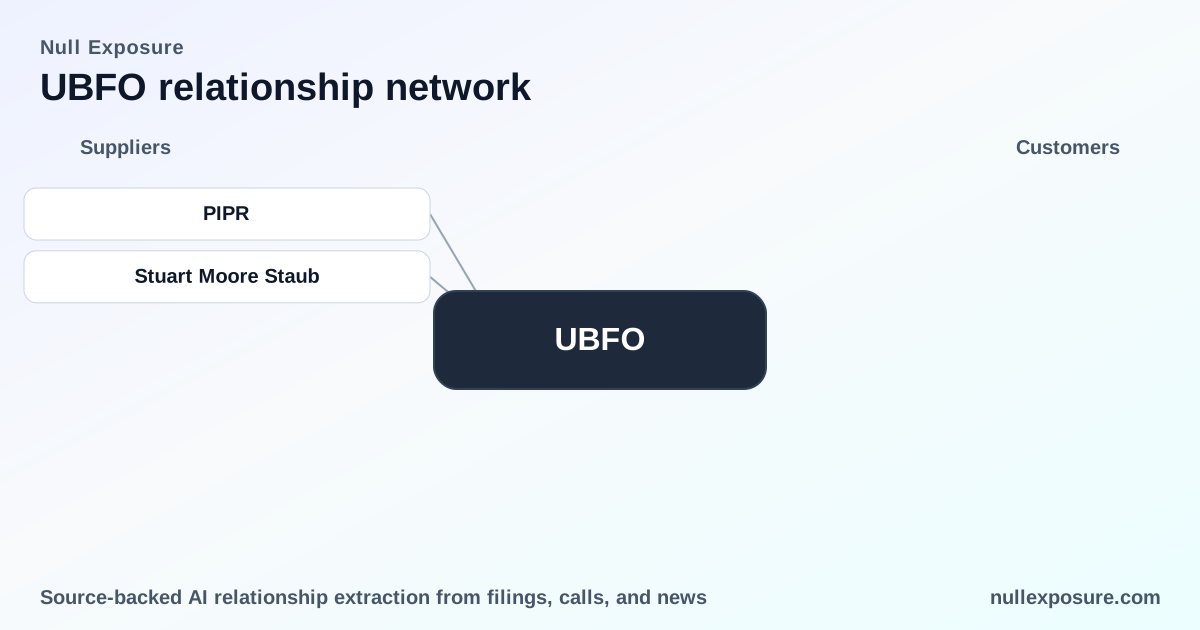
The public record identifies two named external relationships connected to United Security’s recent strategic activity. Each is transaction-focused and short-duration by nature.
Piper Sandler & Co.: Piper Sandler acted as financial advisor to United Security Bancshares and delivered a fairness opinion to the board in connection with the announced merger activity. This places Piper Sandler in a classical M&A advisory role, supporting valuation and deal governance. (Bastille Post, March 10, 2026: reporting on the Community West Bancshares / United Security Bancshares merger announcement.)
Stuart Moore Staub: Stuart Moore Staub served as legal counsel to United Security Bancshares in the same transaction, providing counsel on deal structure and regulatory/commercial paperwork. Legal counsel participation is standard but critical in bank M&A because of regulatory approvals and fiduciary duties. (Bastille Post, March 10, 2026: reporting on the Community West Bancshares / United Security Bancshares merger announcement.)
What these relationships mean for value and execution risk
The presence of a reputable investment bank delivering a fairness opinion signals that management and the board are treating the transaction as material to shareholder value. For investors, that implies both the possibility of an imminent re-rating around transaction terms and the risk that deal execution — regulatory sign-off, shareholder approval, and funding — drives near-term volatility.
Legal counsel participation confirms the company is navigating the usual banking regulatory and disclosure complexities. For small-cap regional banks, legal and advisory costs are concentrated and non-recurring around M&A; these costs are earnings-neutral long-term but drive short-term headline risk.
If you require a vendor-risk brief tied to regulatory filings and media reporting, find our briefings at https://nullexposure.com/.
Constraints and company-level signals investors should treat as persistent
Two constraint excerpts surfaced in the filings and public materials that shape the bank’s operational profile:
- Short-term funding profile: Disclosures reference repurchase agreements collateralized by mortgage-backed securities and FHLB advances with typical maturities of one to six months (repos) or one to three months (FHLB advances). This is a company-level signal that liquidity management is active and dependent on short-dated wholesale lines, making interest-rate moves and counterparty confidence meaningful risk factors.
- Outsourced IT/service posture: The filings include an Information Technology Engagement Letter (June 29, 2022) with a third party, identifying a company-level dependency on external IT providers for core services. Outsourced technology increases operational concentration risk and requires disciplined vendor governance.
These are company-level constraints and not attached to any single named advisor in the relationship list; treat them as persistent operational characteristics that affect how suppliers and counterparties are prioritized.
Implications for investors and ops teams — risk checklist
Investors and operations leaders should prioritize the following actions based on the supplier footprint and constraints:
- Monitor merger execution milestones: board approval, shareholder votes, regulatory clearances, and any amendments to transaction pricing or structure — these determine near-term valuation outcomes.
- Watch liquidity metrics: short-term repo balances, FHLB advance usage, and deposit trends; short-dated wholesale reliance increases sensitivity to market stress.
- Audit IT third-party continuity: confirm SLAs, cyber readiness, and contingency plans tied to the June 2022 engagement letters; outsourced IT is a single point of operational failure if not actively governed.
- Track advisor disclosures: fairness opinion scope and legal comfort letters often reveal indemnities, break fees, and other deal contingencies that affect shareholder economics.
For deeper vendor analytics and to map counterparties against filings, go to https://nullexposure.com/.
Bottom line: concentrated relationships, high-impact outcomes
United Security Bancshares runs a classic regional-bank business underpinned by short-term liquidity management and a small set of high-impact external relationships. The named suppliers in the public record are transaction-focused (financial advisor and legal counsel) and therefore material to any change in corporate control or strategic direction. At the same time, company-level signals around short-term funding and outsourced IT point to operational and liquidity sensitivities that investors must monitor throughout and after any transaction.
For an investor-ready vendor dossier, filings summary, and event tracking for UBFO and similar regional banks, visit https://nullexposure.com/.