UDR Inc.: Supplier relationships, contracting posture, and what investors should price in
UDR Inc. operates as a residential REIT that acquires, manages and leases multifamily apartment properties and monetizes through recurring rental income, ancillary resident services and capital recycling via asset sales and development. The company funds its portfolio with a mix of equity, long-dated debt and lease structures, returns cash through a modest dividend and trades with valuation multiples that reflect interest-rate sensitivity and regional supply dynamics. For investors and operator teams assessing counterparties or exposure to UDR, the practical focus is on long-term contracting, material lease liabilities, and formalized third‑party oversight — factors that shape counterparty risk, procurement strategy and vendor negotiation leverage. Learn more about supplier intelligence at https://nullexposure.com/.
The commercial posture that drives supplier relationships
UDR demonstrates a long-term contracting posture that underpins supplier economics and operational planning. The company issued $300 million of senior medium-term notes due 2034 and maintains ground leases across multiple communities that extend into 2043–2103 when reasonable extension options are included; these instruments signal multi-decade financial and site commitments that constrain short-term renegotiation and increase the importance of durable supplier arrangements. According to UDR’s filings, operating lease right-of-use assets stood at $187.0 million with corresponding liabilities of $182.3 million at year-end 2024, indicating a non-trivial, ongoing cash commitment to lessors and partners that procurement teams must manage proactively.
UDR’s governance also explicitly treats vendors and service providers as potential cybersecurity vectors; the company maintains a risk-based oversight program for third parties, vendors and other external users of systems, elevating supplier qualification and monitoring as operational necessities rather than optional controls. Taken together, these constraints present a predictable, capital-intensive supplier footprint with high maturity and moderate concentration — vendors that secure UDR business should expect long-dated contracts, formal compliance requirements, and the need to support continuity and security assurances.
How those constraints translate into business-model characteristics
- Contracting posture: long-tenor, lock-in oriented — long-term notes and ground leases reduce renegotiation frequency and push vendors toward multi-year service models.
- Spend concentration: material commitments — nearly $182 million of lease liabilities is a company-level signal that a meaningful portion of spend is structural and non-discretionary.
- Criticality: high for property operations and risk services — vendors supporting property maintenance, systems security and resident services are likely to be mission-critical because of the operational cadence of apartment portfolios.
- Maturity: institutional and process-driven — documented third‑party risk programs indicate mature vendor governance and requirements for evidence, audits and controls.
If you manage vendor relationships with REITs, these points imply structured SLAs, insurance and cybersecurity attestations will be prerequisites for scale.
Sell-side relationships and why each matters for counterparty analysis
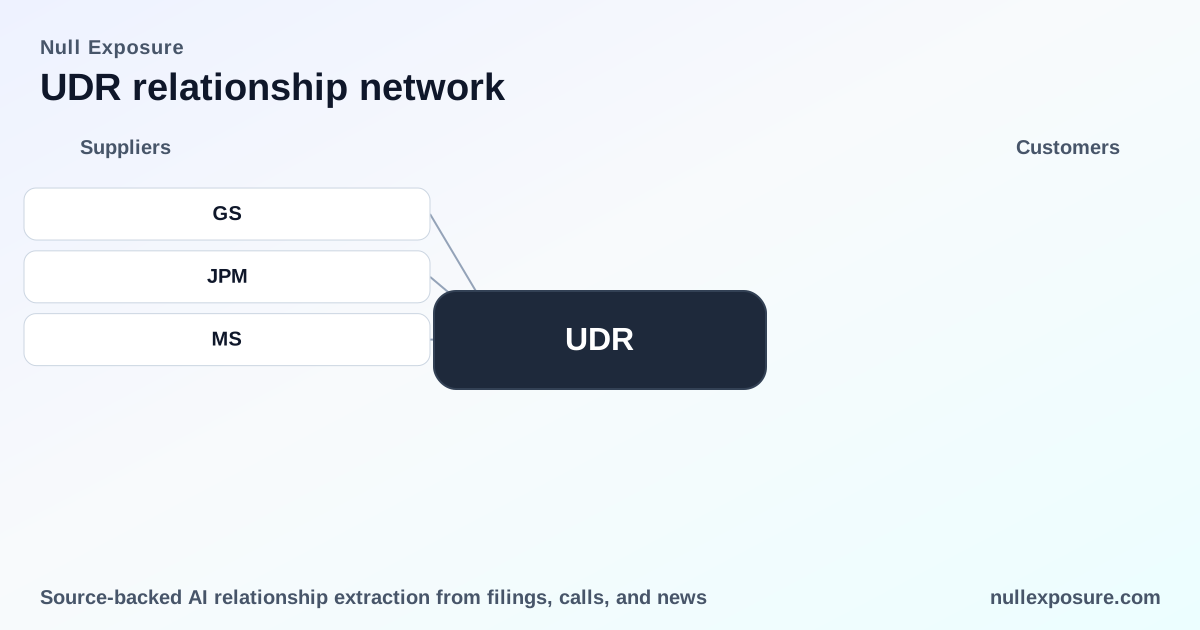
Goldman Sachs
Goldman Sachs is cited among the major brokers covering UDR, contributing to the market conversation on interest‑rate sensitivity and Sunbelt supply risk that drives investor repricing. An industry roundup on March 10, 2026 highlighted Goldman Sachs alongside peers as part of the broader sell‑side consensus on UDR’s risk/reward trade-offs (ad-hoc-news, March 10, 2026).
JPMorgan
JPMorgan features in the same sell‑side cluster offering views that sit within a Hold/Market‑Perform consensus and shape institutional expectations for occupancy, rent growth and capital markets access. The same March 2026 article grouped JPMorgan with other houses weighing macro and regional supply dynamics (ad-hoc-news, March 10, 2026).
Morgan Stanley
Morgan Stanley is included in the sell‑side coverage universe that frames UDR’s valuation through the lens of interest-rate trajectory and regional development trends; its coverage contributes to the spread of Buy and Underweight opinions influencing trading and liquidity. This inclusion was noted in the March 10, 2026 industry summary (ad-hoc-news, March 10, 2026).
Takeaway: the sell‑side footprint around UDR is concentrated among large, systemically important brokers and sector specialists; their research collectively establishes the public narrative that operator procurement and investor relations teams must counterbalance with direct disclosure and supplier-focused controls.
For a broader supplier risk perspective and peer comparison, visit https://nullexposure.com/.
Operational implications for vendors and investor risk managers
UDR’s mix of long-dated lease obligations and formal third‑party risk programs elevates the value of continuity, compliance and scale for suppliers. Vendors providing property services, systems, or cybersecurity should expect:
- Multi-year contracting cycles and advance capacity commitments given UDR’s long-term leases and notes.
- Rigorous vendor onboarding, ongoing risk assessment and evidence of cyber controls as part of normal procurement.
- Contract terms that reflect limited renegotiation windows and potential for predictable, recurring revenue streams.
From an investor viewpoint, UDR’s financials and market metrics provide additional context: market capitalization around $13.4 billion, revenue TTM of ~$1.75 billion, and EV/EBITDA near 13.8 reflect a company with significant operating scale but valuation sensitivity to rates. The dividend yield (~4.86%) and a P/E in the 30s position UDR as income-tilted but requiring rate stability to compress risk premia.
Practical red flags and negotiation levers
- Long-term locked spend is a negotiating constraint for suppliers: pricing models should anticipate multi-year service delivery rather than one-off projects.
- Cyber and compliance requirements are not perfunctory; they are gating factors for contract award and renewal.
- Sell-side consensus clustered around Hold signals that market expectations are muted; for suppliers, this reduces the upside of commercial expansions tied to aggressive growth projections in the portfolio.
If you need a focused analysis of UDR’s supplier exposures or want to map counterparties across the REIT sector, explore tailored intelligence at https://nullexposure.com/.
Conclusion: how to act
UDR’s supplier posture is defined by durable contractual commitments, material non‑discretionary spend and institutional vendor governance. For operators and investors, the practical response is to prioritize vendors with proven compliance, scalable service models and the financial resilience to support multi-year performance. For procurement teams negotiating with UDR, build contracts that respect the long-term nature of estate operations and explicitly address cybersecurity, continuity and measurable SLAs.
To commission a supplier-risk briefing or benchmark UDR against peers, start here: https://nullexposure.com/.