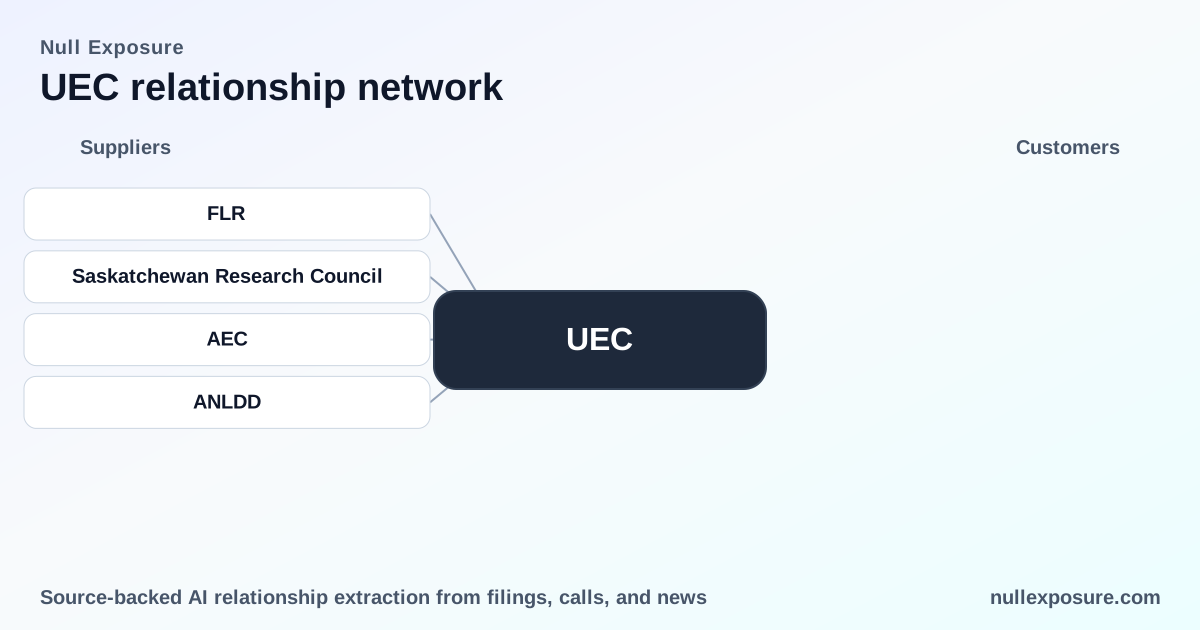
UEC Supplier Relationships: Strategic integration, processing access, and contracted inventory
Uranium Energy Corp (UEC) operates as an in-situ recovery (ISR) uranium producer and a growing vertically integrated supplier through targeted investments and processing initiatives; it monetizes through uranium concentrate production, inventory sales and strategic control of downstream processing assets and services. UEC balances production ramp-up with inventory purchase commitments and is actively securing processing capacity and technical studies to internalize value across the fuel-cycle. Learn more about supplier risk and exposure on the Null Exposure homepage: https://nullexposure.com/.
How UEC’s supplier posture drives the business model
UEC’s operating model combines mine-level ISR production with deliberate vertical integration into refining and milling. The company functions both as a buyer of market uranium (contracted purchase commitments) and as a seller/service provider when it accepts and processes third-party materials through its facilities. This blended posture creates three structural characteristics investors and operators must evaluate:
- Contracting posture: UEC holds binding purchase commitments (300,000 pounds for $11.11 million as of July 31, 2025), which establishes predictable supply obligations and price exposure for Fiscal 2026.
- Concentration and criticality: Vertical integration efforts reduce reliance on external mills but raise execution risk around new processing assets and feasibility studies.
- Maturity and ramp profile: ISR operations are in a ramping phase (Christensen Ranch production began in August 2024), so supplier relationships are simultaneously transactional (material purchases) and strategic (engineering, lab services, and mill access).
These company-level signals are drawn from recent corporate disclosures and operational updates that describe inventory commitments, initial production volumes, and the company’s capacity to accept third-party resins for yellowcake processing.
Supplier and partner relationships you need to know
Fluor — engineering partner for feasibility and downstream buildout
Fluor is engaged to conduct a feasibility study tied to UEC’s central UR&C project and new refining/conversion subsidiary, with study completion targeted around mid‑2026. Fluor’s work is a linchpin for UEC’s plan to internalize refining and conversion capacity and reduce downstream bottlenecks. (Ad‑Hoc News, March 10, 2026: https://www.ad-hoc-news.de/boerse/news/ueberblick/uranium-energy-stock-surges-on-strong-fundamentals-and-favorable-policy/68541236; additional coverage March 10, 2026: https://www.ad-hoc-news.de/boerse/ueberblick/uranium-energy-shares-face-market-skepticism-despite-policy-tailwinds/68537034)
Saskatchewan Research Council — assay and geoanalytical lab services
Samples from UEC’s Christie Lake project are being analyzed at the SRC Geoanalytical Laboratory in Saskatoon, providing timely assay data that supports resource definition and near-term exploration decisions. SRC’s lab work accelerates the technical basis for drilling and resource modeling in the Eastern Athabasca Basin. (Resource Capital, March 10, 2026: https://www.resource-capital.ch/en/news/view/uranium-energy-corp-intersects-1594-eu3o8-over-70-m-and-extends-the-sakura-zone-at-the-christie-lake-project-in-eastern-athabasca-basin-canada/)
Anfield Energy — mill access and a controlling position
UEC, through its subsidiary UEC Energy Corp., completed a financing/ownership move that gives it effective control of Anfield Energy and access to the Shootaring Canyon mill in Utah; UEC already holds just under a 29% direct stake. The transaction included the issuance of subscription receipts totaling approximately 896,861 to UEC’s subsidiary as part of a private placement. Control of Shootaring Canyon materially secures processing capacity and is central to UEC’s vertical integration thesis. (GlobeNewswire, February 6, 2026: https://www.globenewswire.com/news-release/2026/02/06/3234082/0/en/Anfield-Energy-Announces-Special-Shareholder-Meeting-and-Mailing-of-Related-Documents.html; Ad‑Hoc News, March 10, 2026: https://www.ad-hoc-news.de/boerse/news/ueberblick/uranium-energy-s-strategic-acquisition-sets-stage-for-critical-quarter/68626241)
Why these relationships matter to investors and operators
Fluor’s feasibility study is the near-term catalyst that determines the timeline and capital intensity of UEC’s refining/conversion buildout; if the study supports construction, UEC transitions from a producer reliant on third‑party mills to an integrated processor with pricing leverage. Laboratory relationships such as SRC shorten the feedback loop on exploration and increase the confidence of near‑term resource upgrades. Anfield’s Shootaring Canyon mill access directly reduces third‑party processing risk and meaningfully changes the company’s cost and logistics profile.
At the same time, investors must weigh the financial and operational commitments underlying these relationships. UEC has explicit purchase commitments that create inventory exposure (300,000 pounds at a weighted price of $37.05 per pound, total purchase price ~$11.11 million as of July 31, 2025). The company also reports accepting third‑party resins at its processing plant, which introduces counterparty and operational throughput considerations.
Explore a detailed supplier risk analysis on Null Exposure: https://nullexposure.com/.
Operational constraints shaping supplier negotiations
UEC’s public disclosures surface a set of constraints that directly influence how the company negotiates with and prioritizes suppliers:
- Buyer role (high confidence): UEC carries material inventory purchase commitments and scheduled deliveries in Fiscal 2026, which locks in spend and supply timing.
- Seller / processing host (moderate confidence): UEC’s plant is set up to accept third‑party resins and produce yellowcake, positioning the company to earn processing fees and manage third‑party throughput.
- Service provider relationships (moderate confidence): UEC engages third parties for IT and other services with explicit security requirements, which imposes vendor control protocols.
- Ramping stage operations (moderate confidence): Christensen Ranch ISR operations commenced in August 2024 and recorded initial production volumes in FY2025, indicating early-stage operational scale‑up risks and supplier demand variability.
- Core product focus (moderate confidence): Inventories emphasize U3O8 (uranium concentrate), reinforcing that core supplier relationships are tied to raw materials, processing inputs and assay services.
- Spend band $10m–$100m (high confidence): Contracted commitments and project-level capital place supplier spend in the mid-high range, which affects counterparty selection and procurement terms.
These are company-level operating signals drawn from UEC disclosures and operational statements; they define negotiating leverage, counterparty selection criteria, and near-term cash flow timing.
Practical next steps for decision-makers
For investors: prioritize diligence on the Fluor feasibility timeline and Anfield integration milestones, and model the $11.11 million purchase commitment against inventory turn and expected realized uranium prices. For operators and suppliers: structure contracts to accommodate ramp volatility, include performance milestones tied to Fluor study outcomes, and price processing services to reflect priority access to Shootaring Canyon.
For a focused supplier-risk assessment and cross-check against UEC’s disclosures, visit Null Exposure to review the supplier map and related intelligence: https://nullexposure.com/.
Bottom line
UEC’s supplier relationships are strategic and transactional, centered on downstream processing access (Anfield), engineering validation (Fluor), and analytical support (SRC). These relationships materially reduce third‑party dependencies but concentrate execution risk into a small set of high‑impact partners and projects. Investors and operators should calibrate exposure to inventory purchase commitments, project execution milestones, and feasibility study outcomes when assessing UEC’s path from ISR producer toward a vertically integrated uranium supplier.