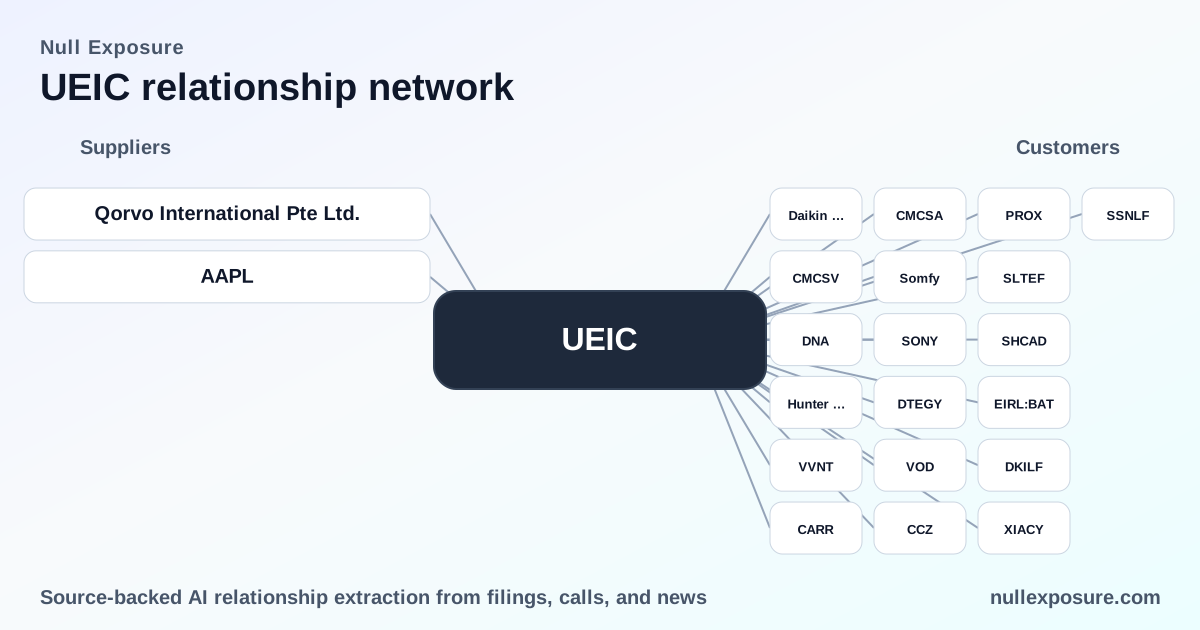
Universal Electronics (UEIC): Supplier Relationships, Concentration, and What Investors Should Price In
Universal Electronics (UEIC) designs, develops, manufactures and sells universal and preprogrammed control products, smart wireless security and audio‑video accessories, and smart‑home products to consumer electronics manufacturers, subscription streaming platforms, security and hospitality customers. UEIC monetizes through hardware sales, embedded firmware and software integrations with OEMs and operators, plus recurring services tied to device provisioning and software updates. The company’s supply chain posture—outsourced manufacturing in Asia, a mix of integrated circuit suppliers and strategic partnerships with platform owners—drives both margin variability and execution risk for investors.
Explore a concise supplier risk profile and relationship map at https://nullexposure.com/ to supplement your diligence.
High-level signal: what the supply chain looks like in a sentence
UEIC runs a distributed supplier model with third‑party manufacturers in Asia and India, no single supplier dominated purchases in 2024 or 2023, and a historically important integrated circuit partner that accounted for a meaningful share in an earlier year. These structural facts shape negotiation leverage, lead‑time exposure, and product continuity.
What every investor needs to know about UEIC’s supplier posture
UEIC’s operating model is built on hardware complexity and ecosystem integrations. That creates four practical characteristics investors should price into the equity:
- Contracting posture: UEIC relies on contractual manufacturing and component procurement rather than captive factories, so cost and capacity are negotiated with third parties rather than directly controlled. According to company disclosures, the firm uses selected third‑party manufacturers and suppliers in Asia and India (company filing, FY2024).
- Concentration: The company reports that no supplier represented over 10% of inventory purchases in 2024 or 2023, signaling a deliberate diversification effort at the supplier level (company filing, FY2024). This reduces single‑counterparty vulnerability today, though historical concentration existed in 2022.
- Criticality: Components such as integrated circuits and authentication chips are mission critical for UEIC’s remote controls and connected devices; supplier continuity for these items is essential to shipping cadence and warranty exposure.
- Maturity and geography: The supplier base is geographically concentrated in APAC and India, consistent with low‑cost manufacturing and component ecosystems; this creates geopolitical and logistics exposure that investors must monitor alongside lead‑time and freight cost cycles.
These are company‑level signals drawn from UEIC’s filings and reported disclosures; they inform how procurement shocks propagate to revenue and margins.
Supplier relationships you need to know now
Qorvo International Pte Ltd.
Qorvo was the largest integrated circuit supplier for UEIC historically, providing 11.5% of UEIC’s total inventory purchases in 2022, illustrating prior component concentration around RF and connectivity silicon (UEIC 10‑K, FY2024). This level of past exposure highlights why integrated circuit sourcing is a structural risk for UEIC; investors should track whether comparable share concentrations re‑emerge as product mixes shift.
Apple
UEIC’s remote product engineering integrated UEI’s BLE chipset with Apple’s MFi authentication chip for secure connectivity with Apple TV, demonstrating a product‑level partnership where UEIC supplies hardware compatible with a major platform (BroadbandTV News, November 2020). That relationship underlines UEIC’s role as a supplier to platform owners and operators, with integrations that can increase product stickiness and access to distribution channels.
How these relationships translate to investment risk and opportunity
Supplier relationships are both a lever and a liability for UEIC. On the opportunity side, integrations with platform leaders such as Apple expand distribution and create lifecycle revenue from firmware and provisioning services. On the risk side, reliance on specialized component suppliers for wireless and voice‑enabled controls concentrates technological and sourcing risk into a handful of parts categories.
Key investment implications:
- Revenue sensitivity to component availability: Product shipments and revenue recognition are directly linked to component flow; integrated circuit shortages or quality issues could compress near‑term revenue and raise warranty costs.
- Margin pressure from supplier pricing: Outsourced manufacturing in APAC gives UEIC cost flexibility, but input inflation and freight volatility transmit quickly to gross margins.
- Operational resilience from diversification: The company’s stated absence of suppliers >10% in 2024/2023 is a positive signal for continuity and negotiation leverage, reducing the probability of a single‑supplier shock derailing production.
For a situational deep dive and timeline of supplier exposures, visit https://nullexposure.com/ to read supporting materials and supplier maps.
Risks to stress test in models
- Concentration rollback risk: Historical concentration (Qorvo at 11.5% in 2022) shows that supplier exposures can re‑materialize; model scenarios where a single IC supplier re‑emerges at scale.
- Asia/India manufacturing concentration: Geographic concentration accelerates downside in cases of port closures, tariffs, or localized COVID‑style disruptions; assume extended lead times in stress tests.
- Platform dependency: Integrations with platform owners enhance lifetime value but create dependency on partner certification and platform roadmap decisions.
Portfolio actions and monitoring checklist
- Monitor quarterly procurement disclosures and any supplier‑specific callouts in UEIC filings or MD&A.
- Track gross margin trend versus component price indexes and freight cost indices.
- Watch integration announcements or renewals with platform partners (Apple and operator contracts) for upside to device attach and service revenue.
For ongoing supplier intelligence and to see how these supplier signals interact with financial metrics, visit https://nullexposure.com/ where you can access concise supplier risk dashboards and relationship summaries.
Bottom line: what investors should price in today
Universal Electronics operates a diversified, outsourced supply chain with strategic component dependencies. Current disclosures show reduced supplier concentration through 2024, but historical concentration in critical integrated circuits and active platform integrations (e.g., with Apple) require active monitoring. Given UEIC’s modest market capitalization and operating margins—revenue of roughly $368 million trailing‑12‑months and negative EPS—supply‑chain disruptions can have outsized effects on near‑term results, while successful platform integrations and stable APAC manufacturing relationships provide the levers for margin recovery.
If you are evaluating UEIC as a supplier counterparty or portfolio position, focus diligence on component sourcing plans, contract tenors with key IC vendors, and the cadence of platform certifications that drive device attach and recurring provisioning revenue.