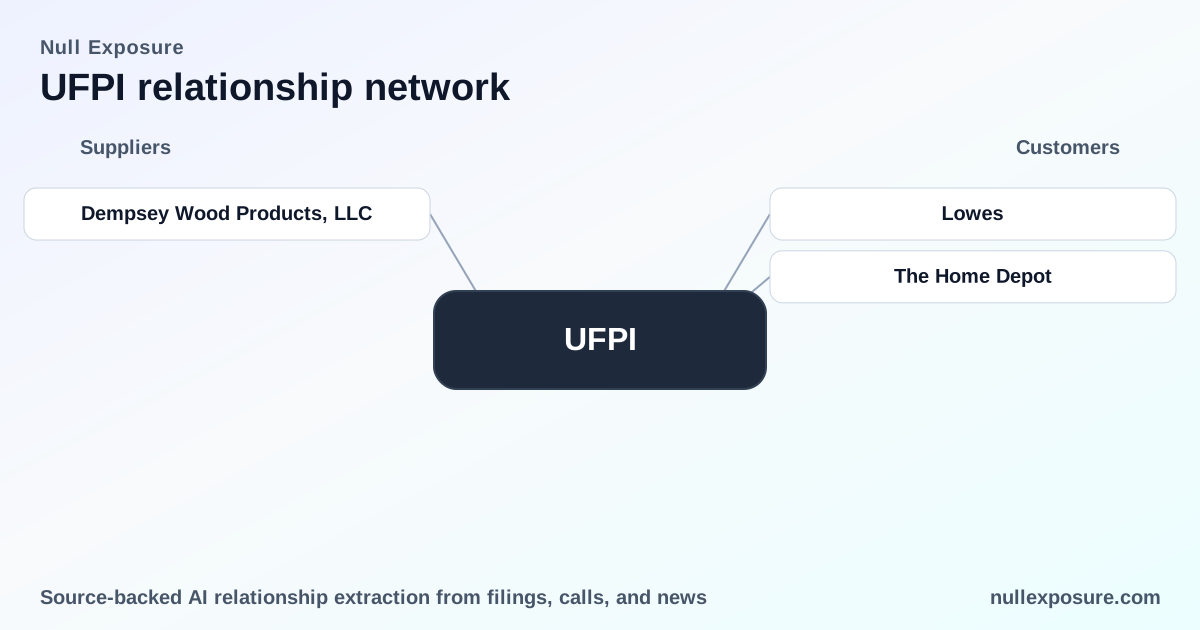
UFP Industries (UFPI) — supplier relationships, operating posture, and what investors need to know
UFP Industries designs, manufactures and markets wood products and wood alternatives across North America, Europe, Asia and Australia, monetizing through vertically integrated manufacturing, branded and private-label product sales, and downstream installation services. The company converts large volumes of softwood lumber into finished goods (building products, pallets, engineered wood) and captures margin through scale, product mix and value‑added installation or distribution. For investors evaluating supplier relationships, the key investment thesis is simple: UFPI’s scale as a major lumber converter drives purchasing power and capital intensity, while selective equity stakes in upstream operators secure feedstock and product continuity. Learn more at https://nullexposure.com/.
The big picture on suppliers: scale, purchases and bargaining leverage
UFPI operates as a large-scale buyer of primary wood products. According to company disclosures covering the most recent periods through 2025-12-31, trailing revenue was roughly $6.32 billion with EBITDA of about $526 million; the company reported approximately $2.0 billion in annual lumber purchases and $608.9 million in plywood purchases during 2024. Those flows make UFPI a material demand anchor in North American softwood markets and shape its supplier bargaining posture.
Key company-level signals:
- Buyer scale and negotiating leverage: UFPI estimates it purchased about 6.5% of North American softwood lumber production in 2024, positioning it as a major converter and buyer (company 2024 filing).
- Procurement diversity: The company states there are numerous primary producers for the varieties it uses and that it is not dependent on any single supplier, indicating low supplier concentration risk at the commodity source (FY2024 10‑K).
- Capital commitments and spend intensity: Outstanding purchase commitments on commenced capital projects were approximately $142.8 million as of December 28, 2024, signaling ongoing capex-driven procurement and long‑lead supplier commitments (FY2024 10‑K).
- Spend magnitude: Annual purchases in the hundreds of millions to billions of dollars are core to operations, so supplier relationships are operationally significant even when no single counterparty is critical.
These facts paint UFPI as a mature, capital-intensive buyer with scale-derived leverage and broad supplier choice. For active investors, that combination reduces single-vendor vulnerability while embedding procurement as a recurring earnings driver.
Dempsey Wood Products, LLC — the disclosed equity relationship
UFP discloses a direct equity relationship with Dempsey Wood Products, LLC. According to the company’s 2024 Form 10‑K, UFP acquired a 50% equity stake in Dempsey in 2022; Dempsey produces pallet lumber and other industrial wood products in Orangeburg, South Carolina. (UFP 2024 Form 10‑K, filed December 28, 2024.)
This is the only supplier-related relationship explicitly called out in the supplier results for UFPI. The stake gives UFP a direct foothold in industrial lumber production—a downstream complement to its conversion and distribution footprint—while preserving access to a vertical supplier for pallet-grade material.
What that equity stake means strategically
Equity ownership in Dempsey is a classic vertical integration move: it secures a portion of industrial-grade feedstock, reduces exposure to spot-market volatility for pallet lumber, and aligns upstream capacity with UFPI manufacturing demand. The 50% position likely affords meaningful operational influence without full consolidation of upstream risk.
From an investor perspective, the Dempsey stake:
- Reduces procurement volatility for pallet-grade inputs that feed logistics and packaging product lines.
- Functions as a targeted, complementary investment rather than the core model—UFPI’s primary customer-facing business remains conversion, distribution and installation.
- Should improve visibility on pricing and availability for specific industrial lumber grades used in pallet and packaging products.
Source: UFP 2024 Form 10‑K disclosure on acquisitions and equity investments (document filed December 28, 2024).
Operational constraints and contracting posture
UFPI’s supplier signals describe a company that contracts from a position of scale but remains procurement-sensitive due to commodity dependency. Translate the constraints into operating characteristics:
- Contracting posture: UFPI is a large strategic buyer with negotiating leverage across many primary producers; long-term purchase commitments and capital projects indicate multi-year supplier arrangements for capital equipment and certain raw materials.
- Concentration: Commodity sourcing is diversified across numerous primary producers, reducing the likelihood that a single supplier outage would be business‑critical.
- Criticality: Raw lumber and plywood are mission-critical inputs—any sustained disruption would directly hit throughput, margins and order fulfillment.
- Maturity: The company’s purchase scale, existing capital commitments (~$142.8M) and vertical investments like Dempsey reflect a mature procurement function that blends market purchases with strategic ownership.
These constraints are company-level signals drawn from UFPI’s FY2024 disclosures and should inform diligence, not replace it.
Financial context that matters to suppliers and operators
UFPI’s scale supports supplier negotiation but also creates concentrated exposure to wood commodity cycles. Relevant financial data points: trailing revenue ~$6.32B, EBITDA ~$526M, market cap near $5.09B, and operating margin in the low single digits—consistent with a high-volume manufacturing model where input costs materially affect margins. According to UFPI’s public financials through the latest quarter (2025-12-31), those figures frame how supplier cost changes translate to earnings volatility. Use those numbers when modeling supplier pass-throughs or scenario analyses.
Mid-article note: for more supplier and counterparty intelligence tailored to investor diligence, visit https://nullexposure.com/.
Risk factors and monitoring priorities
Investors and operators should prioritize the following:
- Input-price exposure: Lumber and plywood price swings directly impact margins; UFPI offsets this with scale and some vertical exposure but cannot eliminate commodity risk.
- Capital commitment timing: Multi‑year capital projects and purchase commitments (>$100M) create execution and supplier delivery risk during construction and ramp periods.
- Operational concentration: While primary producers are numerous, high-volume purchases concentrate UFPI’s demand exposure economically, so industry-wide supply shocks (weather, tariffs, mills idled) remain systemic risks.
- Integration execution: Equity stakes such as Dempsey introduce integration and governance risks that affect realized procurement benefits.
Bottom line and recommended next steps for investors
UFP Industries’ supplier posture is scaled, diversified at the supplier level, and capital-intensive, with strategic equity stakes used to secure specific feedstocks. The Dempsey Wood Products 50% stake is the only supplier-level equity relationship disclosed in the 2024 filing, representing a targeted approach to vertical integration rather than broad upstream consolidation (UFP 2024 Form 10‑K).
For investors and operating partners:
- Confirm how much of UFPI’s finished goods flow is tied to vertically owned suppliers versus market purchases when stress-testing margins.
- Monitor lumber and plywood purchase trends, capex commitments, and any additional minority investments that would change supplier concentration dynamics.
- Use procurement scale as a negotiating strength in supplier discussions but price scenarios conservatively given commodity volatility.
Explore deeper supplier intelligence and relationship mapping at https://nullexposure.com/ for diligence-ready analysis and ongoing monitoring.