Frontier Group Holdings (ULCC): Supplier Map, Constraints, and What Investors Should Price
Frontier is a low-fare, ancillary-driven carrier that monetizes via ticket sales, ancillary fees and a fleet strategy built around a single airframe family and mixed lease / purchase financing. Its economics depend on maintaining ultra-low unit costs through fleet commonality, aggressive sale-leaseback and lease termination activity, and disciplined ancillary revenue capture. For investors evaluating supplier exposure, the key is that aircraft OEMs, lessors and engine suppliers are not peripheral vendors — they are operating partners whose contract structure, delivery profile and cash timing directly affect Frontier’s balance sheet and liquidity. Learn more about supplier signals and exposures at https://nullexposure.com/.
How Frontier’s supplier footprint supports the low-fare model
Frontier runs a single-family Airbus A320 platform to compress maintenance, training and operations costs, then layers third-party services for distribution, ground handling and reservations to keep fixed headcount low. That operating model both concentrates counterparty risk (Airbus, major lessors, engine vendors, and a handful of systems providers) and creates large, long-dated cash commitments that dominate capital allocation decisions.
Key operational drivers:
- Fleet standardization: lowers unit costs but increases vendor concentration with Airbus and related MRO/engine partners.
- Mixed financing: large purchase commitments and operating leases create complex cash and covenant dynamics.
- Third-party services: outsourced reservations, ground handling and distribution are operationally critical even if individually smaller in spend.
If you want a deeper supplier risk profile, visit https://nullexposure.com/ for an extended report.
Supplier relationships that matter — plain-English summaries
Pratt & Whitney
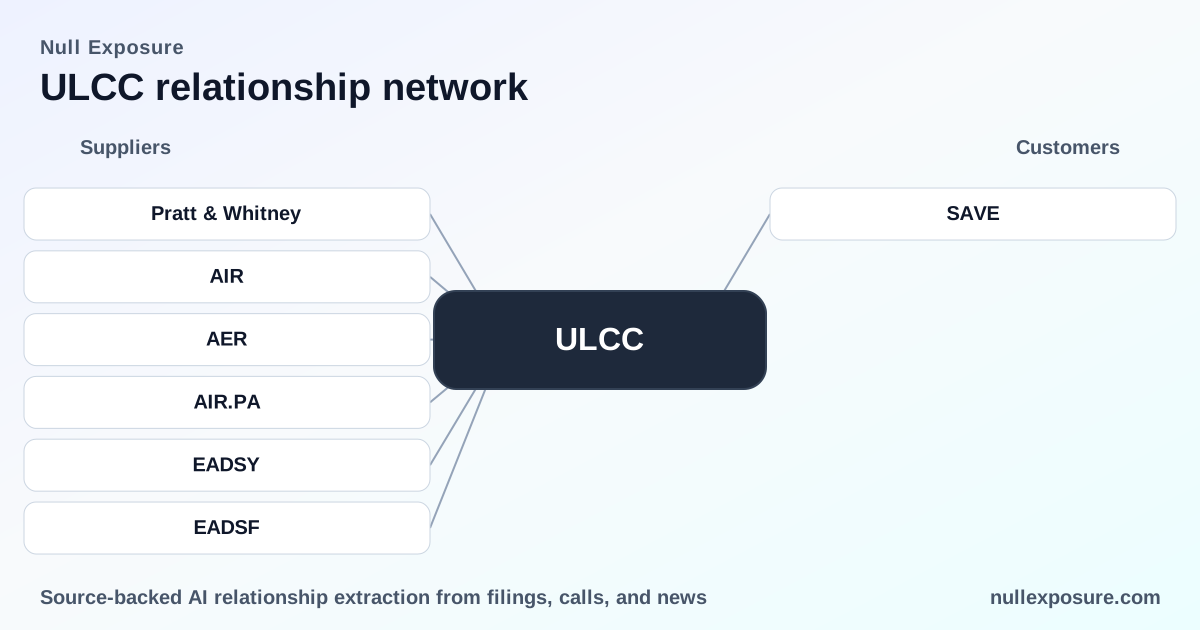
Frontier has material spare-engine obligations tied to Pratt & Whitney as part of its long-term equipment commitments, which extend through 2031 and form part of its flight equipment purchase obligations. According to Frontier’s 2024 Form 10‑K, the company has significant obligations for spare engines on order from Pratt & Whitney for delivery through 2031.
Airbus
Airbus is Frontier’s primary airframe partner and the counterparty to firm purchase commitments that underpin the carrier’s growth profile; recent corporate actions include framework negotiations to moderate delivery pace and defer some deliveries as part of a wider fleet reset. Frontier disclosed in its 2024 Form 10‑K large, long-dated aircraft purchase commitments with Airbus, and the 2025 Q4 earnings call and subsequent press coverage (Yahoo Finance, SimplyWall) described a non-binding framework to revise its delivery schedule and moderate long-term growth.
Sources: Frontier 2024 Form 10‑K; Frontier 2025 Q4 earnings call; reporting on the Q4 release by Yahoo Finance and SimplyWall (March 2026).
AerCap
AerCap is an important lessor partner in Frontier’s lease inventory and was the counterparty to a non-binding agreement to enable early termination of 24 leases, part of a planned fleet overhaul to reduce near-term capacity and cash drag. Management discussed the AerCap arrangement on the 2025 Q4 earnings call and press coverage (Yahoo Finance) corroborated the lease-termination framework announced in March 2026.
Sources: Frontier 2025 Q4 earnings call; Yahoo Finance coverage (March 2026).
Contracting posture, concentration and spend — what the constraints signal
Frontier’s supplier relationships show a mixed contracting posture that shapes both risk and optionality:
- Long-term, large commitments dominate capital exposure. The company disclosed firm purchase commitments for the A320neo family and significant flight equipment purchase obligations totaling roughly $11.56 billion across the delivery schedule through 2031, signaling very high, multi-year capital exposure to aircraft OEM pricing and delivery timing. (Company-level signal from the 2024 Form 10‑K.)
- A subset of critical service contracts are long-dated. Frontier operates long-term engine overhaul flight-hour agreements and long-term contracts to host its reservations system, which are critical to operations and substitution is costly in time and integration. (Company-level signal from the 2024 Form 10‑K.)
- Short-term leases and airport facility arrangements provide some flexibility. Facility leases across roughly 100 U.S. airports are frequently short-term and evergreen, giving tactical flexibility for network optimization, but not reducing the strategic long-term obligations. (Company-level signal from the 2024 Form 10‑K.)
- High spend concentration. Several procurement lines are comfortably in the >$100m band (flight equipment purchase commitments and PDP financing), making supplier negotiation and financing alternatives principal levers for liquidity management.
Operational criticality and key risk vectors
Frontier’s operations concentrate several single points of failure that investors must monitor:
- Fuel cost exposure is critical: fuel accounted for 28% of operating costs in 2024, making suppliers and contracts that affect fuel procurement and hedging practices highly material to margins. (Company-level signal from 2024 reporting.)
- Reservations and distribution are operationally critical: the Navitaire reservations system is hosted under a long-term third-party contract and is essential for ticketing, check-in and GDS connectivity; disruption would be materially impairing. (Company-level signal from the 2024 Form 10‑K.)
- Lease expiries and delivery schedules compress cash timing risk: a mix of operating leases expiring between 2025 and 2036 and deferred/new deliveries mean timing shifts with Airbus or lessors immediately affect capacity and cash flow.
If you want our supplier risk heat map and counterparty scorecards, see https://nullexposure.com/.
What the recent fleet reset implies for counterparty dynamics
The actions described in Q4 2025–Q1 2026 — a non‑binding AerCap agreement to terminate 24 leases and negotiated deferrals with Airbus — reflect a deliberate attempt to reshape cash flow and capacity without full cancellations. This is a de-risking move that reduces near-term capex and lease payments but increases reliance on negotiated outcomes with large counterparties, so investors should watch the transition from non-binding frameworks to binding amendments and the impact on sale-leaseback economics and covenant tests. Source: 2025 Q4 earnings call and contemporaneous press (Yahoo Finance, SimplyWall, Finviz).
Bottom line: what to price in and next steps for due diligence
- Price in concentrated counterparty risk: Airbus and major lessors are not replaceable in the short term; contract amendments and delivery timing materially affect liquidity and capacity.
- Treat long-term purchase commitments as a financing and execution risk rather than merely a growth signal; PDP facilities and pre-delivery financing are material to cash availability.
- Monitor the transition from non-binding frameworks to binding agreements with AerCap and Airbus as the decisive inflection for near-term cash relief.
Bold takeaway: Frontier’s supplier relationships are central to both its operating leverage and its vulnerability — long-term OEM commitments and lessor negotiations are primary drivers of capital flexibility.
For a deeper supplier-level exposure analysis and to access our counterparty risk reports, visit https://nullexposure.com/. If you want bespoke supplier diligence for an investment committee or operations briefing, contact us via https://nullexposure.com/ to request a tailored briefing.