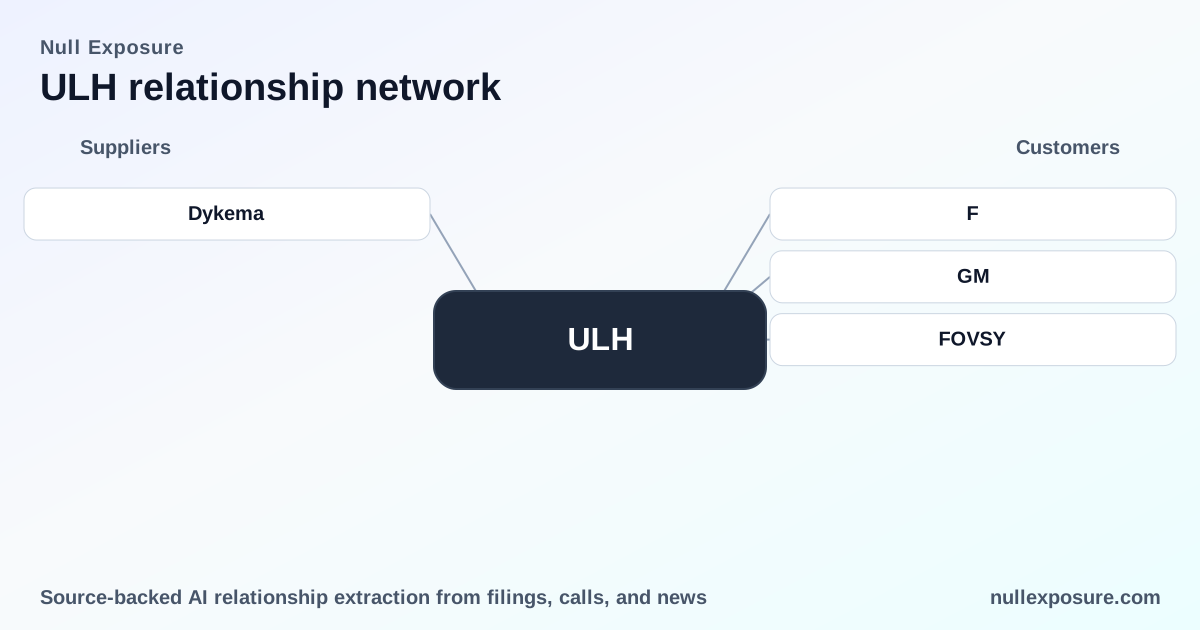
Universal Logistics Holdings (ULH): supplier relationships and what they signal for investors
Universal Logistics Holdings operates and monetizes a broad transportation and logistics platform across the United States, Mexico, Canada and Colombia by charging customers for freight movement, terminal and intermodal services, and by managing owned and leased equipment. The company generates revenue from contract and transactional freight services while absorbing asset and procurement decisions—such as trailer purchases—that materially affect supplier exposure and capital intensity. Investors should evaluate supplier links for both operational continuity and M&A execution.
For a compact view of supplier signals and to explore similar supplier dossiers, visit https://nullexposure.com/.
What the direct relationship evidence shows: a single, material legal advisor in a recent deal
Dykema — Universal engaged Dykema as legal counsel in an acquisition. According to a Dykema news release in March 2026, Dykema assisted Universal Logistics Holdings in the acquisition of a market‑leading rail terminal operator, signaling that ULH is executing inorganic growth that requires external legal services for transactional work. (Source: Dykema news release, March 10, 2026 — https://www.dykema.com/news-insights/dykema-assists-universal-logistic-holdings-inc-in-acquisition-of-market-leading-rail-terminal-operator.html)
Key takeaway: ULH is using outside counsel for M&A execution; this is a clear supplier relationship tied to strategic growth rather than routine operations.
Other named supplier relationships and company-level supplier signals
Grant Thornton LLP — The company disclosed that Grant Thornton audited the effectiveness of ULH’s internal control over financial reporting, which establishes Grant Thornton as the independent registered public accounting firm providing audit services to ULH. This is a governance-critical supplier relationship that affects compliance, SEC reporting quality, and the company’s public standing. (Source: company disclosure on internal control audit, FY2024 filing excerpt.)
Affiliate trailer purchases — During 2024, ULH purchased trailers from an affiliate totaling $4.5 million, placing this spend in the $1M–$10M band. This is a material, related‑party procurement that demonstrates ULH’s continued use of affiliated vendors for capital equipment. (Source: company disclosure excerpt describing 2024 trailer purchases.)
Key takeaway: ULH’s supplier posture combines routine professional services (audit, legal) with meaningful related‑party capital procurement. These two vectors drive different categories of supplier risk: compliance and reputational risk from the auditor relationship, and operational / governance risk from affiliate procurement.
For further analysis and to compare supplier structures across peers, see https://nullexposure.com/.
What these relationships imply about ULH’s operating model
- Contracting posture: ULH demonstrates a hybrid posture—procurement of capital equipment from affiliates indicates centralized purchasing that leverages affiliated channels for specific asset classes; engagement of external law firms and auditors shows standard external contracting for compliance and transactional expertise. This combination reflects a deliberate balance between controlling asset cost and outsourcing specialized functions.
- Concentration and dependence: The $4.5M affiliate trailer spend signals concentrated exposure to intra‑group suppliers for certain capital items. While one off‑balance number does not prove systemic concentration across all categories, the existence of related‑party procurement is a persistent governance signal that investors should monitor for potential conflicts and disclosure quality.
- Criticality: Trailers and terminal assets are operationally critical—delays or quality issues directly affect network capacity and service reliability. Similarly, an auditor and legal counsel are strategically critical to reporting integrity and deal execution.
- Maturity of supplier relationships: Use of well‑established firms like Grant Thornton and Dykema indicates relationships that are transactional but mature in professional services tiers; affiliate procurement suggests an ongoing internal supply channel rather than an ad‑hoc market purchase.
Risks and opportunities for investors and operators
- Governance and related‑party risk: Related‑party purchases at material scale require rigorous disclosure and oversight; the $4.5M affiliate trailer purchases are large enough to influence capital allocation decisions and warrant monitoring of board oversight and audit committee commentary.
- M&A integration and legal spend: Engagement of external counsel for acquisitions is standard, but the presence of such deals signals a growth-through-acquisition strategy that brings integration risk and potential supplier churn as ULH inherits third‑party contracts.
- Operational continuity: Trailers and terminal capacity are core to service delivery; suppliers that provide these assets or services influence on‑time delivery and margin stability.
- Audit quality: Retention of Grant Thornton for internal control audits is a positive governance indicator that supports confidence in financial statements; this relationship reduces audit risk relative to smaller, less experienced auditors.
Major relationship takeaway: ULH combines strategic use of external professional services for governance and M&A with concentrated, affiliated procurement for capital assets—this mix creates both control benefits and governance sensitivities that are material to investors.
Practical diligence checklist for supplier risk assessment
- Confirm whether the $4.5M affiliate trailer purchases are recurring and whether procurement terms are at arm’s-length; request contract summaries and board approvals where possible.
- Review the most recent audit opinion and internal control reports from Grant Thornton to judge the robustness of controls and remediation actions.
- Evaluate the scope and fee arrangements of legal counsel for recent M&A to estimate ongoing external spend and integration complexity.
- Monitor revenue and margin trends—ULH’s FY revenue is roughly $1.558 billion with EBITDA at ~$203 million, and the company reported a negative EPS in the latest period, which makes cost and supplier terms more consequential to near‑term cash flow. (Source: company financials, latest quarter FY2025—company overview figures.)
Final assessment and action items
Universal Logistics is a mid‑cap logistics operator with material external supplier relationships for audit and legal services, and notable affiliate procurement in capital equipment. For investors, the intersection of governance suppliers (audit), strategic suppliers (legal), and affiliate vendors (trailers) creates a layered supplier profile that is operationally meaningful and disclosure‑sensitive. Prioritize verifying arm’s‑length pricing on related‑party purchases and the audit committee’s oversight record.
If you want a structured supplier-risk brief or to compare ULH’s supplier posture against peers, start with the company hub at https://nullexposure.com/ — it’s a practical next step for investor due diligence.
For ongoing monitoring of supplier signals and to access comparable supplier dossiers across logistics peers, revisit https://nullexposure.com/ for updated supplier relationship coverage and alerts.