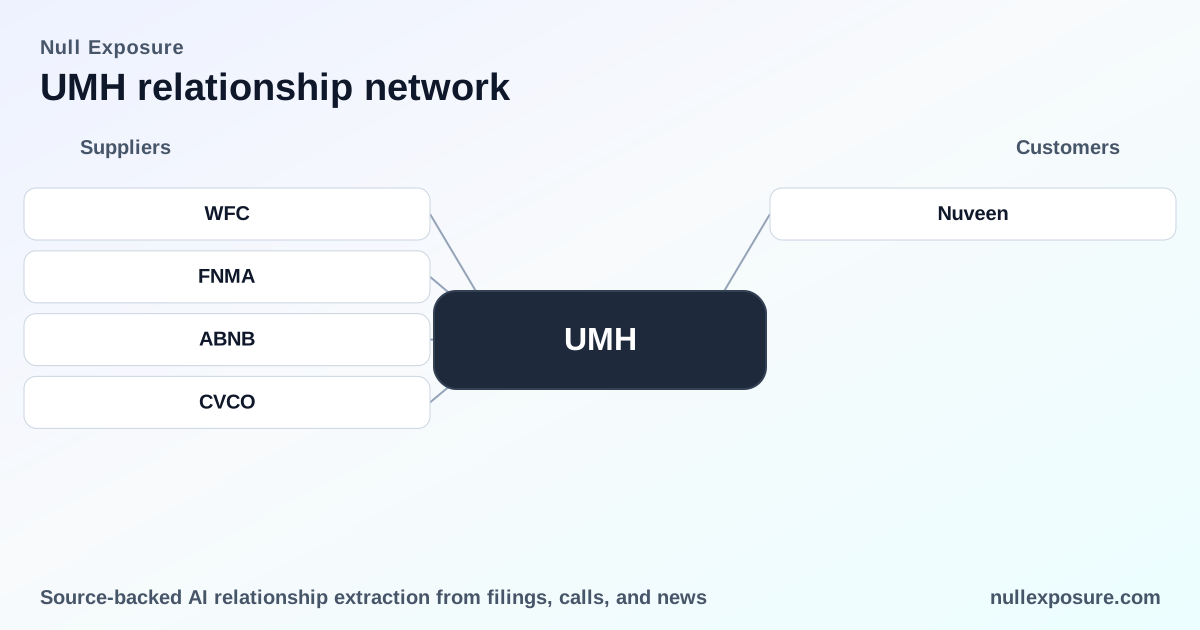
UMH Properties: supplier relationships that shape capital access and product flow
UMH Properties is a residential REIT that owns and operates manufactured home communities—approximately 124 communities with ~23,400 developed lots—and it monetizes through lot rents, home sales, and financing/ancillary services tied to community occupancy. Its operating economics depend on two linked supplier sets: capital providers who finance communities and buyers/ manufacturers that supply or stage homes for those lots. For investors, the key question is whether UMH’s supplier relationships are durable, low-cost sources of capital and home supply that support occupancy and predictable cash flow. Learn more about supplier risk and concentration at https://nullexposure.com/.
How these supplier links fit UMH’s business model
UMH’s supplier relationships are not peripheral—they are operationally and financially integral. The company combines real-estate ownership (land and infrastructure) with outsourced elements: manufactured homes produced off-site and third-party financing arrangements used to acquire or refinance communities. From the constraints and disclosures, several company-level operating-model signals emerge:
- Contracting posture: relationships reflect multi-year financing facilities and formal supply/partnership arrangements rather than ad-hoc spot purchases; that implies negotiated terms and predictable cost structures for capital and home supply.
- Concentration and criticality: lenders and manufacturers are critical suppliers—capital access determines acquisition pace and leverage; home manufacturers and design partners affect speed-to-occupancy and product suitability for target renters/buyers. This elevates supplier risk relative to a pure landlord model.
- Maturity and stage: disclosed relationships are active operational arrangements (financing facilities and marketing/partnership pilots), indicating established, executable channels rather than exploratory commitments.
- Outsourcing posture: UMH leverages third parties for manufacturing and lending/servicing functions rather than vertical integration, concentrating operational risk on partner performance and contract terms.
These characteristics shape how analysts should model downside scenarios (financing stress, supply interruptions) and upside (improved capital terms or faster home fill rates). If you want a structured supplier-risk brief for UMH, start here: https://nullexposure.com/.
Vendor snapshots: four partnerships investors should track
Wells Fargo Bank, N. A.
UMH executed a financing transaction in which Wells Fargo financed 28 unencumbered communities (about 4,100 sites) for roughly $106 million, providing balance-sheet liquidity tied directly to community assets. This was disclosed in a company announcement in August 2020 via GlobeNewswire.
Federal National Mortgage Association (Fannie Mae)
UMH utilized a Fannie Mae credit facility structured with a 10-year term and a 30-year amortization schedule, signaling access to long-dated, amortizing capital suitable for community-level financing. The Fannie Mae facility was described in the same GlobeNewswire notice from August 2020.
Airbnb
UMH experimented with alternative demand channels by partnering with Airbnb to offer prospective residents short-term stays at a new development in Sebring, Florida, enabling market-testing of product and accelerating leasing conversion. A REIT.com article in 2024 covered this initiative and its intent to innovate occupancy pathways.
Cavco Industries
For its Sebring showcase, UMH enlisted Cavco Industries to provide project renderings and partner on the display homes, indicating direct collaboration with a manufactured-home builder to align product design and marketing with community rollout. REIT.com’s 2024 coverage references Cavco’s role in the showcase.
What these relationships imply for investors
UMH’s supplier mix reveals a dual strategy: lock in capital through traditional institutional lenders and expand or refine occupancy through partnerships with manufacturers and distribution/marketing channels.
- Capital stability via institutional lenders: the Wells Fargo and Fannie Mae facilities show UMH secures structured, long-term financing tied to portfolio assets—this reduces short-term refinancing risk on those communities and supports disciplined acquisition or recapitalization programs. Capital counterparty quality is therefore a positive for near-term liquidity.
- Product and demand innovation through manufacturers and platforms: Cavco’s involvement and the Airbnb pilot demonstrate management is actively addressing fill-rate economics by improving product-market fit and experimenting with new demand funnels; this can lift occupancy and NOI if replicated efficiently.
- Outsourced execution heightens counterparty risk: reliance on third parties for home manufacturing and lending/servicing means performance and contractual terms with those suppliers directly affect rollout speed and credit risk. Supplier disruptions would materially affect revenue ramp and financing covenants.
- Maturity and disclosed timing matter: several supplier actions trace to announcements in 2020 and 2024; these are established initiatives rather than hypothetical plans, which supports modeling their ongoing impact on cash flow.
Key takeaways for underwriting and operations
- Finance relationships are strategic and long-dated; they reduce short-term refinancing exposure for financed communities.
- Manufacturer partnerships are operational levers that directly influence time-to-occupancy and customer conversion rates.
- Outsourcing increases dependency on third-party performance; incorporate supplier failure modes into stress tests.
- Management is experimenting with demand channels (Airbnb) to accelerate leasing, an actionable tactic rather than mere marketing.
If you need an investor-tailored supplier risk memorandum or a counterparty concentration dashboard for UMH, begin with the homepage at https://nullexposure.com/ to commission discrete analysis.
Final assessment and next steps
UMH’s supplier relationships reflect a pragmatic REIT strategy: secure long-term capital from institutional lenders while outsourcing home production and experimenting with direct-to-occupant demand tactics. For investors, the core thesis is straightforward: capital partnerships support scale and acquisition activity, while manufacturer and marketing partners determine speed-to-rent and margin on home sales. Monitor counterparty credit and operational performance of major suppliers—especially lenders and large manufacturers—because those relationships are both material and active.
To review UMH’s supplier profile in a structured report or to request bespoke diligence, visit https://nullexposure.com/ and request a supplier-risk brief tailored to your portfolio needs.