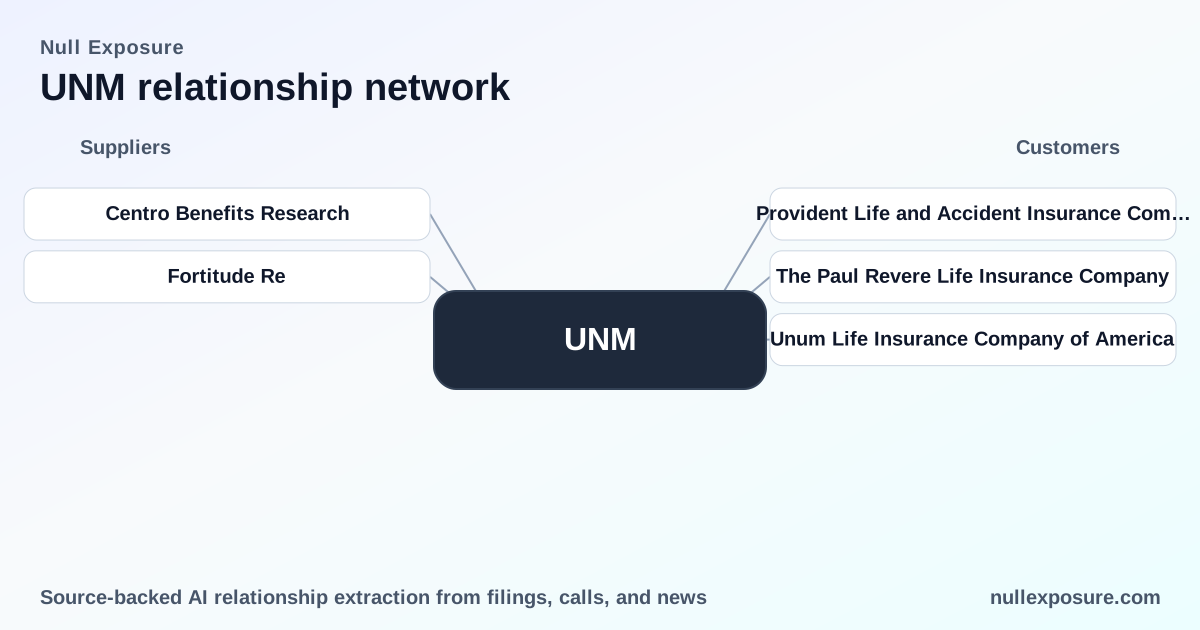
Unum Group (UNM) — Supplier relationships that move capital and distribution
Unum Group is a Fortune 500 provider of group and individual disability, life and long‑term care insurance that monetizes primarily through premium flows, investment income on reserves, and active use of reinsurance and capital markets to manage balance‑sheet volatility. For investors and operator teams, the most consequential supplier relationships are those that reshape distribution economics and reduce reserve volatility through risk transfer—both themes visible in recent disclosures. Learn more or revisit this analysis anytime at https://nullexposure.com/.
Why two supplier threads deserve investor attention
Unum’s supplier footprint in the recent public record splits into distribution technology integration and reinsurance counterparties. These are not operational curiosities; they are value‑drivers:
- The distribution integration speeds quoting and RFP processing, which directly affects sales velocity and loss ratios through improved plan selection.
- Reinsurance transactions reduce statutory and economic reserve burdens, freeing capital and lowering earnings volatility.
Unum’s scale—roughly $13 billion in trailing revenue and a market cap north of $12 billion—means these relationships are strategic levers rather than tactical experiments. The firm’s forward P/E (~7.9) and conservative dividend yield (~2.5%) position investors to value the optionality of repeatable risk‑transfer programs and broader broker distribution improvements.
Centro Benefits Research: modernizing broker‑carrier quoting
Centro Benefits Research announced on February 24, 2026 the onboarding of Unum to its broker‑carrier platform, creating a real‑time RFP and quote integration for brokers that use Centro’s system. This integration reduces friction in placement and speeds quote responsiveness, improving Unum’s competitive positioning in employer benefits procurement. According to Centro’s announcement (published Feb 24, 2026), the integration delivers seamless, real‑time quote processing that should lower broker abandonment and shorten sales cycles: https://simplywall.st/stocks/us/insurance/nyse-unm/unum-group/news/will-centros-real-time-quoting-integration-redefine-unum-gro
- Investor takeaway: digital distribution connectivity is incremental revenue leverage—faster quoting converts into higher hit rates on renewals and new business for large group products.
- Operational note: integration with broker platforms increases dependency on distribution partners for pricing fidelity and speed; Unum must maintain consistent underwriting rules across digital channels.
Fortitude Re: capital management through risk transfer
Unum disclosed a material risk transfer that reduced approximately $4 billion of long‑term care (LTC) reserves through a transaction with Fortitude Re and an internal funds‑withheld reinsurance structure. The move was described during Unum’s Q4 2025 earnings call and is reported in the company’s post‑quarter transcript coverage: https://www.insidermonkey.com/blog/unum-group-nyseunm-q4-2025-earnings-call-transcript-1690848/
- Investor takeaway: this is a capital‑efficient strategy—transferring LTC exposures to Fortitude Re materially lowers reserve ratios and should improve statutory capital and earnings stability.
- Risk and repeatability: the size of the transaction signals Unum’s openness to large structured reinsurance deals as a tool to manage legacy morbidity and interest‑rate mismatch.
What the constraints tell investors about Unum’s contracting posture
The public constraints indicate Unum routinely acts as a buyer in reinsurance agreements to spread risk and limit exposure to large losses. This is a company‑level signal about contracting posture rather than a relationship‑specific claim. The practical implications:
- Contracting posture: Unum actively sources reinsurance and risk‑transfer solutions rather than relying solely on internal capital buffers.
- Concentration: reliance on a handful of large reinsurers for major transfers increases counterparty concentration risks; counterparties’ credit and capacity will influence Unum’s cost of risk mitigation.
- Criticality: reinsurance is a critical supply line for capital management—loss of access to willing reinsurers would materially change Unum’s capital plans.
- Maturity: these are established financial instruments for Unum, reflecting a mature approach to balance‑sheet management rather than ad‑hoc hedging.
How these supplier relationships change the investment thesis
The two relationships in the public record map directly to top‑line growth engine (distribution) and bottom‑line risk management (reinsurance). Taken together they support a thesis where Unum:
- Improves sales conversion and reduces expense ratios through broker integrations like Centro, accelerating revenue per quoting event.
- Locks down capital relief and earnings stability by executing large risk transfers with reinsurers like Fortitude Re.
This dual focus—distribution modernization and balance‑sheet optimization—aligns with Unum’s stated operating model and provides two levers investors can monitor for execution: tightness of integration adoption among brokers and the frequency/size of reinsurance deals. If you want a consolidated view of counterparties and constraint signals, revisit our supplier analysis hub: https://nullexposure.com/.
Practical risks and monitoring checkpoints
Monitor these indicators over the next 12–24 months:
- Adoption metrics from broker platforms (quote volume and conversion rates) to confirm Centro integration is translating into new business.
- Frequency and structure of reinsurance transactions; look for repeat deals or multi‑year arrangements that institutionalize capital relief.
- Counterparty credit trends among reinsurers and any rate‑or‑capacity shocks that would lift Unum’s cost of transferring risk.
Bold takeaway: Unum’s supplier moves are strategic and measurable—distribution partnerships lift growth potential while reinsurance deals materially reshape capital volatility.
If you want ongoing monitoring and deeper supplier maps for Unum and peers, visit our tools and reports at https://nullexposure.com/. For a tailored brief that connects supplier signals to valuation scenarios, start here: https://nullexposure.com/.
Final assessment and action items for investors and operators
Unum’s recent public supplier footprint shows deliberate use of modern distribution channels and large, structured reinsurance to optimize both growth and capital. For investors, that suggests upside from improved sales efficiency and lower reserve‑driven earnings variability; for operators, it underscores priorities—standardize underwriting across digital channels and institutionalize reinsurer engagement. To track these dynamics continuously, browse our supplier intelligence and scenario playbooks at https://nullexposure.com/.