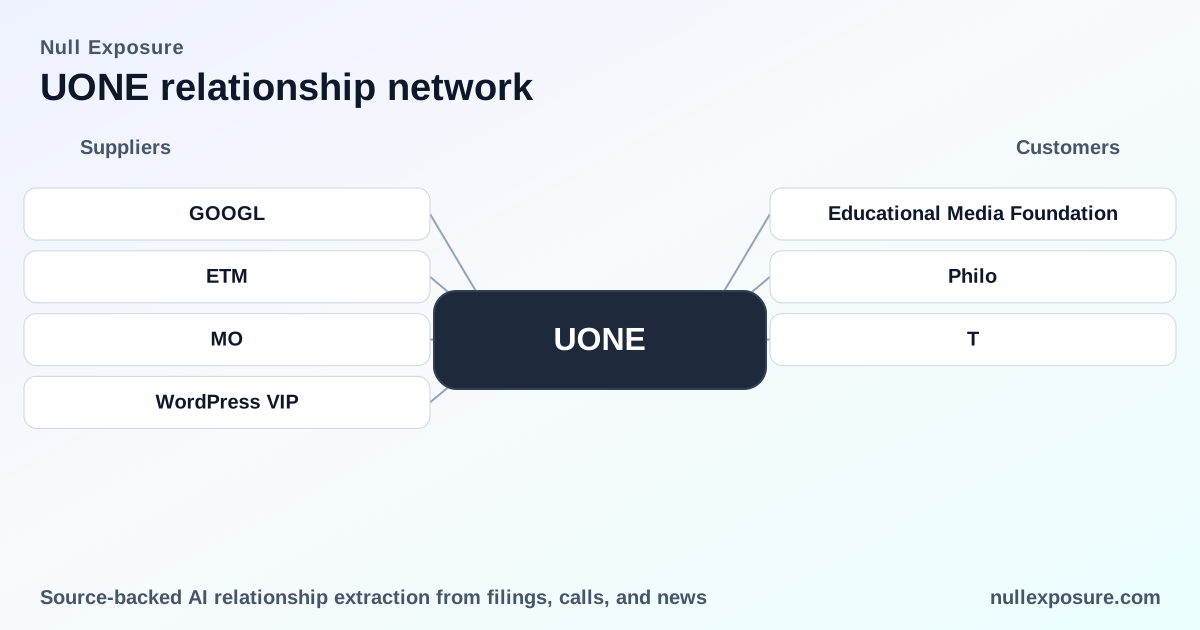
Urban One (UONE) — supplier relationships that shape the operating runway
Urban One is an urban-focused multimedia company that monetizes primarily through local and national radio broadcasting, digital content and advertising, branded events, and strategic station-level asset exchanges. Its operating model depends on long-term music licensing arrangements, third‑party digital platform services for audience distribution, and occasional asset swaps to reallocate market coverage — all of which materially influence cash flow timing and cost structure. For a concise supplier-risk briefing and relationship map, visit https://nullexposure.com/.
Why supplier relationships matter for an investor in UONE
Urban One’s margins and free cash flow are highly sensitive to licensing fees, platform uptime and distribution economics. Music performance licenses and broadcast-related agreements are operationally critical, while technology suppliers and occasional corporate counterparties affect customer reach and promotional execution. Debt maturity and contractual tenure further constrain flexibility. Below I walk through every supplier relationship surfaced in recent reporting and what each means for investors.
The relationships — plain-English summaries and sources
Google — platform services on event pages
Urban One’s event page for a Dallas celebrity golf classic displays a Google reCAPTCHA integration, indicating use of Google’s site security services to manage user interactions and form submissions. This is a routine but important dependency on a major cloud/web services provider for customer-facing functionality (Majic945, March 2026: https://majic945.com/1125309/13th-annual-radio-one-dallas-celebrity-golf-classic/).
Entercom Communications Corp. (Entercom / ETM) — asset exchange to expand market reach
Urban One executed a definitive asset exchange with Entercom in FY2020 that transferred several Charlotte market stations to Urban One, explicitly expanding the company’s reach into general-market formats and reinforcing broadcast footprint through strategic station swaps rather than cash acquisitions (PR Newswire, FY2020: https://www.prnewswire.com/news-releases/urban-one-enters-into-exchange-agreement-with-entercom-that-will-expand-urban-ones-reach-into-the-general-market-in-charlotte-north-carolina-301167646.html).
Altria Group — land ownership cited in a local development project
Reporting on a proposed Richmond casino project referenced 100 acres owned by Henrico County‑based Altria Group that were relevant to Urban One’s proposed development, highlighting an intersection between Urban One’s strategic initiatives and third‑party landowners in non-broadcast projects (Yogonet, FY2021: https://www.yogonet.com/international/news/2021/11/04/60056-richmond-becomes-only-virginia-city-to-turn-down-casino-project).
WordPress VIP — enterprise content hosting for brands
Urban One’s site architecture and brand pages include a “Powered by WordPress VIP” attribution, signaling a reliance on enterprise-grade WordPress hosting and CMS services to deliver digital content and manage audience engagement across Urban One properties (Majic945, March 2026: https://majic945.com/1125309/13th-annual-radio-one-dallas-celebrity-golf-classic/).
What the constraints tell you about Urban One’s operating posture
Urban One’s supplier constraints (drawn from contract excerpts and filings) form a coherent picture of a broadcasting operator with binding licensing commitments and medium-term financial obligations:
-
Licensing first, operating continuity second. Urban One is a represented participant in the Radio Music Licensing Committee (RMLC) and is party to multi‑year interim licenses with ASCAP and settlement terms with GMR that cover multi-year windows through March 31, 2026. Those licensing contracts are core to the right to broadcast music content and therefore directly impact cost of revenue and margin stability.
-
Contract tenors that compress flexibility. The licensing evidence describes multi‑year interim agreements through calendar 2026; concurrently the company carries long‑dated notes (the 2028 Notes) that mature in February 2028 with a stated coupon, creating a near‑term window where both royalty negotiations and debt service are concentrated.
-
Dual role in the rights economy. Urban One functions both as a licensee (paying performance/royalty fees governed by PROs and RMLC negotiations) and, at an industry level, interacts with licensors and rights holders through PRO mechanisms — indicating symmetrical exposure to fee outcomes and settlement timing.
These are company-level signals: they describe Urban One’s contractual environment, not a single supplier. They imply operational criticality of music licensing, a fixed-interest debt timeline that peaks in the 2026–2028 window, and an ongoing dependency on third‑party platforms for content delivery.
Investment implications — what investors should watch now
- Earnings sensitivity to royalty settlements. Because licensing fees are negotiated in aggregate via RMLC/PRO settlements, any upward adjustment in royalty rates or retroactive settlement terms would hit gross margins quickly and materially.
- Refinancing and liquidity focus through 2028. The 2028 Notes introduce a defined maturity that compresses the time available to refinance or deleverage; monitoring cash flow, EBITDA trends, and access to capital markets is essential.
- Platform and vendor concentration. Use of Google services and WordPress VIP is standard but underscores exposure to large providers for customer interaction and digital distribution; outages or cost changes at these providers would be operationally disruptive.
- Strategic flexibility via asset swaps. The Entercom exchange demonstrates Urban One’s willingness to use station trades to reshape market presence without large upfront cash outlays — a tactical lever that preserves liquidity but can dilute short-term revenue predictability.
For deeper supplier-risk mapping and creditor-scope analysis, visit https://nullexposure.com/ to access the full supplier coverage and cross‑reference filings.
Near-term monitoring checklist for operators and investors
- Track the RMLC/ASCAP/GMR negotiation timeline and any announced interim or final fee schedules through 2026.
- Monitor cash conversion and interest coverage ahead of 2028 note maturity.
- Watch for additional asset exchange transactions; they signal strategic redeployment rather than organic audience growth.
- Observe digital vendor contracts and any migration away from incumbent platforms, which could change hosting or ad-serving economics.
Bottom line — concise takeaways
Urban One’s supplier landscape is dominated by music licensing commitments and a small set of platform providers, with strategic asset exchanges used to reallocate broadcast reach. The combination of multi‑year licensing tenors and a concentrated debt maturity profile creates a near-term window of elevated operational and refinancing risk. Investors should prioritize license settlement outcomes and liquidity metrics when evaluating UONE’s valuation and credit profile. For ongoing supplier coverage and primary-source links, go to https://nullexposure.com/.