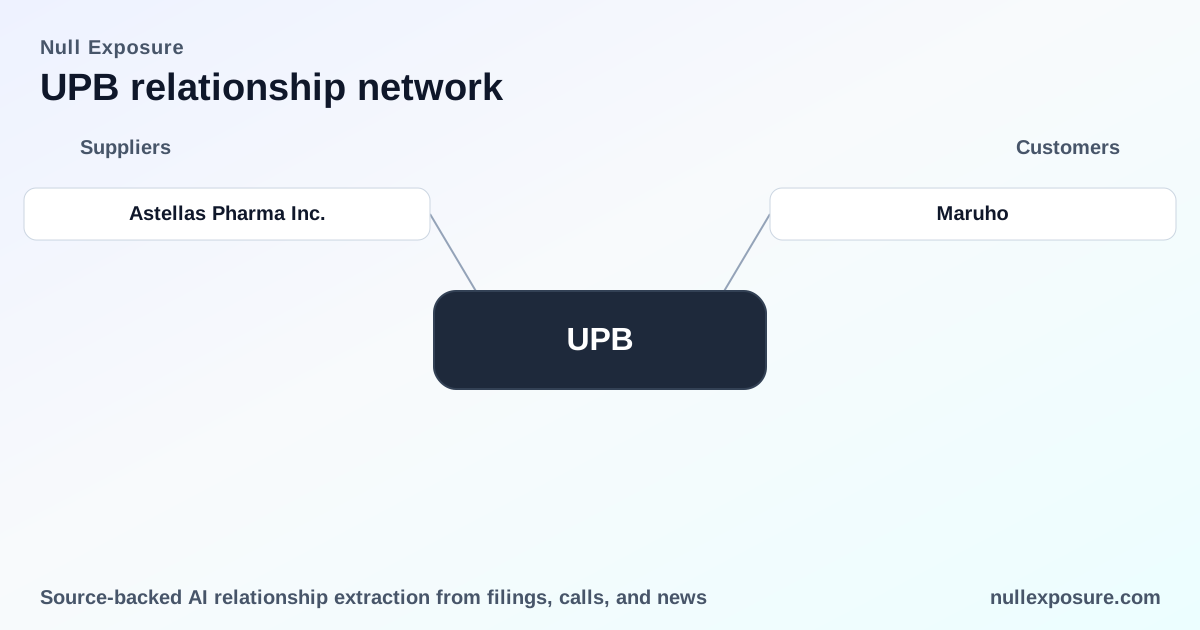
Upstream Bio (UPB): Supplier relationships that define commercialization risk and runway
Upstream Bio is a clinical-stage biotechnology company that monetizes by acquiring and advancing licensed therapeutic assets into clinical development, funding operations through equity markets and partnerships, and ultimately capturing value via product commercialization or out-licenses. The company’s operating model is driven by licensed intellectual property, outsourced manufacturing, and short-term service contracts, with material royalty obligations embedded in legacy licenses that will influence future margins and partner negotiations.
For investors and operators assessing supplier counterparty risk, this profile highlights the contracts that matter today and the financial contours that will shape development economics. For detailed supplier mapping and due diligence resources, visit https://nullexposure.com/.
The Astellas asset purchase: what investors need to know
Upstream acquired the therapeutic candidate verekitug from Astellas Pharma Inc. as part of a 2021 asset purchase. This transaction transferred ownership of the Compound to Upstream and is the proximate source of the company’s clinical-stage program. According to Upstream Bio’s FY2024 Form 10‑K, the company explicitly states it “acquired verekitug from Astellas Pharma Inc.” as the origin of the program (FY2024 10‑K).
Why it matters: the Astellas deal is the genesis of Upstream’s lead program and comes with legacy obligations tied to prior third‑party licenses, which affect future royalty and manufacturing commitments.
Regeneron and legacy royalty obligations that affect future margins
Upstream accepted surviving obligations that originated under a terminated Regeneron license as assigned through Astellas; as a result, the company is obligated to pay mid‑single‑digit percentage royalties on worldwide net sales of products containing the Compound. According to the company’s FY2024 10‑K, Upstream assumed these Regeneron-related royalty obligations when it acquired the asset (FY2024 10‑K).
Why it matters: these royalties are a persistent cost of goods/sales lever that will reduce long‑run product gross margins and constrain downstream pricing flexibility.
Lonza and Wuxi Biologics: licensing and manufacturing economics
Upstream entered a license with Lonza Sales AG in October 2021 that grants a worldwide, non‑exclusive, sublicensable license to Lonza IP; under that agreement the company also entered a sublicense with Wuxi Biologics (Hong Kong) Limited to manufacture the Compound. Upstream disclosed annual payments to Lonza of approximately $0.4–$0.5 million for 2023–2024 and stated that Lonza is owed royalties and annual payments payable in Swiss francs, potentially up to a mid‑six‑figure annual amount depending on manufacturing arrangements (FY2024 10‑K).
Source: Upstream Bio FY2024 Form 10‑K (disclosures on Lonza License Agreement and the Wuxi sublicense).
Why it matters: outsourcing manufacturing to a CDMO via a license/sublicense structure creates a predictable but non‑trivial fixed cash flow demand and introduces operational dependency on third‑party GMP compliance and capacity.
Contracting posture, spend profile, and geographic footprint — company‑level signals
Upstream’s procurement and service model shows several consistent characteristics:
- Contracting posture: licensing‑centric. The company’s relationship network is structured around intellectual property licenses (high confidence). These licenses carry royalty schedules, annual fees and sublicensing mechanics that will drive long‑term cost structure and negotiation leverage.
- Short‑term operational commitments. The company obtains many manufacturing and service inputs on a purchase‑order or cancellable basis without long‑term minimum purchase commitments; contracts for preclinical, clinical, and manufacturing services are generally terminable on notice. This creates flexibility but also operational concentration risk if a key provider becomes unavailable.
- Spend is material but not transformational. Reported payments to Lonza in recent years were in the $0.4–$0.5 million range, consistent with a mid‑six‑figure spend band for core manufacturing licenses. This level of spend is meaningful for a clinical‑stage biotech budget but does not reflect the large, multi‑million outsourcing commitments typical of late‑stage supply agreements.
- Global footprint and regulatory complexity. Clinical programs and royalty obligations are global; Upstream conducts trials and faces royalties on worldwide sales, which creates exposure to multi‑jurisdictional regulatory standards and foreign currency (Swiss franc) payment obligations.
These characteristics position Upstream as a licensed‑asset developer that outsources manufacturing and trials to CDMOs and CROs, trading long‑term commercial control for capital efficiency in clinical development.
How these relationships translate to investor risk and operational priorities
- Margin pressure from legacy royalties. The mid‑single‑digit royalty obligation to Regeneron and royalty/annual payments to Lonza are recurring cost drivers that will compress product margins versus a clean‑title asset.
- Single‑program concentration. The company’s value is concentrated in the acquired Compound; operational disruptions at a manufacturing or clinical partner would directly delay value creation.
- Flexibility vs. certainty. Short‑term, cancellable service contracts preserve cash control but increase execution risk; investors should value the tradeoff between lowered fixed commitments and potential supplier churn.
- Foreign‑currency and payment mechanics. Swiss franc‑denominated payments to Lonza introduce FX exposure that will impact cash burn and forecasting.
Key takeaway: Upstream’s supplier network and licensing architecture impose predictable recurring obligations and operational dependence on CDMOs and CROs; managing these counterparty relationships and the embedded royalty layers will determine commercialization economics and investor returns.
For a practitioner’s view of supplier exposure and to evaluate counterparty concentration across your portfolio, see NullExposure’s coverage at https://nullexposure.com/.
Quick reference — relationship snapshots (plain English + source)
- Astellas Pharma Inc.: Upstream acquired verekitug from Astellas in 2021, making Astellas the original seller of the Compound that underpins Upstream’s lead program; this is disclosed in Upstream’s FY2024 10‑K.
Source: Upstream Bio FY2024 Form 10‑K (asset purchase disclosures). - Regeneron (legacy license): Upstream assumed surviving royalty obligations originating from a terminated Regeneron license via the Astellas assignment and is required to pay mid‑single‑digit royalties on worldwide net sales of any Royalty Product containing the Compound.
Source: Upstream Bio FY2024 Form 10‑K (Regeneron Letter Agreement disclosures). - Lonza Sales AG: Upstream entered a worldwide, non‑exclusive license with Lonza in October 2021 and agreed to royalties and annual payments payable in Swiss francs; the company recorded annual payments to Lonza of about $0.4–$0.5 million in recent years.
Source: Upstream Bio FY2024 Form 10‑K (Lonza License Agreement disclosures). - Wuxi Biologics (Hong Kong) Limited: Under the Lonza framework, Upstream entered a sublicense with Wuxi to manufacture the Compound, creating a CDMO manufacturing pathway and related sublicense fees to Lonza.
Source: Upstream Bio FY2024 Form 10‑K (sublicense disclosures).
Bottom line for investors and operators
Upstream Bio is a licensed‑asset biotech whose supplier architecture is license‑heavy, CDMO‑reliant, and royalty‑laden. Execution risk centers on manufacturing continuity, royalty economics and the company’s ability to scale development without onerous fixed commercial commitments. The financial disclosures show modest, recurring supplier payments today but embedded obligations that will scale with commercial success. For tactical supplier due diligence and portfolio analytics, review NullExposure’s supplier intelligence at https://nullexposure.com/.
Actionable insight: prioritize scenario modeling that incorporates mid‑single‑digit royalties and mid‑six‑figure annual license fees into long‑term gross margin and break‑even forecasts; ensure contingency plans for CDMO replacement to protect development timelines.