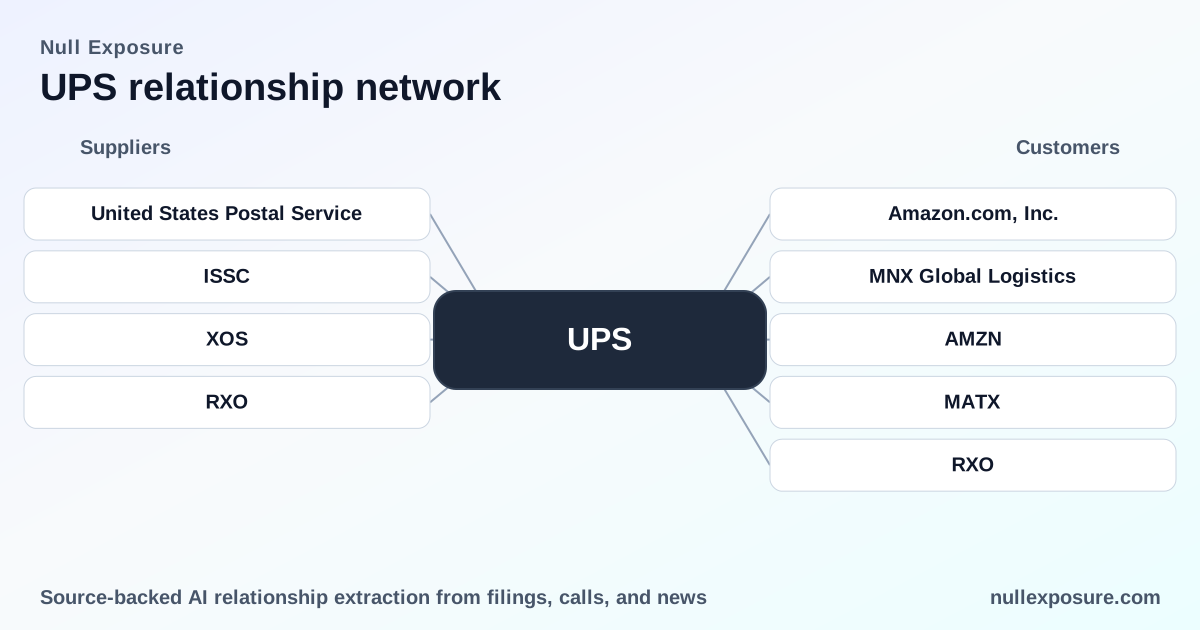
UPS supplier map: strategic partners, contract posture, and investor implications
UPS monetizes transportation, logistics and value‑added services by operating a global asset base combined with a broad network of contracted carriers and third‑party providers. Revenue comes from parcel and freight movement, logistics solutions and brokered transportation services, with margins driven by scale, routing efficiency, fuel and surcharge mechanics, and long‑term contractual relationships that transfer operational risk to counter‑parties where appropriate. Supplier relationships are therefore not peripheral — they are central to capacity, cost flexibility and the execution risk profile investors must price. For a concise supplier risk snapshot and to explore supplier exposures in depth, visit https://nullexposure.com/.
What the recent supplier signals reveal about UPS’s operating model
UPS operates as a hybrid integrator: it owns and operates a large portion of fleet and sortation assets while deliberately outsourcing selected functions to third‑party service providers and strategic suppliers. Company disclosures and market reporting together show a mix of active service provider engagements, periodic cybersecurity assessments of third parties, and contractually protected continuity where needed. Those signals translate into four pragmatic characteristics investors should track:
- Contracting posture: UPS uses a mixture of owned assets and third‑party service providers to manage capacity volatility and geographic reach. Company filings emphasize the use of independent contractors and third‑party carriers in transportation operations.
- Concentration and criticality: Some supplier relationships are strategic and high‑impact (brokered freight, last‑mile augmentation, and electrification partners), while many are transactional and replaceable.
- Maturity and tenure: Relationships range from multi‑year contracts that preserve continuity to newly formalized pilots that reflect route optimization or service expansion.
- Operational constraints: UPS conducts periodic cybersecurity and qualitative assessments of third‑party providers, indicating supplier governance is a material control area.
For a practical review of how these attributes map to named partners, see the relationship summaries below. If you want a deeper supplier risk profile, start here: https://nullexposure.com/.
Supplier snapshots: who UPS is working with and why it matters
United States Postal Service — last‑mile augmentation
UPS formalized a relationship with the United States Postal Service at the end of 2025Q4 to support last‑mile delivery of a product, signaling an arrangement that supplements domestic final‑mile capacity and leverages USPS reach. According to UPS’s Q4 2025 earnings call, the relationship was explicitly formalized to support last‑mile delivery.
Innovative Solutions and Support, Inc. (ISSC) — aftermarket products and commercial upgrades that touch UPS
Innovative Solutions and Support reported stronger first‑quarter product sales in FY2026 driven in part by aftermarket upgrades into commercial markets that include UPS and air transport, indicating UPS is a purchaser of certain aftermarket components or services tied to fleet or package‑handling equipment. A FY2026 earnings transcript noted product sales to commercial markets including UPS.
Xos (XOS) — electrification supplier and fleet customer list inclusion
Industry reporting lists UPS among Xos’s blue‑chip fleet customers, placing UPS in the cohort of early adopters for electric commercial vehicles and suggesting UPS is engaging with EV OEMs as part of its fleet transition strategy. An Electrek report from February 2026 named UPS on Xos’s client list that also includes other logistics fleets.
RXO — post‑divestiture brokered transportation continuity
RXO’s acquisition of Coyote Logistics from UPS transfers ownership while explicitly preserving UPS’s brokered transportation sourcing: RXO will continue to serve UPS under a contract that runs through January 2030, ensuring continuity of brokered freight services after the divestiture. A March 2026 industry article covering the RXO‑Coyote transaction reported the contract term through January 2030.
How the company‑level constraints influence investment analysis
Company‑level signals from UPS’s governance and disclosures highlight two relevant constraints: a service‑provider posture and an active relationship stage for third‑party engagements. These are not tied to a specific supplier in the disclosures but represent enterprise‑level supplier governance:
- The description that UPS utilizes independent contractors and third‑party carriers characterizes the company as a mixed model operator — owning core assets while depending on contracted capacity for flexibility. That reduces fixed cost leverage during demand downturns but increases counterparty and operational risk in peak seasons.
- UPS’s mention of periodic cybersecurity and technical assessments of third‑party providers is a governance control, signaling material counterparty risk in software, telemetry and supplier‑operated nodes. Investors should treat supplier cybersecurity posture as an earnings risk factor rather than a compliance footnote.
Together these constraints imply UPS is managing a deliberate trade‑off: flexibility and scale against reliance on external providers for critical execution, and a governance program aimed at mitigating the resulting operational exposures.
Portfolio implications and near‑term watchlist
For investors evaluating UPS exposure, the recent supplier signals create three actionable areas of focus:
- Contract durability and tail risk: The RXO arrangement preserves brokered freight continuity through 2030 — a positive for short‑term execution. Investors should model the potential margin and volume effects once the contract expires.
- Electrification and capex cadence: Partnerships with EV OEMs like Xos signal fleet transition capex and operational pilot risk; monitor adoption rates, TCO improvements and maintenance contract scopes.
- Third‑party operational risk: The USPS last‑mile engagement and use of independent carriers shift delivery execution outside UPS’s fully owned network; monitor on‑time performance, cost per parcel, and third‑party cybersecurity outcomes.
For a structured supplier exposure review and custom alerts, see https://nullexposure.com/ and consider integrating supplier risk monitoring into your model.
Investment posture: recommendations for analysts and operators
- Stress‑test peak season throughput assuming increased reliance on third‑party carriers and quantify the probability of margin compression from subcontractor rate changes.
- Track contract expirations (notably the RXO arrangement through January 2030) and model both renewal price risk and the operational cost of onshoring capacity if contracts are not renewed.
- Include supplier cybersecurity and telematics reliability as line items in scenario analyses for late‑stage delivery risk.
For professional supplier intelligence and continuous monitoring, visit https://nullexposure.com/ to get started.
Bottom line
UPS executes a deliberate hybrid model: owned scale where it yields operational control and contracted partnerships where flexibility and reach matter most. Recent relationship disclosures — from a formalized USPS last‑mile arrangement to continued brokered freight service via RXO, and engagements with aftermarket and EV suppliers — illustrate a strategic supplier mix that supports growth while exposing UPS to counterparty and governance risks. Investors should price in both the upside of flexible capacity and the downside of third‑party execution and cybersecurity exposures.