URBN Supplier Map: What Investors and Operators Need to Know
Urban Outfitters, Inc. (URBN) operates as a multi-brand retail platform that monetizes through retail sales, brand portfolio rollups, outlet and subscription channels, and strategic partnerships. The company combines owned brands (Urban Outfitters, Anthropologie, Free People, Nuuly) with third‑party suppliers and private‑label manufacturers to source merchandise and run omnichannel distribution; profits flow from margin capture on merchandise, store and e‑commerce revenue, and operating leverage from real estate and fulfillment investments. For a quick way to track supplier exposure and partner signals, visit https://nullexposure.com/.
How URBN contracts and sources — the operating model in plain terms
URBN runs a mixed contracting posture that balances long‑term real estate commitments with short‑cycle vendor procurement. Public filings document store leases with initial terms of 5–15 years and a major fulfillment center lease in Raymore, Missouri, that runs to January 2039 with renewal options, which locks in fixed operational capacity and real estate costs. At the same time, vendor purchases are handled through short‑term purchase orders that are primarily satisfied within 12 months, giving URBN trading flexibility to refresh assortments and react to consumer trends.
The company purchases from approximately 4,000 vendors worldwide, and URBN explicitly uses agents and third‑party manufacturers to produce private‑label and exclusive merchandise. Filings list active commitments for unfulfilled purchase orders and services totalling $888,264 as of January 31, 2025. Metadata signals also flagged a high spend‑band indicator, but the filed disclosure provides the concrete commitment figure above — treat the filing number as the operative fact when modelling near‑term cash flows.
- Key operating signals: long‑dated real estate exposure, short procurement cycles for merchandise, global vendor diversification, and reliance on third‑party manufacturers for private labels.
Supplier and partner roster: the named relationships investors should note
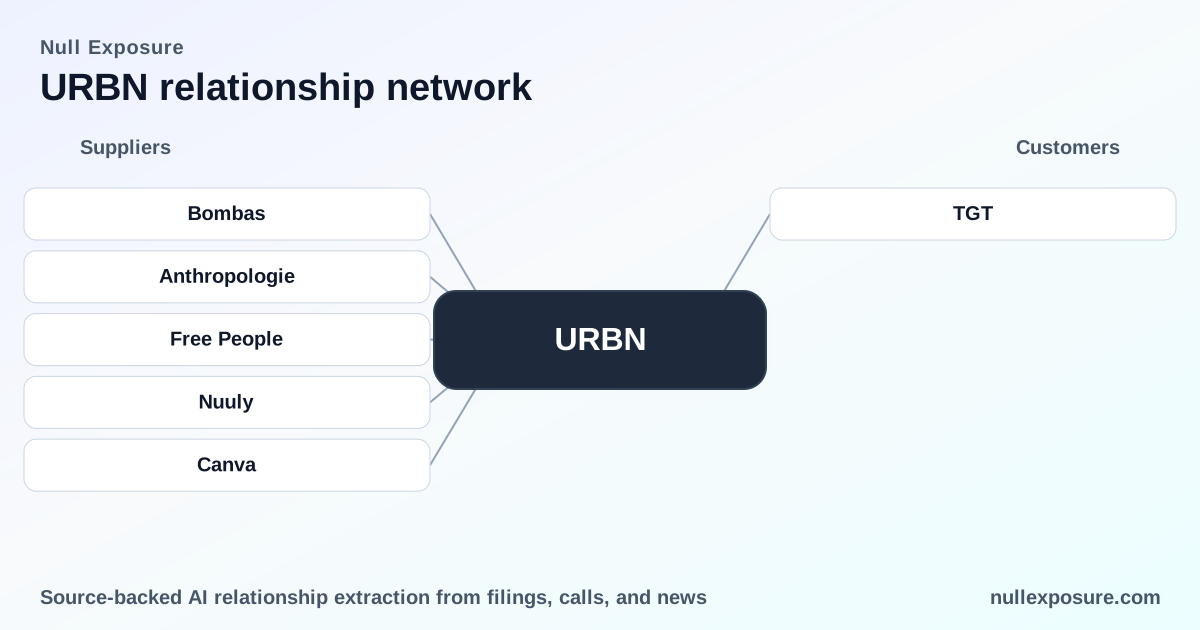
Below are every supplier/partner mention surfaced in the source materials, with a concise investor‑oriented summary and source reference.
Bombas
Bombas supplied apparel to URBN in fiscal years 2023, 2024 and 2025, indicating a recurring vendor relationship for apparel merchandise. According to URBN’s FY2025 Form 10‑K, Bombas is listed among suppliers that provided goods to the company in those fiscal years (URBN FY2025 10‑K).
Anthropologie
Urban Outfitters operates an outlet concept called Reclectic that sells inventory drawn from Urban Outfitters and its sister brands, including Anthropologie, as part of a cross‑brand discount strategy. A local press report described Reclectic’s assortment strategy when announcing a new outlet opening (GlensideLocal, March 2026).
Free People
Free People goods are included in the Reclectic discount outlet merchandise pool, reflecting internal inventory flow across URBN’s brand portfolio to optimize sell‑through at outlet locations. The Reclectic concept and its brand mix were detailed in the same regional news coverage (GlensideLocal, March 2026).
Nuuly
Nuuly, URBN’s rental/subscription arm, feeds inventory into the Reclectic outlet concept as part of brand and channel rotation to extend product life and recapture value from used or off‑assortment items. The GlensideLocal article on the Reclectic launch mentions Nuuly among the brands represented (GlensideLocal, March 2026).
Canva
URBN established a retail partnership with Canva and served as Canva’s first retail partner, a relationship positioned to drive discovery and wish‑list functionality among younger shoppers. Management highlighted this partnership on the Q4 FY2026 earnings call, noting Canva’s role in teen gift‑list behavior and its retail integration (Q4 FY2026 earnings call transcript, InsiderMonkey, March 2026).
What the relationship list tells investors about concentration and criticality
The named relationships combine third‑party suppliers (Bombas), intra‑company brand flows (Anthropologie, Free People, Nuuly), and digital platform partnerships (Canva) — a mix that speaks to URBN’s hybrid sourcing and merchandising strategy. Two investor implications stand out:
- Diversified vendor footprint reduces single‑supplier concentration risk. URBN’s public disclosure of roughly 4,000 vendors distributes procurement risk across many suppliers, lessening the impact of any single vendor disruption on overall merchandise availability.
- Real estate and logistics are critical single points of operational leverage. Long‑term store leases and the Raymore fulfillment center lease through 2039 create fixed commitments that amplify margin sensitivity to sales volatility and occupancy economics.
Risk profile and supply‑chain characteristics investors must model
Model URBN’s supplier exposure around four structural features:
- Contracting mix: Long‑term real estate leases create fixed cost obligations while short‑term purchase orders allow inventory flexibility. That combination increases operating leverage and makes top‑line performance the primary driver of supplier‑related cash flow stress.
- Global sourcing: Purchasing from thousands of vendors worldwide provides assortment breadth but introduces standard global supply-chain risks — lead‑time variability, tariff and freight volatility, and manufacturing concentration by product category.
- Third‑party manufacturing for private labels: Outsourcing production to contract manufacturers reduces capital absorption but raises quality, compliance, and scheduling dependencies that directly affect seasonal assortment delivery.
- Digital partnership dependency for discovery: Partnerships like Canva expand customer reach, particularly among younger demographics, and inject a non‑traditional supplier/partner dynamic that is strategic rather than purely transactional.
In mid‑cycle or downside scenarios, the fixed lease book and fulfillment center commitments will be the primary stressors; vendor POs are short enough to trim, but real estate costs are less flexible.
For a structured, investable view of supplier concentration and counterparty exposure, run a supplier‑by‑spend overlay on top of the contractual posture described above — more details and tooling are available at https://nullexposure.com/.
What investors and operators should do next
- Build scenario models that stress occupancy and fulfillment center costs against a range of sales outcomes, since long‑term leases materially increase operating leverage.
- Triangulate vendor criticality by product category (apparel vs. private label) to identify suppliers whose disruption would meaningfully impair revenue.
- Monitor brand‑level cross‑flow tactics (Reclectic outlet and Nuuly rotation) as margin recapture levers that can shorten inventory days and improve gross margin if executed at scale.
For a vendor risk scorecard and continuous monitoring setup that maps names like Bombas, brand flows (Anthropologie/Free People/Nuuly), and strategic partners like Canva to balance‑sheet and cash‑flow impacts, see the services at https://nullexposure.com/.
Bottom line
URBN’s supplier picture is broad and operationally engineered for flexibility: thousands of global vendors and short‑term POs underpin merchandising agility, while long‑dated real estate and a major fulfillment center create persistent fixed‑cost exposure that amplifies downside risk. Strategic partnerships and intra‑brand inventory circulation are positive levers for margin recovery, but investors must model both the benefits of brand synergy and the constraints imposed by the lease portfolio. If you want a concise supplier exposure brief tailored to URBN’s lease and supplier data, start here: https://nullexposure.com/.