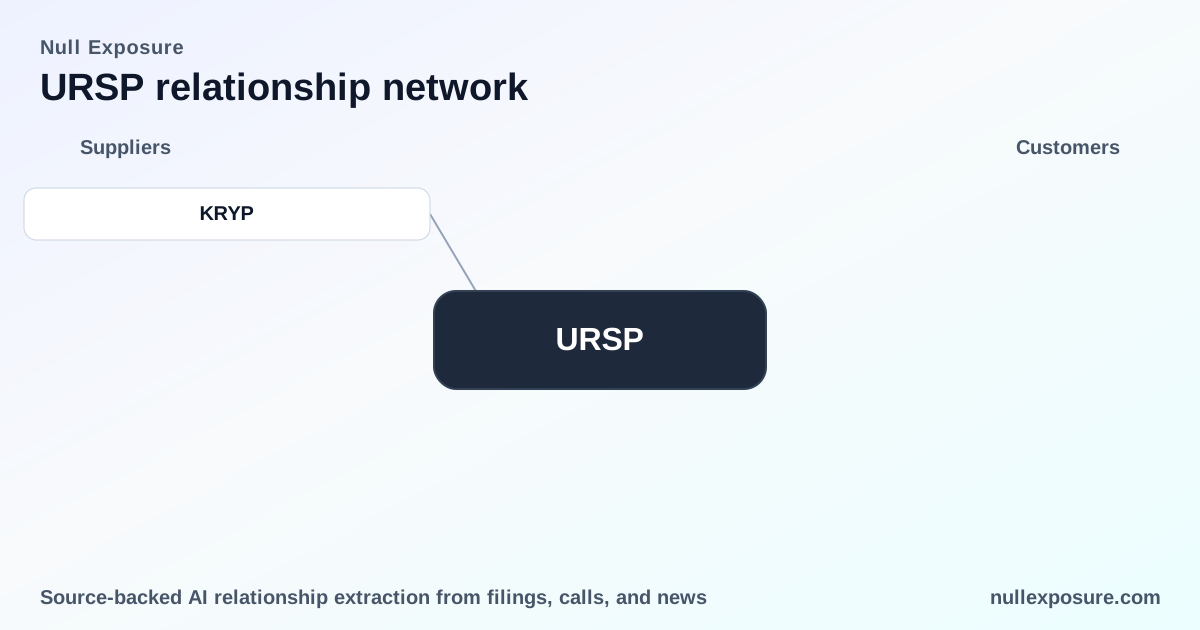
URSP: A concise supplier map and what investors should know
Thesis: URSP is a ProShares-managed leveraged exchange-traded fund that provides 2x exposure to an equal-weight S&P 500 strategy, monetizing through management fees, expense ratios, and trading-related revenues (bid/ask spread capture and securities lending where applicable). For investors and operators assessing supplier relationships, the fund behaves like a product platform: its economics are driven by asset flows, fee capture, and the operational partners that execute portfolio construction, execution, and custody. For a high-level supplier audit and ongoing monitoring, focus on the fund sponsor, execution counterparties, and the fund’s stage of market entry. For more supplier intelligence, see https://nullexposure.com/.
How URSP is structured and how it makes money
URSP is not a standalone operating company but a listed fund product under the ProShares family. Revenue for the sponsor is generated directly from the fund’s expense ratio and indirectly from the trading activity it induces—higher AUM increases fee income while higher turnover increases execution and market-making activity that can generate ancillary revenue. The product launched publicly in March 2026, positioning it as a new entrant in the leveraged equal‑weight ETF space, and its commercial success will depend on distribution, marketing, and how the market values equal-weight exposure versus cap-weighted alternatives. According to ETF Trends, ProShares introduced the ProShares Ultra S&P 500 Equal Weight ETF (URSP) on March 10, 2026.
For quick access to supplier profiles and relationship analysis, visit https://nullexposure.com/.
One-page supplier list: who the fund relies on
Every relationship disclosed in the available coverage is summarized here so investors and operators can see the direct sponsor link and initial public signals.
- ProShares — ProShares launched the ProShares Ultra S&P 500 Equal Weight ETF under the ticker URSP on March 10, 2026; the sponsor is the fund’s manager and primary commercial counterparty, responsible for product design, distribution, and fee collection. According to ETF Trends (March 10, 2026), ProShares added URSP to its suite of leveraged funds as a 2x equal‑weight S&P 500 vehicle.
This is the complete set of relationships surfaced by public coverage at the time of analysis.
What the relationship list implies for contracting and concentration
With no additional suppliers explicitly surfaced in the public results, investors should treat the following company-level signals as the baseline operating model characteristics for URSP:
-
Contracting posture: As a standard ETF product, contracting with the sponsor is market-facing and scalable; counterparties (authorised participants, market makers, custodians) typically operate under routine master agreements used across ETF listings rather than bespoke long-term exclusives. This produces relatively low vendor lock-in on execution services but concentrates commercial importance in the sponsor for distribution and client access.
-
Concentration: Sponsor concentration is high by design—the fund’s economics and policy are centralized with ProShares. Operational concentration in execution/market‑making and custody is typical for ETFs but not explicitly named in the available coverage; expect reliance on established vendors where counterparty selection will materially affect tracking and liquidity.
-
Criticality: The sponsor–fund relationship is critical: product design, expense structure, and marketing drive inflows and therefore fee revenue. Operational partners (execution, clearing, custody) are mission-critical for intraday liquidity and settlement.
-
Maturity: URSP is newly launched (March 2026), so the product is in the early commercial phase; meaningful AUM, distribution reach, and operational cadence are still forming, which elevates monitoring needs around liquidity and tracking metrics in the near term.
Key operational and investment risks to monitor
Investors evaluating supplier risk should track a concise set of indicators:
-
Liquidity and market microstructure risk. Leveraged ETFs require continuous intraday rebalancing and depend on market makers and authorized participants for liquidity. Monitor spreads, quoted sizes, and NAV discount/premia.
-
Counterparty exposure in derivatives and borrowing. Leveraged exposure is typically achieved via swaps, futures, or other derivatives; the credit and operational strength of execution counterparties influence fund resilience under stress.
-
Tracking error and expense drag. Leveraged equal-weight strategies face rebalancing and compounding effects that increase tracking variance versus the target multiple; the fund’s expense ratio directly reduces investor returns and funds sponsor revenue.
-
Regulatory and product risk. Leveraged products receive targeted scrutiny; ongoing regulatory developments can change disclosure or operational requirements for sponsors and counterparties.
-
Distribution concentration. Early-stage funds depend on a mix of distribution channels—ETF platforms, advisory wrappers, and institutional channels. Sponsor relationships with distribution partners will materially affect growth.
Practical monitoring checklist for operators and investors
Maintain a short, repeatable monitoring cadence to convert supplier relationships into actionable signals:
- Weekly: quoted spreads, quoted sizes, and intraday NAV vs. market price.
- Monthly: AUM growth, turnover, and fee revenue trajectory reported by the sponsor.
- Quarterly: counterparty roster for swaps/futures and any changes to authorized participants or custodial arrangements.
- Event-driven: tracking sponsor announcements, regulatory notices, or market disruptions that affect leveraged instruments.
A compact checklist helps prioritize vendor due diligence and escalation.
For more in-depth supplier relationship profiles and ongoing coverage, visit https://nullexposure.com/.
Bottom line: what investors should do now
URSP is a sponsor-driven, newly launched 2x equal‑weight S&P 500 ETF whose primary supplier relationship is with ProShares. That relationship determines product economics, distribution, and the fund’s public positioning; other execution and custody partners exist but were not disclosed in the initial public reporting. For investors and operators, prioritize real‑time liquidity metrics and counterparty disclosures during the fund’s formative months, and treat sponsor announcements as the leading indicator of commercial trajectory. If you want a consolidated view of sponsor and supplier relationships across listed products, the most efficient next step is a dedicated supplier review at https://nullexposure.com/.