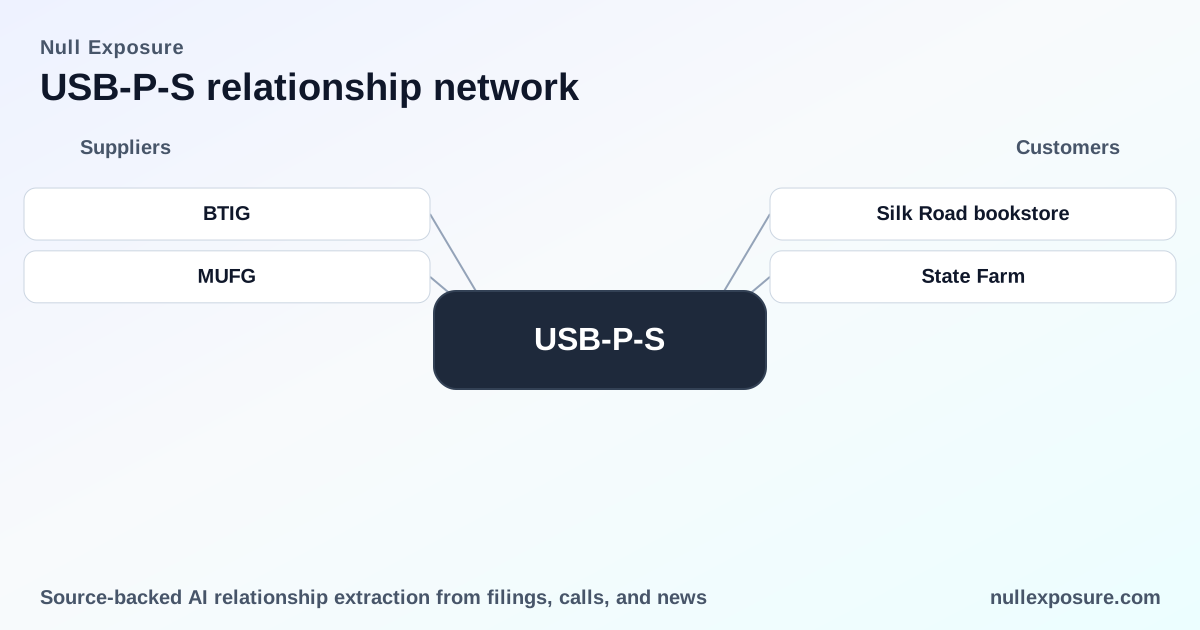
USB-P-S (U.S. Bancorp Preferred) — Supplier Relationships and Investor Implications
U.S. Bancorp operates as a diversified bank holding company that monetizes through deposit gathering, lending, payment processing, trust and custody services, and capital markets intermediation; the preferred security USB-P-S reflects a capital structure slab that supports those banking operations while delivering a fixed-income-like claim to investors. For holders and counterparties, the company’s supplier relationships — referral partners in equity capital markets and custody/debt-servicing counterparties — are meaningful signals about how U.S. Bancorp sources business, offloads operational complexity, and reinforces capital-market distribution channels. Learn more about supplier exposure and third‑party dynamics at https://nullexposure.com/.
What the relationships tell investors about how revenue and distribution are sourced
U.S. Bancorp leverages third parties to extend market reach and to manage non-core operational flows. That approach does two things: it amplifies origination and fee income through referral networks while also concentrating operational risk where custody and servicing contracts transfer asset administration to or from other banks. Investors should view supplier relationships as both growth multipliers and concentrated operational dependencies — the former supports fee diversification, the latter creates counterparty exposure that affects loss-absorption and funding flexibility.
Relationship roster: who U.S. Bancorp is working with (and why it matters)
- BTIG — The firms have worked together since 2014 when BTIG became U.S. Bancorp’s equity capital markets referral partner, a long-running referral link that helps U.S. Bancorp capture fee flows from equity issuances without building in-house origination at scale. According to a GlobalTrading write-up referencing activity in FY2026, this arrangement underpins part of U.S. Bancorp’s capital-markets distribution strategy (GlobalTrading, FY2026).
- MUFG Union Bank — U.S. Bancorp executed a deal to acquire a debt servicing and securities custody portfolio from MUFG Union Bank, a transaction that transfers custody and servicing scale into U.S. Bancorp’s platform and strengthens fee-bearing assets under administration. American Banker reported the portfolio acquisition in the context of branch consolidation and digital migration (American Banker, FY2021).
Why these two relationships matter to preferred‑security investors
Both relationships reflect distinct strategic plays:
- The BTIG referral partnership is a distribution and origination lever: it lets U.S. Bancorp monetize referral flows without bearing the full capital or expense burden of primary equity origination. That supports fee income stability and access to corporate clients, which is favorable for the credit profile underpinning preferred claims.
- The MUFG custody/servicing portfolio acquisition is an asset-gathering and scale play: buying custody or servicing portfolios increases fee-bearing liabilities and operational scale but raises integration and counterparty concentration risks that investors must price into preferred security returns.
Operating model signals and business‑model constraints
No explicit third‑party contractual constraints were provided in the supplier data payload; as a company-level signal, that absence itself is informative. In practice, U.S. Bancorp’s supplier posture shows the following characteristics:
- Contracting posture: strategic and long-term, favoring referral partnerships and asset purchases rather than short-term vendor outsourcing; the BTIG relationship since 2014 exemplifies this preference for durable commercial ties.
- Concentration: targeted concentration in capital-markets distribution and custody/servicing capabilities rather than diffuse vendor networks; acquisitions like the MUFG portfolio signal emphasis on building scale through selective counterparty transactions.
- Criticality: high operational criticality for custody and servicing contracts — these relationships are not ancillary; they affect fee income and operational continuity when transferred between institutions.
- Maturity: moderately mature third-party relationships, with referral ties established for multiple years and portfolio acquisitions indicating an evolution from referral-based origination to custody/servicing scale.
These characteristics together imply a supplier strategy that trades variable operating cost for strategic depth and fee capture, with attendant concentration risk that investors in preferred stock should monitor.
Key investment implications and risk checklist
- Fee diversification vs. concentration: Referral arrangements like BTIG expand fee reach without large capital commitments, supporting the stability of preferred‑level coverage, but they centralize market-access exposure to a few partners.
- Operational and integration risk: Portfolio acquisitions (e.g., MUFG custody assets) raise short-term integration costs and operational risk that can pressure earnings volatility if execution falters.
- Counterparty credit and reputational exposure: Dependence on external custodians and servicing agreements raises counterparty risk; stress at a major partner could cascade to fee interruption or remediation costs.
- Strategic flexibility: The company’s willingness to buy portfolios and keep long-term referral ties signals strategic flexibility to scale fee-bearing assets — a positive for long-run preferred-holders provided integration is disciplined.
Consider these items when modeling preferred security coverage: fee income stability, tangible goodwill or integration costs from acquisitions, and the concentration of distribution partners.
Actionable next steps for investors and operators
- Review counterparties named in filings and press coverage for tenure and dispute history; long-standing partners have different risk profiles than newly negotiated contracts.
- Stress-test preferred-income coverage under scenarios where referral flow reduces by 20–30% or where custody portfolios experience integration delays.
- Engage with management disclosures on integration timelines and expected run-rate fee contributions from acquired portfolios.
For a more systematic exposure analysis and to see how supplier relationships influence capital structure, visit https://nullexposure.com/ and explore supplier risk profiles.
Final takeaway
U.S. Bancorp’s supplier posture is selective and strategic: long-term referral partnerships like BTIG support distribution and fee growth, while custody and servicing portfolio acquisitions such as the MUFG transaction expand fee-bearing scale but increase integration and counterparty risk. Preferred investors should price in both the upside of diversified fee capture and the downside of concentrated operational dependencies. For a concise supplier exposure assessment tied to capital structure, go to https://nullexposure.com/ — it’s the quickest way to map third-party links into credit-sensitive scenarios.