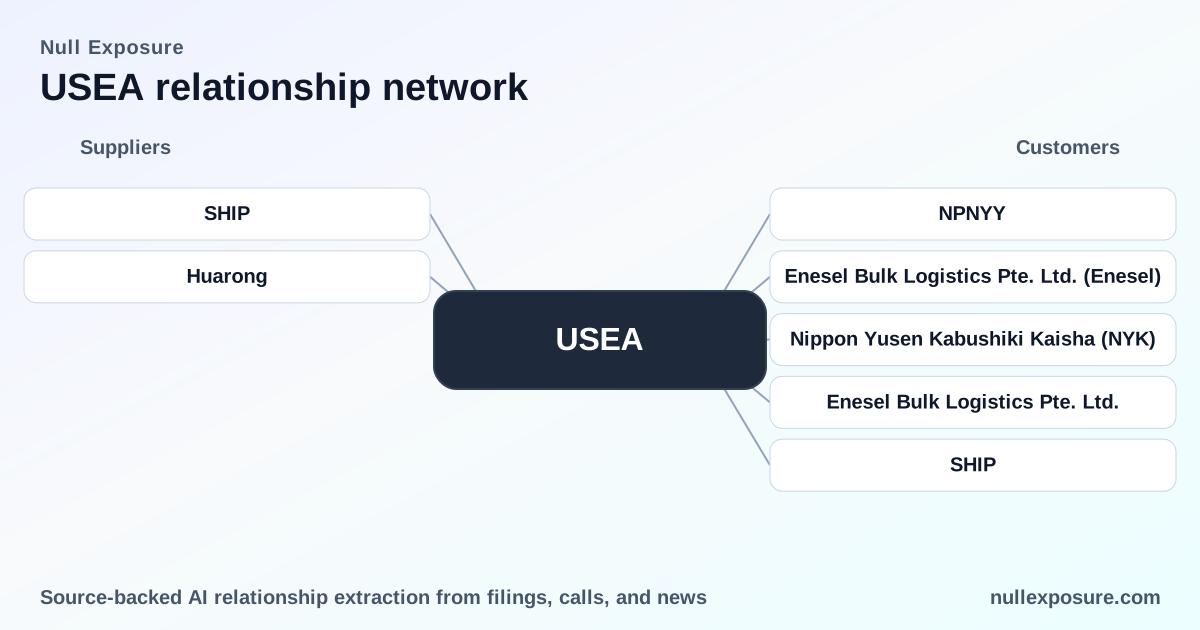
United Maritime (USEA) — supplier relationships and operational posture investors should price in
United Maritime Corporation operates and monetizes as a small-cap, asset-light/asset-managed dry-bulk shipping owner-operator: it acquires, charters and sells vessels, collects freight and charter revenues, and supplements liquidity through short-term financing and sale-leaseback structures. The company's cash generation is highly cyclical and tied to vessel utilization and freight rates, while its balance sheet management relies on transactional counterparty arrangements for working capital and fleet flexibility. Investors should evaluate counterparty tenor, capital concentration and the frequency of financing-driven transactions as primary drivers of operational risk and near-term liquidity.
Explore deeper supplier relationship mapping and risk signals at https://nullexposure.com/.
What to know first: how these supplier ties affect the P&L and balance sheet
United Maritime runs a commercially focused shipping business where supplier relationships are operationally and financially consequential. Charter counterparties deliver revenue via time or voyage charters; financial counterparties deliver liquidity through loans, sale-leaseback facilities, and purchase options that change balance-sheet composition. Short-tenor financing and frequent charter turnover compress operational predictability and increase refinancing risk, while strategic purchases of sale-leaseback vessels reduce charter dependency but require access to capital markets.
If you want a consolidated supplier-risk view for investment decisions, visit https://nullexposure.com/ for portfolio-level analytics and supplier scoring.
The relationships you must price in (each one covered)
Below are every supplier relationship captured in the source material, each summarized in plain English with the supporting citation.
-
Seanergy Maritime Holdings Corp. — short-term charter for Capesize vessel and bridge financing. United Maritime executed an 18-month bareboat charter with Seanergy for a 2010-built Japanese Capesize dry-bulk vessel of 181,453 dwt, a transaction that supplies immediate operational capacity while offloading commercial and technical risk to the charterer (GlobeNewswire, Feb 17, 2026). In addition, Seanergy provided a $2.0 million short-term bridge loan to fund an ECV project; that bridge loan was fully repaid on June 17, 2025 (United Maritime Q2 financial results, Aug 6, 2025; industry coverage in RivieraMM, FY2025).
Sources: GlobeNewswire news release (Feb 17, 2026) and United Maritime quarterly filing via GlobeNewswire (Aug 6, 2025); RivieraMM industry coverage (FY2025). -
Huarong — sale-and-leaseback purchase option exercised for M/V Gloriuship. In June 2025 United Maritime exercised a purchase option under a Huarong sale-and-leaseback arrangement, acquiring the M/V Gloriuship for $7.6 million, which altered the company’s asset base by converting a leased vessel back to owned status (United Maritime Q2 financial results, Aug 6, 2025).
Source: United Maritime quarterly filing via GlobeNewswire (Aug 6, 2025).
What these supplier ties signal about United Maritime’s operating model
Treat these supplier interactions as operational levers rather than passive vendor relationships. The recorded activity shows: short-term liquidity injections, tactical fleet charters, and use of sale-leaseback mechanics to optimize balance-sheet composition. Those choices drive two investor-relevant realities:
- Contracting posture: predominantly transactional. Multiple short-tenor instruments (bridge loans, 18-month bareboat charters, sale-leaseback exercises) indicate United Maritime structures suppliers and financiers on transactional terms to preserve optionality rather than long-dated strategic partnerships.
- Concentration and criticality: moderate but focused. The supplier set reflected in public disclosures is small; a handful of counterparties provide capital and fleet access, which concentrates counterparty risk without necessarily creating single-point operational failure.
- Maturity: mixed. The presence of both short-term bridge financing and executed purchase options shows a blend of tactical financing and longer-lived asset ownership choices—suggesting a mid-stage capital strategy that alternates between leasing and owning to optimize returns and balance-sheet metrics.
These are company-level signals derived from public filings and news—no supplier-specific constraint report was provided in the source set.
Risk implications investors should weigh
- Refinancing and liquidity risk: Reliance on short-term bridge loans and short-charter tenors increases sensitivity to market dislocations in dry-bulk rates or credit spreads.
- Counterparty exposure: Concentrated relationships with a limited number of capital providers and charter counterparties mean a deterioration at one supplier could produce outsized operational disruption.
- Balance-sheet volatility: Frequent sale-leaseback activity and exercised purchase options reclassify assets and liabilities in ways that can materially change leverage ratios quarter-to-quarter.
What to watch next and tactical investor actions
- Track disclosures for additional short-term financing events and charter commencements/terminations—those are the fastest signals of changing liquidity posture.
- Monitor charter backlog and fleet utilization in subsequent quarterly filings; changes will directly affect revenue volatility and covenant headroom.
- Evaluate counterparty health where possible (credit ratings, market footprint) to gauge secondary risk from concentrated suppliers.
For a systematic supplier-risk framework and ongoing monitoring, see the firm-level service at https://nullexposure.com/.
Final takeaways for portfolio allocation
United Maritime operates in a capital-intensive, cyclical industry and runs a supplier network that is lean, transactional, and strategically used to manage fleet exposure and near-term liquidity. The two financing patterns shown—bridge lending and sale-leaseback purchase options—are consistent with a company that flexes ownership and lease positions to optimize short-term returns but increases exposure to refinancing cycles. Investors should price in elevated refinancing risk and concentrated counterparty exposure when setting valuations or sizing positions.
If you want an actionable supplier-risk scorecard and ongoing alerts tailored to maritime counterparties, visit https://nullexposure.com/ for more detailed analytics and subscription options.