Universal Insurance Holdings (UVE): Reinsurance Suppliers and What Investors Should Know
Universal Insurance Holdings operates as an integrated property & casualty insurance group concentrated in coastal and hurricane-exposed geographies. The company underwrites personal and commercial lines and monetizes by retaining underwriting profit while transferring peak catastrophic risk through annually renewed reinsurance programs, supplemented by third‑party adjusters for claims handling. For investors, the economics hinge on loss volatility mitigation via reinsurance strength and counterparty quality. For an up-to-date view of supplier relationships and credit exposure, see https://nullexposure.com/.
How UVE structures risk transfer and why it matters to returns
Universal reduces its balance-sheet volatility by buying catastrophe excess-of-loss reinsurance and other protections that are typically reset annually. The company’s 2024 10‑K states that reinsurance commitments generally run from June 1 to May 31, establishing a predictable contracting cadence that aligns with the hurricane season. That short‑term contracting posture gives management flexibility to adjust capacity and pricing each year, but it also creates roll‑risk when market conditions harden or counterparties retreat.
The FY2024 filing also makes two business-model points relevant to investors:
- UVE treats a mix of traditional reinsurers, alternative capital (e.g., catastrophe bonds), and government backstops as core components of its mitigation strategy, which lowers tail risk but increases dependence on strong reinsurer capital markets.
- UVE relies on third‑party adjusters to scale claims handling during peak events, reinforcing the operational importance of supplier networks beyond capital providers.
If you want a concise supplier map and counterparty credit view, start here: https://nullexposure.com/.
Quick scan of the reinsurance counterparties listed in the 2024 10‑K
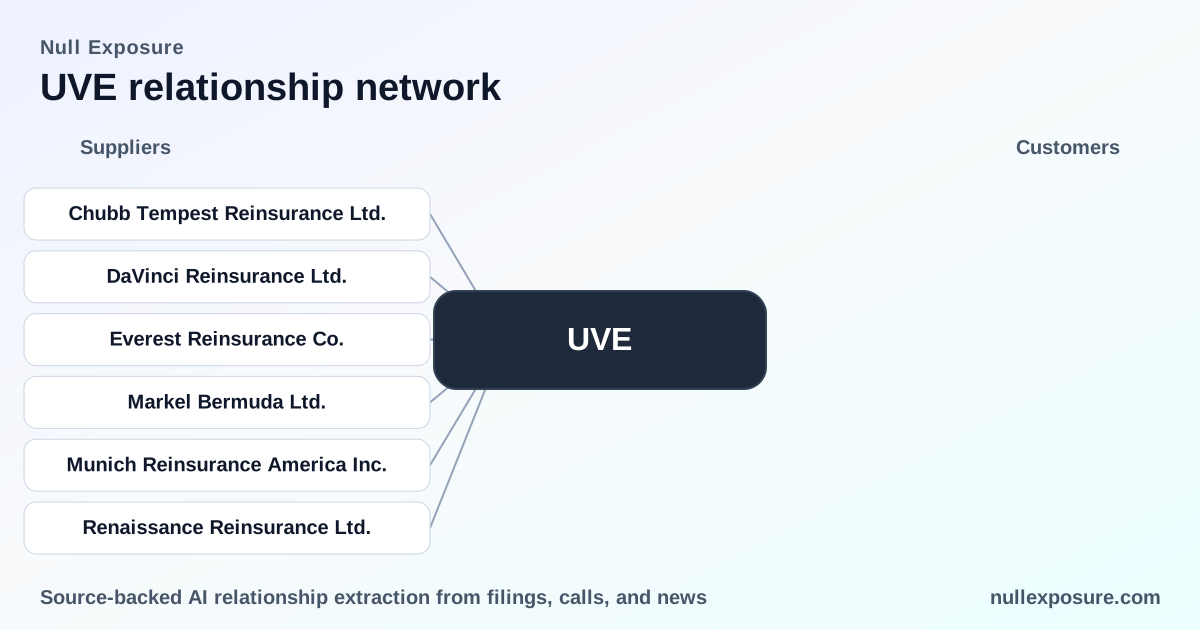
Below are the third‑party reinsurers UVE identifies as among the largest rated participants in its Insurance Entities 2024–2025 program. Each entry includes a 1–2 sentence plain‑English summary and the source.
Chubb Tempest Reinsurance Ltd.
Chubb Tempest Reinsurance Ltd. is listed among UVE’s largest rated third‑party reinsurers and is shown with A.M. Best A++ and S&P AA ratings, indicating top-tier credit strength supporting UVE’s excess‑of‑loss layers. This counterparty provides high‑quality capacity for catastrophe covers, as disclosed in UVE’s FY2024 Form 10‑K.
DaVinci Reinsurance Ltd.
DaVinci Reinsurance Ltd. appears in the same reinsurer table with A.M. Best A and S&P A+ ratings, supplying rated reinsurance capacity to UVE’s program and contributing to diversification of risk transfer across rated panels. UVE’s FY2024 10‑K lists DaVinci among its principal external reinsurers.
Everest Reinsurance Co.
Everest Reinsurance Co. is included with A.M. Best A+ and S&P A+ ratings and serves as a rated traditional reinsurer in UVE’s catastrophe program, backing portions of excess‑of‑loss protection detailed in the FY2024 10‑K. Everest’s involvement signals access to global reinsurance markets and experienced catastrophe capacity.
Markel Bermuda Ltd.
Markel Bermuda Ltd. is listed with A.M. Best A and S&P A ratings and participates in UVE’s reinsurance layers, offering Bermuda‑domiciled capacity that complements other rated reinsurers in the portfolio, according to the FY2024 10‑K.
Munich Reinsurance America Inc.
Munich Reinsurance America Inc. is shown with A.M. Best A+ and S&P AA ratings, representing another strong, highly rated reinsurer in UVE’s program and contributing significant capacity to manage peak storm exposures, per the FY2024 10‑K.
Renaissance Reinsurance Ltd.
Renaissance Reinsurance Ltd. is named with A.M. Best A+ and S&P A+ ratings and acts as a rated participant in UVE’s reinsurance program, providing additional rated capacity for UVE’s catastrophe excess‑of‑loss structure as disclosed in the FY2024 10‑K.
What these relationships collectively signal about UVE’s operating model
UVE’s counterparty list reads like a cross‑section of the highly rated reinsurance market, which drives several investor‑relevant conclusions:
- Counterparty quality is high. UVE’s program leans on several A/A+ and higher rated reinsurers (Chubb Tempest, Munich Re, Everest, Renaissance), which reduces credit risk on recoverables and supports capital efficiency.
- Contracts are short‑term and actively managed. The annual June‑to‑May renewal cadence gives UVE tactical flexibility to rebid layers and optimize cost of reinsurance, but it also creates exposure to episodic market price swings.
- Supplier criticality is material. Reinsurance is central to UVE’s ability to write hurricane‑exposed business; disruptions or withdrawal of capacity would be a strategic constraint on growth and earnings stability.
- Spend and commitment scale are meaningful. UVE disclosed amounts payable for future reinsurance contract years—$73.8 million in 2025, $127.3 million in 2026 and $53.5 million in 2027—indicating multi‑year funding commitments in the hundreds of millions and significant ongoing spend with reinsurance suppliers (FY2024 10‑K).
- Service relationships extend beyond capital providers. UVE assigns field inspections and surge work to third‑party adjusters to maintain claims service quality during catastrophes, which is operationally critical for loss containment and customer retention.
For a deeper supplier risk map and to monitor counterparty changes ahead of renewals, visit https://nullexposure.com/.
Risk and opportunity considerations for investors
- Risk: Annual renewals inject timing risk into UVE’s cost base; a hard market or withdrawal by large providers would raise retention or compress margins. Credit concentration is mitigated by multiple rated reinsurers, but the program still depends on continued access to rated capacity and alternative capital.
- Opportunity: UVE’s strategy to mix traditional rated reinsurers and alternative sources — combined with disciplined underwriting metrics — allows management to capture underwriting leverage when pricing is favorable. The company’s return on equity and operating margin metrics suggest this model has historically generated attractive profitability.
Bottom line and next steps
Universal’s reinsurance program is structured around high‑quality rated counterparties and annual, actively managed contracts, with sizeable commitments that materially influence capital allocation and earnings volatility. Investors should track reinsurance renewal outcomes, counterparty credit developments, and the company’s spend trajectory across future contract years as primary indicators of near‑term underwriting leverage.
For ongoing monitoring of supplier relationships, reinsurance capacity, and counterparty ratings, follow updates and analytical tools at https://nullexposure.com/.