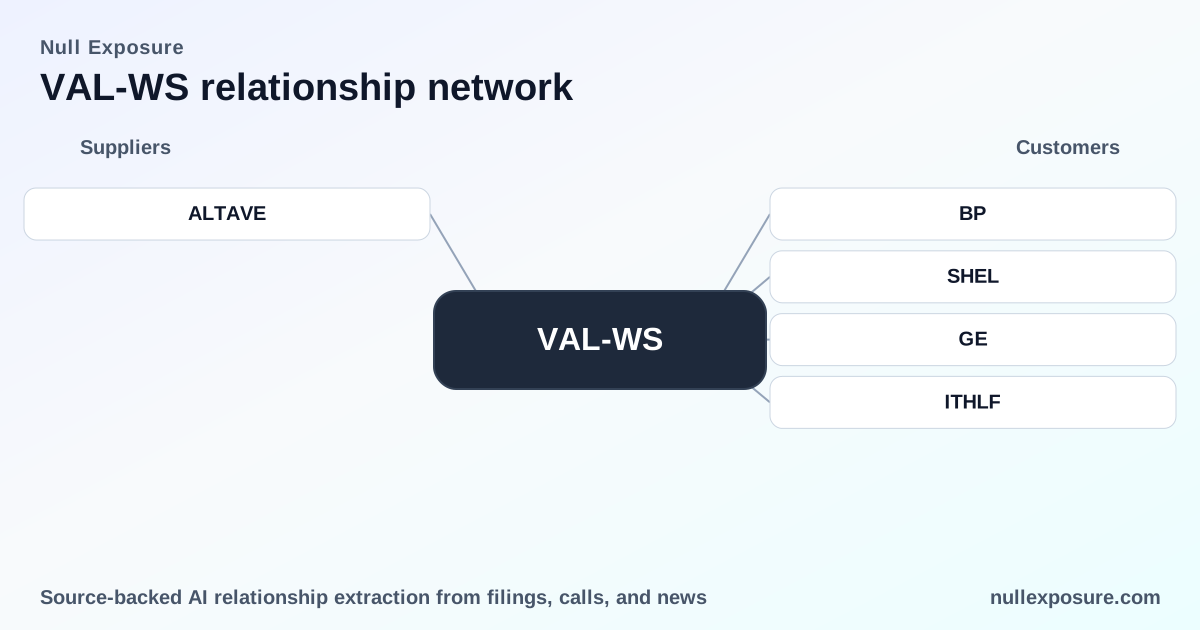
Valaris (VAL-WS): Supplier Map and Strategic Implications for Investors
Valaris operates as a capital-intensive offshore drilling contractor, monetizing through long-term rig contracts, joint ventures with national and independent oil companies, and premium service add-ons such as advanced monitoring and safety systems. The company extracts predictable contract cash flows from asset deployment while preserving upside from technology-led operational efficiencies that lower operating cost per well and increase utilization of an aging yet sophisticated fleet. For investors and operators evaluating supplier relationships, Valaris presents a classical offshore services profile: asset-backed revenue, concentrated counterparty exposure, and a reliance on technology partners to sustain competitiveness.
Explore broader supplier intelligence at https://nullexposure.com/.
How Valaris makes money and why suppliers matter
Valaris’ economic model is straightforward in industry terms: deploy rigs under dayrates or lump-sum contracts, collect sustained cashflows during contract tenure, and leverage JV arrangements for market access. Value is realized through utilization, contract pricing, and maintenance of technical reputation — all of which depend on a stable ecosystem of suppliers for IT, predictive maintenance, fuel, well services, and safety monitoring. Supplier relationships therefore function not as ancillary procurement items but as operational multipliers that can either protect margins or introduce operational risk.
This supplier posture implies:
- Contracting posture: Typically medium- to long-term contracts with major operators and joint-venture arrangements that embed suppliers into lifecycle operations.
- Concentration and criticality: Supplier failures translate quickly into rig downtime and lost dayrates, so supplier reliability has outsized earnings impact.
- Maturity of relationships: Many supplier ties are strategic and durable, particularly for technology and fleet maintenance providers.
Learn more about supplier landscapes and risk scoring at https://nullexposure.com/.
Notable supplier relationship: ALTAVE
Valaris’ engagement with ALTAVE is a clear example of technology integration to improve operational performance. An Offshore-Energy report from March 10, 2026, notes that nine rigs managed under the Valaris–Aramco joint venture adopted ALTAVE’s AI monitoring solution, suggesting a focused deployment of condition-monitoring and predictive analytics across a material portion of the JV fleet. This placement positions ALTAVE as a reliability and efficiency supplier for Valaris operations and demonstrates the company’s willingness to incorporate third-party AI tooling into core operational workflows (Offshore-Energy, March 2026).
What this supplier tie signals for investors
The ALTAVE deployment is not a casual purchase; it reflects a strategic choice with tangible commercial implications:
- Operational leverage: AI monitoring translates into lower unplanned downtime and potentially lower maintenance cost per rig, supporting dayrate realization and utilization metrics.
- Margins and capex trade-offs: Outsourced monitoring can reduce on-board technical headcount or retrofit capex, shifting spend toward service subscriptions or licensing.
- Optionality for JV scale-up: A successful pilot across nine rigs creates a template to scale monitoring services across other Valaris assets and joint ventures, improving predictability of uptime.
Full relationship rundown (every supplier link found in the record)
- ALTAVE – Nine rigs from the Valaris–Aramco JV fleet are using ALTAVE’s AI monitoring solution, indicating a supplier relationship centered on predictive operations and reliability enhancements (Offshore-Energy, March 10, 2026).
Company-level signals drawn from the supplier record and public snapshot
The underlying records for VAL-WS in this supplier extract contain no flagged constraints or supplier disputes in the dataset, which itself is a signal to investors: there are currently no recorded supplier-level red flags in this feed. Combine that with Valaris’ corporate description and the single technology supplier relationship documented, and you get a consistent profile:
- Asset intensity and vendor integration: Valaris operates a technologically advanced fleet, so supplier relationships lean toward integrated, mission-critical suppliers (maintenance, sensors, safety systems).
- Operational criticality: Suppliers like ALTAVE are positioned to materially affect uptime, meaning counterparty risk is operational risk.
- Concentration risk at the counterparty level: Given the industry structure, a small number of large customers and a moderate set of specialized suppliers create bilateral concentration that can amplify contract wins or losses.
- Contracting maturity: Supplier engagements for monitoring and JV services are typically multi-year and involve co-development or proof-of-concept pilots that scale on success.
These signals should be weighed alongside traditional credit and market metrics when assessing Valaris’ supplier resilience and operational outlook.
Near-term investor implications and risk checklist
Valaris’ integration of AI monitoring illustrates a pragmatic path to defend margins, but several investor-focused points deserve attention:
- Execution risk: Technology pilots can improve metrics, but implementation quality and integration with maintenance processes determine ultimate benefit.
- Counterparty dependency: Strategic suppliers become single points of failure for uptime; contract terms and service-level agreements should be a focus in diligence.
- Market cyclicality: Offshore drilling revenues remain cyclical; technology suppliers preserve margins but do not eliminate commodity exposure.
- Transparency gap: Public filings in this snapshot lack granular financials, so investors should supplement this supplier view with operational KPIs and JV contract disclosures.
For investors wanting continuous tracking of supplier relationships and operational impacts, visit https://nullexposure.com/.
Final takeaways and recommended actions
Valaris demonstrates a targeted approach to supplier selection that privileges technology that improves reliability and reduces downtime. The ALTAVE relationship is emblematic of how operational partners are being used to convert asset capability into steadier cash flows. For investors and operators evaluating VAL-WS, the priority actions are clear:
- Request contract-level detail or SLA summaries for key suppliers to quantify uptime and penalty structures.
- Monitor pilot-to-scale transitions (like the ALTAVE deployment) to see whether gains in utilization translate into measurable revenue or margin improvements.
- Maintain focus on counterparty concentration and ensure scenario stress tests include supplier failure and integration delays.
For a broader view of supplier networks and risk scoring across energy services, check https://nullexposure.com/.
Bold, strategic supplier relationships like ALTAVE’s placement on nine JV rigs are not cosmetic — they are an operational lever. Investors should treat supplier maps as forward-looking inputs to utilization and margin forecasts rather than ancillary vendor lists.