VATE (Innovate Corp): Supplier signals that matter for investors and operators
Innovate Corp (VATE) is an engineering and construction firm that monetizes through project delivery, material procurement and subcontract management, generating roughly $1.10 billion in trailing twelve‑month revenue while operating with tight working‑capital dynamics and heavy procurement exposure. For capital allocators and counterparty risk teams, the critical frame is how Innovate sources steel, manages delivery chains, and outsources investor relations — these supplier relationships directly affect project margins, cash flow timing and operational continuity. Read on for the concrete supplier mentions in filings and press, plus pragmatic implications for underwriting and relationship management. For ongoing supplier intelligence, visit https://nullexposure.com/.
How Innovate sources and pays: a concise operating thesis
Innovate runs a classic construction procurement model: project revenue is earned through contracts while materials and subcontractor costs are outflows, giving suppliers and carriers outsized influence over margins and delivery windows. The company’s filings show significant concentration in steel suppliers, limited use of long‑term procurement contracts, and reliance on third‑party freight and delivery services, which together create a predictable set of counterparty and timing risks for financiers and operators.
- Scale and leverage: $1.0999B revenue (TTM) against a market capitalization of ~$57.6M implies a low market valuation relative to sales, while insider ownership is high (60%) and institutional ownership is modest (18%), affecting governance and potential liquidity for supplier negotiations.
- Profitability and cash flow pressure: Negative EPS (-5.66) and slim operating margins highlight sensitivity to procurement cost swings and delivery disruptions.
Supplier and partner mentions you can act on
Below are every supplier/partner mention surfaced in the results, with brief, plain‑English summaries and source notes.
-
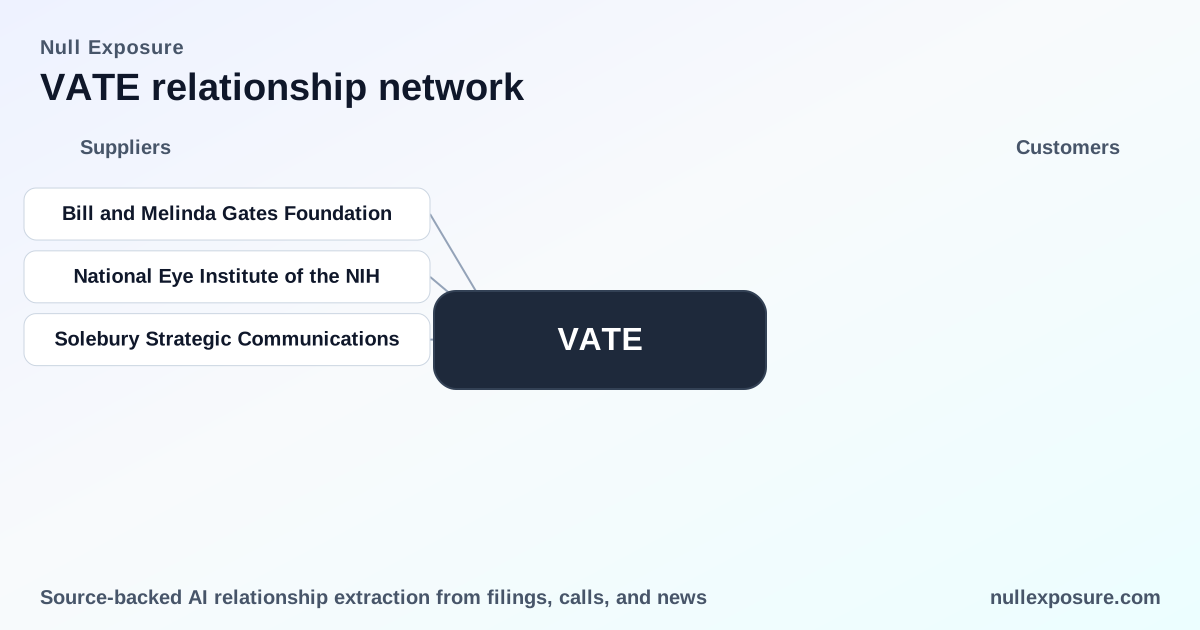
Bill and Melinda Gates Foundation — Innovate’s FY2024 10‑K references grants from the Bill and Melinda Gates Foundation in connection with MediBeacon research collaborations with Washington University School of Medicine and the Mayo Clinic, indicating philanthropic R&D funding is being tracked in corporate disclosures. According to the company’s FY2024 Form 10‑K, these grants supported MediBeacon research efforts (FY2024 10‑K excerpt).
-
National Eye Institute of the NIH — Innovate’s FY2024 10‑K also documents that MediBeacon received a Small Business Innovation Research (SBIR) grant supported by the National Eye Institute, reflecting federal R&D funding relationships captured in the same filing (FY2024 10‑K excerpt).
-
Solebury Strategic Communications — A news item published in March 2026 lists Solebury Strategic Communications (Anthony Rozmus) as Innovate’s investor relations contact and provides the IR email address ir@innovatecorp.com, an operational detail useful for counterparties and market communications planning (StockTitan news post, March 10, 2026).
What the filings collectively say about supply risk and procurement posture
Innovate’s supplier disclosures and constraint signals create a consistent picture of concentration, transactional contracting, and delivery dependency:
-
High supplier concentration for key inputs. The company reports that during the year ended December 31, 2024, approximately 50.9% of the total value of steel and steel components purchased came from two domestic vendors, a clear concentration that creates bilateral counterparty risk for projects (FY2024 disclosure).
-
Predominantly transactional supplier contracts. Filings state that Innovate generally does not have long‑term contracts with its suppliers, implying flexibility but also exposure to spot price volatility and renegotiation risk ahead of project milestones.
-
Delivery and logistics criticality. The company discloses dependence on commercial freight carriers and third‑party delivery services to move products within the United States, and warns that interruptions in carrier operations could prevent timely delivery to customers, directly threatening revenue recognition schedules and liquidations (FY2024 disclosure).
-
Maturity and forward commitments. Innovate lists unrecorded future minimum purchase commitments (e.g., $117.9M for 2025) primarily for materials and subcontractor costs, which signals a material near‑term cash flow commitment tied to procurement and subcontract performance (FY2024 disclosure).
These are company‑level signals, not relationship‑specific attributions; they should be treated as the operating constraints that shape every supplier relationship Innovate enters.
Implications for investors, underwriters and operators
-
Underwrite counterparty concentration: The 50.9% steel concentration means single‑vendor stress could cascade into project delays or price shocks. Underwriters should model scenarios where one of the two vendors increases lead times or prices and quantify impact on working capital and margins.
-
Price and contract strategy matter: The lack of long‑term supplier contracts gives management flexibility but exposes margins to market swings — hedge strategies, vendor diversification plans, or forward purchase commitments should be documented and stress‑tested.
-
Logistics are a near‑term operational risk: Dependence on third‑party carriers is a direct operational constraint; credit facilities and premium finance structures need covenants or contingency liquidity to cover delayed deliveries or penalty exposure.
-
R&D funding mentions are distinct signals: Grants to MediBeacon (Gates Foundation and NIH SBIR) reflect research relationships captured in filings — these are reputational and programmatic rather than core procurement exposures, but they should be tracked for disclosure continuity and potential integration into investor communications.
Mid‑report actionable step: if you are assessing counterparty exposure or pricing risk, download a supplier stress template and run a 30/60/90 day cash‑flow squeeze simulation at https://nullexposure.com/.
Practical next steps and monitoring priorities
- Build a vendor concentration dashboard focused on steel suppliers and top two vendors specifically.
- Require quarterly reporting of lead times and contract status from procurement to ensure early warning for material price or supply shocks.
- Add logistics‑disruption triggers to finance covenants, with liquidity buffers mapped to the $117.9M 2025 commitment profile.
For teams needing continuous supplier intelligence and filing‑level evidence, explore tailored monitoring and alerts at https://nullexposure.com/.
Bottom line: what to watch and why it matters
Innovate’s procurement and delivery footprint is a primary driver of operational risk and margin volatility. The combination of high supplier concentration, largely transactional supplier relationships, and dependency on external freight and delivery services means that supply chain events translate rapidly into financial stress. The mediated mentions of Gates Foundation and NIH grants are useful for reputation and program tracking, while the Solebury investor contact detail is an operational touchpoint for market engagement.
Final action: incorporate supplier concentration stress tests into your next quarterly risk review and bookmark https://nullexposure.com/ for documentation and tracking tools that map these filing‑level signals into operational controls.