VBNK: Supplier Map and Implications for Investors
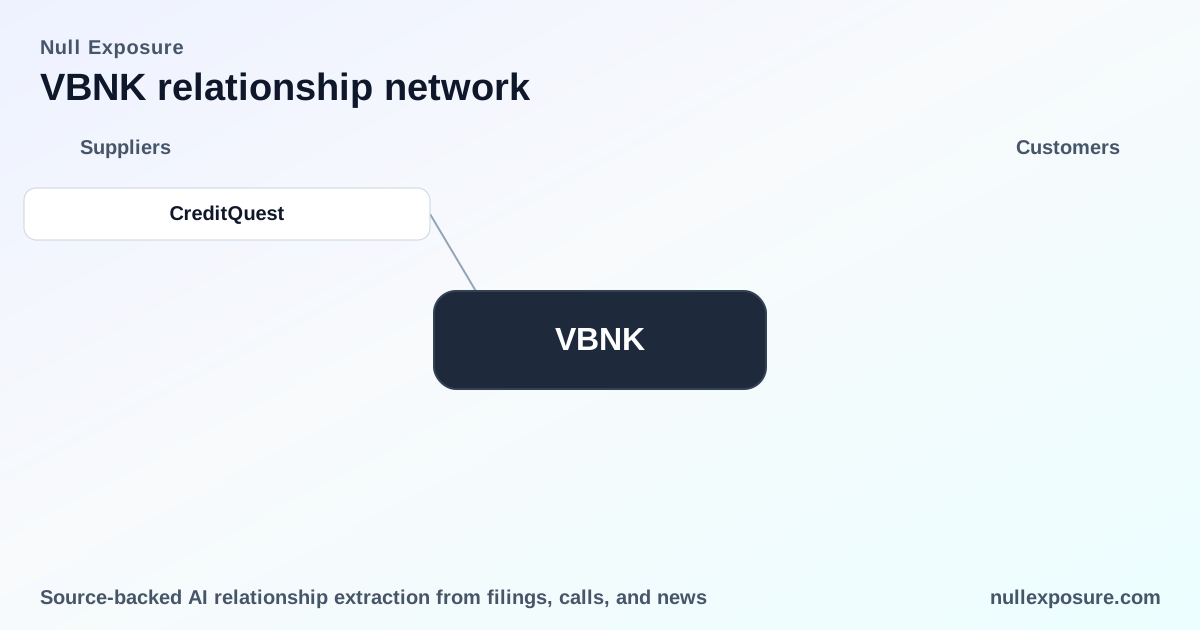
Village Bank (ticker VBNK) outsources critical credit risk tooling to third-party vendors and monetizes through traditional community banking margins—net interest income and fee income—while relying on software suppliers to underwrite and manage loan risk workflows. This supplier snapshot shows a single publicly visible vendor relationship tied to core credit decisioning, which concentrates operational risk in a high-criticality function and should factor into diligence and vendor-management conversations.
For a full supplier discovery and continuous monitoring solution, visit https://nullexposure.com/ to get started.
Why this supplier relationship matters to capital allocators
Village Bank’s competitive position is tied to the quality and governance of its credit risk processes. Credit decisioning systems are both mission-critical and concentrative when a single vendor handles core workflows, because a performance or integration failure translates directly to underwriting, loss recognition, and compliance exposures. Investors should treat vendor choice and implementation history as operational risk indicators alongside traditional credit metrics.
A TCB Magazine profile dated March 10, 2026 says Village Bank implemented the CreditQuest credit risk management system under a senior executive’s leadership, which provides direct evidence of third-party involvement in credit operations. According to the Alpha Vantage feed used to compile this supplier inventory, this is the only supplier mention surfaced in public reporting and local press for the period covered.
Supplier relationships uncovered (one-to-one review)
CreditQuest — core credit risk management system
Village Bank implemented CreditQuest as its comprehensive credit risk management platform under senior executive Michelle Anderson, who led the project after joining the bank in 2019; the implementation characterizes CreditQuest as the bank’s chosen solution for day-to-day credit underwriting and portfolio monitoring. A TCB Magazine profile of Michelle Anderson published March 10, 2026 describes her leading the implementation of the system at Blaine-based Village Bank. (TCB Magazine, March 10, 2026)
What the limited public visibility tells investors about VBNK’s operating model
The public record returned a single supplier mention and no explicit constraints disclosures. That fact itself is a signal: supplier disclosure maturity is limited in public filings and press, which elevates the value of targeted operational due diligence.
- Contracting posture: With a visible, high-impact vendor in credit risk tooling, Village Bank’s contracting posture likely prioritizes long-term stability and integration. Expect standard banking vendor agreements with service-level commitments, data controls, and compliance attestations.
- Concentration: Concentration is elevated when credit decisioning lives with one vendor; this creates a single point of failure and a negotiation dependency that can affect costs and upgrade paths.
- Criticality: CreditQuest is mission-critical—it directly influences loan origination, risk grading, and regulatory reporting—so operational incidents would have immediate balance-sheet and compliance consequences.
- Maturity: The presence of a named implementation led by a senior executive since 2019 suggests a multi-year operational relationship and a mature deployment, rather than a pilot. That reduces deployment risk but increases lock-in and the importance of update and support quality.
Because the constraints section returned no entries, treat that absence as a company-level observation: limited disclosure on supplier constraints rather than confirmation of absence of contractual restrictions or operational limitations.
Operational and investment risks tied to the relationship
Credit risk tooling suppliers create concentrated operational risk that translates into quantifiable business exposure:
- Underwriting integrity risk: Errors in model implementation or data feeds can skew risk grading and loss allowances. Investors should ask whether independent validation and model governance cover the supplier’s outputs.
- Vendor lock-in and cost exposure: Long-standing implementations reduce migration flexibility and increase the bank’s bargaining disadvantage on pricing or feature roadmaps.
- Regulatory and compliance risk: Third-party software used for credit decisions must meet exam standards; outsourced processes require clear auditability and vendor attestations.
- Continuity risk: Supplier outages, M&A of the vendor, or termination disputes can disrupt origination flows and investor cash flows tied to loan growth.
All of the above are directly material to credit performance and capital adequacy, and should be treated as part of operational due diligence rather than secondary housekeeping.
What operators and board members should prioritize
Operators and stewards of Village Bank’s franchise should operationalize vendor risk management around this single visible dependency:
- Conduct a documented review of vendor governance: contractual SLAs, change-management processes, and escalation pathways.
- Validate independent model governance: ensure third-party outputs undergo bank-level validation and challenge by credit risk teams.
- Build contingency plans: develop migration, parallel-run, and emergency manual-processing options should the vendor fail or be acquired.
- Require transparency in cost trajectory: track total cost of ownership including license fees, integration, and professional services.
For investors seeking a deeper, continuous view of supplier exposures and remediation status, see https://nullexposure.com/ to schedule a tailored supplier risk briefing.
Practical next steps for due diligence
When evaluating VBNK for investment or credit exposure, incorporate the following steps into your diligence checklist:
- Confirm contract terms and renewal timelines with CreditQuest, plus any exclusivity or transition assistance clauses.
- Review the bank’s evidence of independent validation and results of the last model governance review.
- Ask for incident history and vendor outage reports over the past 36 months.
- Evaluate the senior executive and vendor governance structure for escalation and compliance oversight.
A focused operational review will close the visibility gap that public sources leave open and convert concentration risk into a quantified valuation input.
Bottom line and action
Village Bank’s supplier profile, as captured in public reporting, shows a concentrated, mission-critical dependence on a single credit risk management vendor—CreditQuest—implemented under a senior executive’s leadership. That relationship elevates operational and regulatory importance and should be a priority for investor and board-level diligence.
If you want continuous tracking of supplier exposure and proactive alerts tied to these relationships, visit https://nullexposure.com/ to learn how we map supplier risk into investment and operational workflows.