Village Farms (VFF): supplier relationships, energy plays, and what investors should know
Village Farms International operates two fundamentally different businesses under one roof: a North American greenhouse fruits & vegetables platform that grows, markets and distributes tomatoes, peppers and cucumbers, and a clean-energy arm that monetizes waste gas through renewable natural gas (RNG) projects. The company earns cash from fresh produce sales and increasingly from energy project revenues and related commodity credits, creating a hybrid cash-flow profile that investors must evaluate across agricultural seasonality and energy contract economics. This briefing summarizes supplier and partner relationships disclosed in public sources, interprets company-level constraints, and highlights the implications for counterparty risk and commercial durability.
Learn more about coverage and supplier intelligence at https://nullexposure.com/.
How Village Farms makes money and why partner networks matter
Village Farms is a vertically integrated greenhouse grower that sells fresh produce through wholesale channels while leveraging its energy unit, Village Farms Clean Energy, to convert waste streams into saleable RNG. According to company filings through FY2025, VFF reported roughly $216 million in trailing revenue and $43.8 million of EBITDA, with a market capitalization near $319 million — a profile of a midsized agribusiness with a nascent energy business diversifying revenue and margin streams. The combination of perishable-product logistics and energy project development makes supplier and service relationships operationally critical, because inputs, off-take arrangements and project partners directly affect margins and uptime.
What the record shows about partner relationships
Village Farms’ public disclosures and press releases identify energy partners as a visible extension of the business’ supplier/partner network. Below are the relationships extracted from the company’s disclosed results.
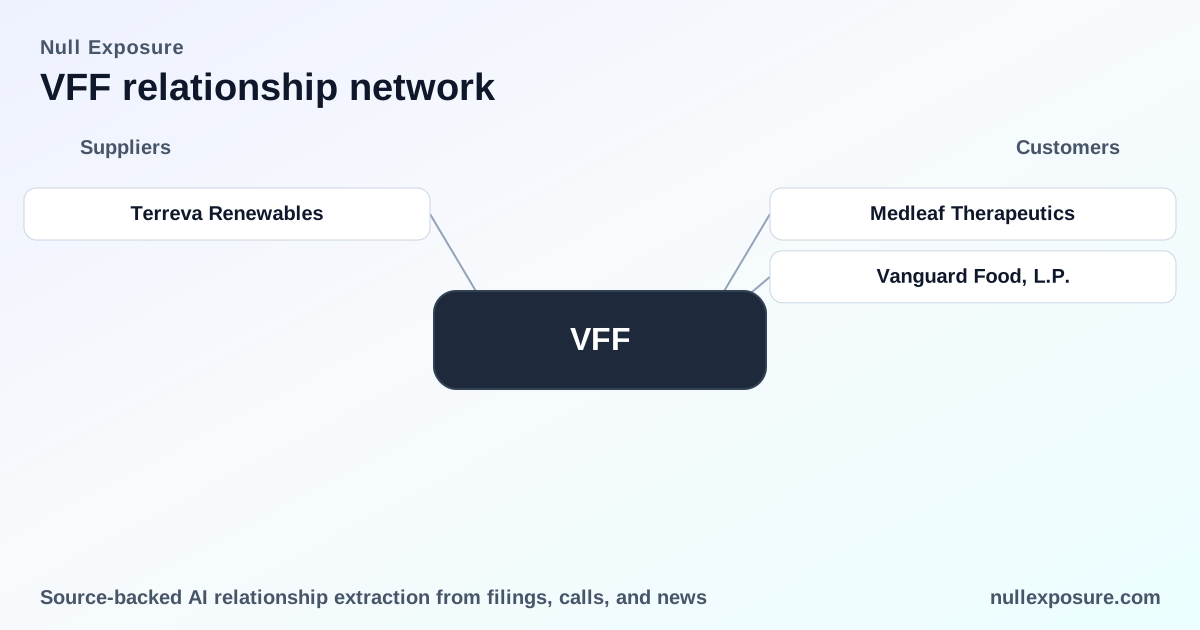
Terreva Renewables — partner on RNG at Delta
Village Farms Clean Energy (VFCE) operates a Delta RNG facility that creates renewable natural gas from landfill gas through a partnership with Atlanta-based Terreva Renewables. This partnership positions VFCE to convert landfill gas into commercial RNG volumes and associated credits, adding non-seasonal energy revenue to the company’s cash flows. Source: GlobeNewswire press release, November 10, 2025.
(That is every partner relationship disclosed in the provided results.)
Company-level constraints and what they signal for supplier posture
The compiled constraints in the record do not name specific partners in these excerpts, but they do convey company-level supplier posture signals worth factoring into counterparty analysis:
- Framework contracting posture: The record includes an indication of framework-style contracting, which signals Village Farms or related units prefer standardized, repeatable agreements for sourcing or selling agricultural inputs. Frameworks reduce negotiation friction and support scale, but they can lock parties into predefined terms for multiple seasons.
- North American geography focus: Evidence points to a North America regional emphasis for sourcing and commercial relationships. That concentration simplifies logistics and regulatory alignment but also exposes the company to regional weather, labor and feedstock cycles.
- Seller role and active relationships: The company-level language frames Village Farms as a seller in its supplier ecosystem and suggests active commercial arrangements, reinforcing that Village Farms both purchases critical inputs and sells product/commodities under ongoing agreements.
These signals imply moderate contract maturity and operational standardization — Village Farms relies on repeatable contractual relationships rather than bespoke, one-off arrangements. That reduces transaction risk but increases exposure to regional shocks when a high share of counterparties is NA-focused.
Why these relationships matter for investors
Two structural takeaways determine near-term valuation sensitivity:
- Revenue diversification reduces agricultural cyclicality. The RNG partnership with Terreva and other energy initiatives turn non-seasonal energy receipts and credits into a buffer against crop seasonality. This changes the volatility profile of cash flows and can support higher valuation multiple if scale is achieved.
- Counterparty and regional concentration are material risk levers. Framework contracts and North American sourcing reduce commercial complexity but raise the stakes on regional input shocks (weather, labor disputes, regulatory shifts). Operational criticality of partners — especially for energy off-take and feedstock processing — is high, so partner performance directly affects realized margin.
Village Farms’ balance of fresh-produce operations and energy projects creates cross-domain counterparty exposure: logistics and buyers for produce, project contractors, and energy off-takers for RNG. Investors should value the earnings stream from each business separately and assess contract terms and counterpart creditworthiness.
What to watch next (practical investor checklist)
- Review VFCE project ramp and reported RNG volumes; increased energy revenue should be visible in quarterly disclosures.
- Inspect contract tenor and pricing mechanics for RNG off-take or credits to understand cash-flow durability.
- Monitor regional sourcing conditions in North America for input cost inflation or supply interruptions.
For a deeper supplier-risk review and ongoing partner monitoring tools, visit https://nullexposure.com/.
Final read and recommended actions
Village Farms is no longer just a greenhouse operator; its partner-led push into RNG creates two distinct revenue engines with different risk-return profiles. The GlobeNewswire disclosure on Terreva underscores the company’s strategy to monetize waste gas through third-party partnerships — a move that strengthens revenue stability but raises dependency on energy-project counterparties. Given the company’s mid-market scale (roughly $216m revenue TTM and $319m market cap) and framework-style contracting posture, investors should treat supplier diligence as a first-order consideration.
If you evaluate VFF for portfolio inclusion or counterparty exposure, prioritize contract diligence on energy off-takes, regional concentration stress-testing, and verification of partner performance history. For ongoing supplier relationship intelligence and structured monitoring, see the coverage available at https://nullexposure.com/.