VHAI-WS-A — Supplier Map and Commercial Implications for Investors
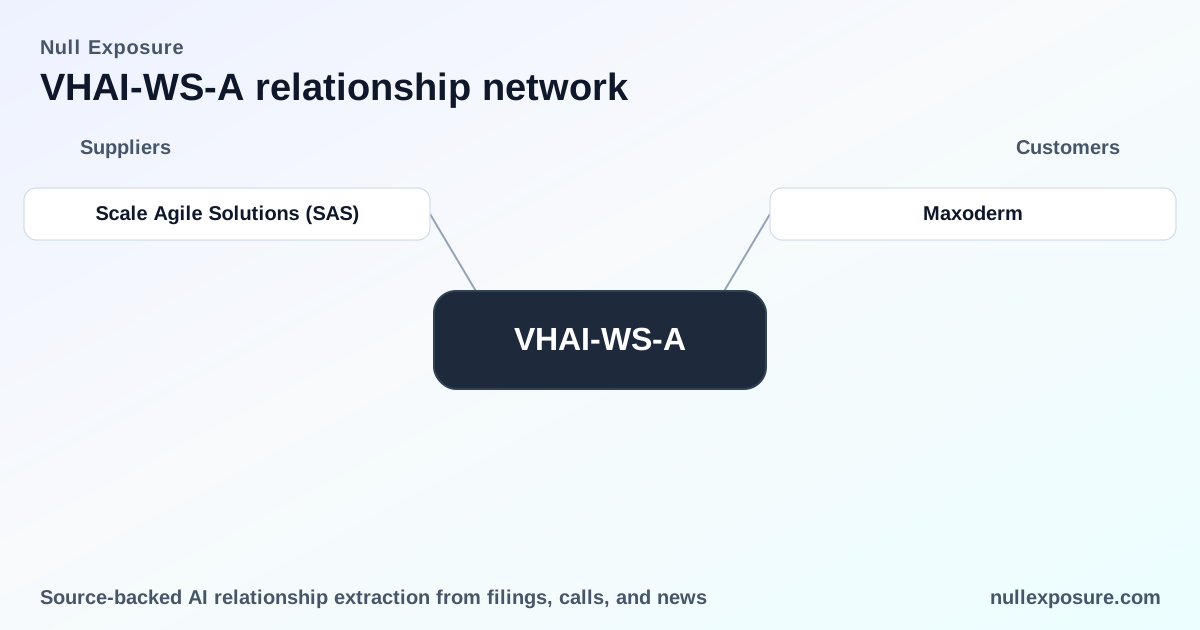
VHAI-WS-A operates through strategic third-party supplier tie-ins that feed its lead engine: the company leverages external AI providers to generate and qualify case-level leads for personal injury and motor vehicle accident (MVA) workflows, then monetizes those leads through downstream conversion, placement, or resale arrangements. This supplier-driven model concentrates commercial value in the quality and stability of AI-sourced lead flow, making supplier stability and data governance central to investment thesis. For a practical view of counterparties and risks, visit https://nullexposure.com/.
H2: What the supplier footprint tells investors about the business model VHAI-WS-A’s public supplier footprint is narrow in scope. The single identified supplier relationship is with an AI technology provider that directly supports the company’s lead-generation funnel. That structure implies a commercial model where revenue is highly sensitive to lead volume and lead quality, which are in turn dependent on supplier performance. The economics of such a setup typically favor low fixed-cost operations with outsized variable costs tied to supplier contracts and performance metrics.
- Concentration and dependency: With only one identified supplier relationship, the company’s lead supply is concentrated, amplifying counterparty risk.
- Criticality: The supplier supplies the core operational input—qualified leads—making the relationship operationally critical rather than peripheral.
- Contracting posture and disclosure: No supplier contract terms are publicly disclosed in the supplied records, indicating limited transparency around pricing, exclusivity, or service-level obligations.
H3: How this translates to investor risk and opportunity The upside for investors is clear: scalable lead supply with low internal capital intensity, provided the external AI model sustains quality at scale. The downside is equally clear: single-source dependencies and limited contractual visibility create outsized operational and regulatory risk, particularly in industries like personal injury where lead provenance and consent practices are under regulatory scrutiny.
For a deeper supplier intelligence read, go to https://nullexposure.com/.
H2: The relationship roster — who supplies what, in plain English Below are the supplier relationships that surfaced in the records provided. Each listing is concise and cites the source of the reporting.
Scale Agile Solutions (SAS)
Scale Agile Solutions provides the underlying AI technology that generates and qualifies leads meeting specific criteria for personal injury and MVA cases, directly supporting VHAI-WS-A’s core intake pipeline. According to a StockTitan overview of VHAI published March 10, 2026, SAS is named as the technology provider for lead generation and qualification.
H2: Constraints, disclosure gaps, and what they signal about operating posture The supplied control set contains no explicit constraints or contract excerpts tied to supplier relationships. That absence is itself a signal investors should weigh: it means the public record supplied here includes limited operational detail about contracting terms, SLAs, exclusivity, termination rights, or indemnities. Treat this as a company-level disclosure signal rather than a reassurance of low risk.
- Contracting posture: No contract language is provided in the public summary, signaling unknown pricing flexibility, termination provisions, and performance guarantees.
- Concentration: The record shows a single identified supplier, which signals high supplier concentration and potential single-point-of-failure risk for lead supply.
- Criticality: The supplier supplies the company’s principal operational input—qualified leads—so this relationship is operationally critical.
- Maturity: The supplier relationship is described in product terms rather than legacy contractual detail; this pattern suggests a commercially focused, possibly recent, supplier engagement rather than a long-tenured, deeply embedded vendor agreement.
H3: What investors should monitor next Investors should track three practical items to convert this supplier view into an investment decision:
- Contract disclosure or regulatory filings that specify pricing, exclusivity, and termination rights for the SAS relationship.
- Independent verification of lead quality and conversion rates to understand how supplier performance translates to revenue.
- Data governance and consent documentation reflecting how leads are sourced and whether lead acquisition practices comply with evolving privacy and advertising regulations in personal-injury verticals.
Middle-of-article CTA: For ongoing monitoring and a complete supplier map, visit https://nullexposure.com/.
H2: Portfolio implications — risk weighting and remediation levers Given the operational dependence implied by the SAS relationship, investment allocation should reflect elevated counterparty and operational risk. Active management strategies include:
- Seeking management disclosure on supplier concentration limits and contingency plans.
- Pressing for contractual detail or escrow arrangements for critical lead flows.
- Stress-testing downside scenarios where lead quality or supply is interrupted.
H3: Closing assessment and actionable takeaways VHAI-WS-A’s model is supplier-centric: revenue and growth hinge on externally sourced AI lead generation that is both operationally central and, in the current public record, under-documented contractually. Investors should treat the single identified supplier relationship as a material factor in valuation and risk assessment and press management for transparency on contract terms, data governance, and fallback sourcing strategies.
Final CTA: To review more supplier relationships and subscription-grade intelligence, start at https://nullexposure.com/.
Key takeaways
- Single reported supplier (Scale Agile Solutions) provides AI lead generation and qualification for personal injury and MVA cases (StockTitan, March 10, 2026).
- High supplier concentration and limited contractual disclosure are the dominant company-level signals; both materially affect operational risk and upside capture.
- Active investor engagement is required to obtain contract terms, verify lead economics, and confirm regulatory compliance for lead sourcing.