Via Renewables (VIASP) — supplier relationships, risk posture, and what investors should price
Via Renewables operates as an independent retail energy services company that buys electricity and natural gas in wholesale markets and resells those commodities to residential and commercial customers in competitive U.S. markets. The firm monetizes the spread between wholesale purchases (physical and financial contracts) and retail billing, with an active hedging program across short- and long-term contracts to stabilize margins. For investors in VIASP preferred stock, counterparty mechanics around payment, custody and benchmark indexing are immediate drivers of cash-flow reliability and contractual settlement risk. Learn more about supplier and counterparty exposure at https://nullexposure.com/.
The three counterparties that matter — plain English, one by one
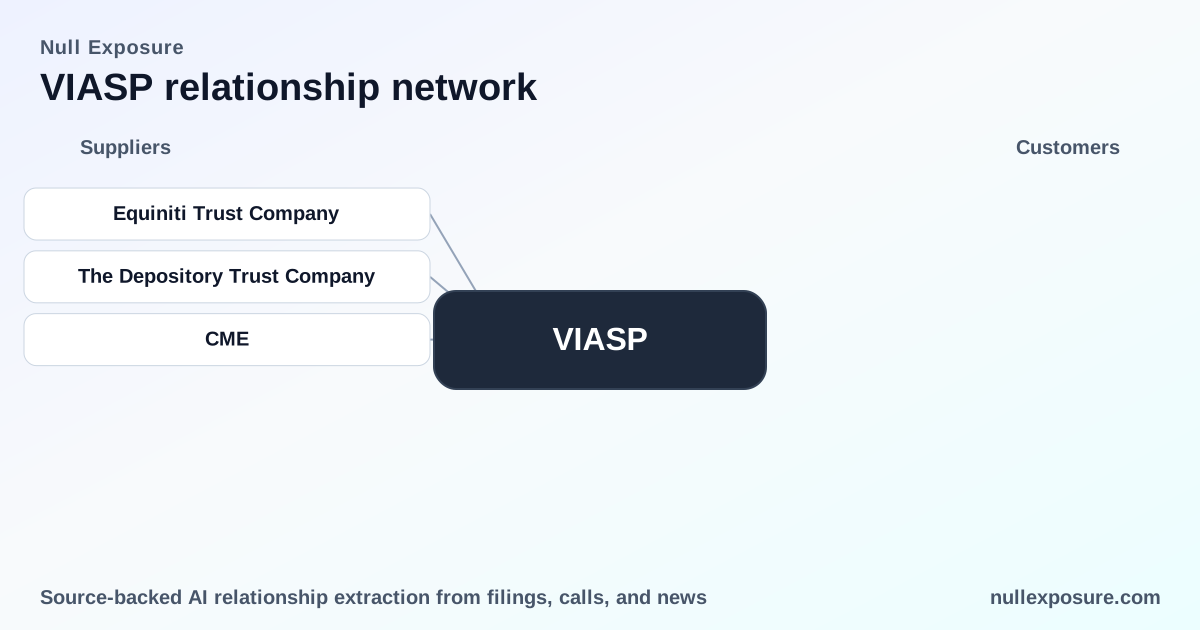
Equiniti Trust Company
Via Renewables designated Equiniti Trust Company as the transfer agent responsible for making redemption payments to DTC for Series A Preferred Stock that was redeemed. Equiniti is the operational conduit for executing a redemption payment referenced in the company’s announcement. A Yahoo Finance release detailing the redemption was published March 10, 2026.
The Depository Trust Company (DTC)
All Series A Preferred shares are issued in book‑entry form through The Depository Trust Company, meaning ownership and settlement of those preferred shares are centralized and cleared via DTC’s facilities. This is the standard custody mechanism for U.S.-listed securities and was described in the same March 10, 2026 corporate communication syndicated on Yahoo Finance.
CME Group Benchmark Administration, Ltd.
Following the end of Three‑Month LIBOR publication, Via Renewables specified Three‑Month CME Term SOFR as the replacement benchmark for the Series A Preferred, with a tenor spread adjustment of 0.26161% applied to the rate. This benchmark selection directly affects the interest indexation of the preferred security and was disclosed in a dividend announcement carried on AccessWire (published March 10, 2026).
How these relationships interact with Via’s operating model
The relationships above are tightly connected to Via Renewables’ choice of capital structure and its commercial execution model:
- Custody and settlement (DTC + Equiniti): Using DTC custody and Equiniti as transfer agent ensures administratively clean redemptions and dividend payments for preferred holders. That reduces operational settlement risk but concentrates counterparty operational dependency on a small set of financial market utilities.
- Benchmark governance (CME Term SOFR): The move from LIBOR to CME Term SOFR with a defined spread is a contract-level change that fixes the indexation approach for cash distributions, removing legacy basis ambiguity but creating exposure to SOFR curve dynamics and term liquidity.
- Procurement posture: Company disclosures state that Via hedges and procures energy using both short- and long-term physical and financial contracts across wholesale markets, which gives the business flexibility but also implies active counterparty management and margin volatility tied to forward curves and supply concentration.
A focused note for investors: operational convenience (DTC/Equiniti) lowers administrative risk, while benchmark selection (CME Term SOFR) changes the economic sensitivity of the preferred instrument.
What the supplier constraints say about commercial risk and concentration
Company-level disclosures provide several actionable signals for investors evaluating supplier and counterparty risk:
- Via contracts across both short-term and long-term horizons, reflecting a mixed procurement posture that balances price discovery with near-term liquidity management.
- Geographic focus is U.S. competitive retail markets, meaning regulatory and regional commodity price action in North America is the dominant driver of cost of goods sold and margin pressure.
- Supplier concentration is material: in 2024 two suppliers accounted for more than 10% of consolidated retail cost of revenues, and collectively these significant suppliers represented 35% of cost of revenue that year. That level of concentration creates counterparty credit and sourcing risk if a large supplier experiences disruption.
- The company acts as both a buyer (of wholesale supply) and a seller (retailing to end customers) and also relies on third-party service providers for billing and supporting software — indicating a hybrid role across the value chain with attendant operational dependencies.
- Relationship activity is active: Via transacted settlements with roughly 74 wholesale counterparties during the year ended December 31, 2024, demonstrating a relatively broad set of trading relationships even in the presence of concentrated large suppliers.
Together, these constraints paint a picture of a commercially mature retail supplier that depends on a small number of material counterparties for cost of goods while managing a broad trading book to execute hedges and settlements. Investors should price both the diversification benefits of the active trading footprint and the tail risk from concentrated supplier exposures.
For deeper situational monitoring and supplier mapping, visit https://nullexposure.com/ for structured visibility into counterparty relationships.
Investment implications — what moves the preferred security’s value
There are three immediate themes that influence valuation of VIASP preferred stock:
- Cash‑flow mechanics and execution risk: The redemption announcement and Equiniti’s role show the company is completing administrative steps to retire Series A or to make associated payments; successful execution of those payments preserves investor value and reduces outstanding claims (Yahoo Finance, March 10, 2026).
- Indexation sensitivity: The Series A’s switch to Three‑Month CME Term SOFR + 0.26161% alters interest-rate exposure compared with legacy LIBOR indexing and ties payouts to the SOFR curve (AccessWire, March 10, 2026). That changes duration and repricing dynamics for preferred holders.
- Counterparty concentration: The material supplier concentration (35% of cost of revenue in 2024) is a commercial risk that can transmit to margin compression or supply interruption, which in turn would affect the company’s ability to fund preferred dividends or redemption obligations.
Bolded takeaway: administrative settlement and benchmark governance are low-friction—but supplier concentration is the structural risk investors must hedge or monitor.
Actionable next steps for investors and operators
- Track forthcoming operational notices tied to DTC and Equiniti to confirm settlement and redemption timing; administrative slips are rare but consequential for payout certainty.
- Monitor short-term SOFR term-curve moves and term liquidity if you hold VIASP Series A exposure, because indexation is now governed by CME Term SOFR plus a fixed spread.
- Maintain a focus on supplier concentration metrics reported in annual filings: look for changes in the percentage of cost of revenue sourced from the top two or three suppliers as an early warning of rising counterparty risk.
For a consolidated view of these counterparty and supplier signals, head to https://nullexposure.com/ to see how these relationships map to cash‑flow and settlement risk.
Bottom line
Via Renewables runs a classic retail energy model: buy wholesale, hedge selectively, and resell to retail customers, while relying on market utilities (DTC, Equiniti) for securities administration and CME Term SOFR for benchmark indexing. Operational execution on redemptions and dividend indexing is straightforward and documented, but supplier concentration and commodity exposure remain the principal commercial risks that will determine realized returns for preferred security investors. Regularly review filings and cash‑settlement notices to ensure administrative steps are complete and to quantify concentration trends over time.