Vir Biotechnology: supplier relationships and what they mean for investors
Vir Biotechnology develops and licenses antibody- and biologic-based therapies for infectious disease and oncology and monetizes primarily through collaborations, licensing transactions (upfront and milestone payments), and equity raises to fund clinical programs. The company outsources most full-scale manufacturing, relies on third parties to run and monitor clinical trials, and recently executed a public equity offering to bolster capital — a combination that creates both cost flexibility and supplier concentration risk. For a structured read on counterparties and operating constraints, explore Null Exposure’s supplier intelligence: https://nullexposure.com/.
How Vir's supplier posture actually works
Vir runs a lean internal manufacturing footprint and contracts external CDMOs and clinical service providers on short‑term, program‑by‑program agreements, which establishes operational flexibility but also creates dependency. Public disclosures and press coverage characterize these relationships as material to program delivery: third parties conduct clinical trials, produce clinical supplies, and execute specialized component work such as Fc‑engineering and masking platforms. The company’s own descriptions state it does not operate facilities for full process development or large‑scale manufacturing, resulting in a supplier model that is highly outsourced, active, and contractually short‑term.
- Contracting posture: short‑term, program-based CDMO arrangements rather than long-term fixed plants (evidence cited by company filings).
- Criticality and concentration: Third‑party providers are material to clinical and regulatory progress; poor performance directly impacts trial timelines and commercialization.
- Maturity and stage: Relationships are active and centered on late‑stage trials and registrational activities for liver disease and newly in‑licensed oncology assets.
- Spend profile: Historical commitments and contract manufacturing spend indicate meaningful single-program spend (ranges cited in filings between $1–100m, depending on the program and milestone triggers).
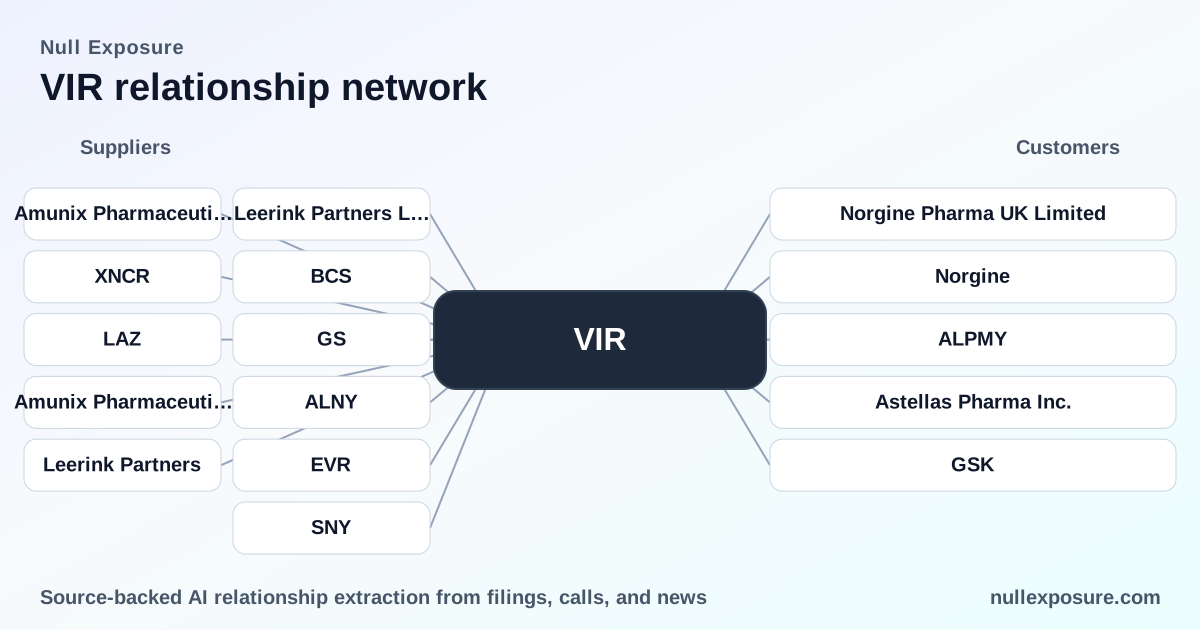
The counterparty roll call — every relationship documented
Below are concise, plain‑English summaries of each counterparty found in public reporting and press coverage, with source references.
Goldman Sachs & Co. LLC
Goldman Sachs acted as a lead underwriter and book‑running manager on Vir’s public offering of 17,647,059 shares priced at $8.50 per share in February 2026. Source: Vir 8‑K disclosed Feb 25, 2026 (reported via StockTitan and PharmiWeb, Feb–Mar 2026).
Leerink Partners (Leerink Partners LLC)
Leerink served as a co‑manager and book‑running manager on the same February 2026 equity offering, supporting the placement and market execution. Source: Vir 8‑K disclosed Feb 25, 2026 (reported via StockTitan and PharmiWeb, Feb–Mar 2026).
Evercore (Evercore Group L.L.C. / Evercore ISI)
Evercore functioned as a co‑manager/book‑running manager on the February 2026 offering, providing syndicate support for the equity raise. Source: Vir 8‑K and press releases (PharmiWeb, Feb 26, 2026).
Barclays (Barclays Capital Inc.)
Barclays joined Goldman Sachs, Leerink and Evercore as a book‑running manager for Vir’s February 2026 public offering, participating in distribution and pricing. Source: Vir 8‑K and PharmiWeb press release (Feb 2026).
Lazard
Lazard acted as Vir’s exclusive financial advisor in connection with strategic transactions tied to in‑licensing and collaboration deals. Source: PR Newswire announcement on collaboration activity (2026).
Alnylam Pharmaceuticals, Inc.
Alnylam is the originator and licensor of elebsiran, an siRNA therapeutic that Vir is developing under a license agreement originally signed in 2017; Vir retains development rights and pays associated commitments under that arrangement. Source: company updates and GenEng News coverage (2025–2026).
Sanofi
Vir in‑licensed PRO‑XTEN and multiple T‑cell engager assets from Sanofi under an up‑to‑$1.986 billion exclusive worldwide license announced in August 2024; the deal included a $102.8 million upfront payment and revenue sharing provisions on certain collaboration proceeds. Source: GenEng News, Biospace, and PR Newswire reporting (2024–2026).
Amunix Pharmaceuticals, Inc.
Amunix (acquired by Sanofi) is the developer of the PRO‑XTEN masking platform; Vir has exclusive rights to PRO‑XTEN for oncology and infectious disease under the Sanofi/Amunix arrangements and has triggered milestone payments tied to clinical progress. Source: GenEng News and company press releases (2024–2026).
Xencor
Xencor supplies Fc engineering/Xtend half‑life extension technology incorporated into Vir’s HBsAg‑targeting antibodies; this is a technology supplier relationship embedded in product design and clinical candidates. Source: Vir press releases and Biospace coverage of the ECLIPSE program (2025–2026).
Operational implications for investors
The supplier map yields several clear, actionable implications for capital allocators and operating teams:
- Capital efficiency versus operational concentration: Short‑term CDMO contracts limit fixed costs and cap downside on failed programs, but they concentrate execution risk with external manufacturers and clinical CROs. This structure requires rigorous vendor oversight and contingency planning.
- Materiality raises execution risk: Company statements explicitly identify third parties as integral to trials and product supply; supplier underperformance translates directly into clinical and regulatory delays.
- Spend buckets and milestone timing affect liquidity: Filings disclose committed spend in the $1–100m bands across programs; these commitments, combined with upfront license payments (Sanofi/Amunix) and milestone share arrangements, shape near‑term cash outflows and contingent liabilities.
- Active stage relationships require monitoring: Agreements are active, not dormant—investors must monitor trial milestones, CDMO confirmations, and milestone payments that trigger partner cash flows.
For a deeper supplier risk score and monitored counterparty updates, review Null Exposure’s analytic feed: https://nullexposure.com/.
Practical risk checklist for monitoring
- Confirm CDMO contracting cycles and whether agreements include capacity guarantees or only yearly engagement windows.
- Track milestone payment schedules tied to Sanofi/Amunix and Alnylam licenses and how cost‑sharing is structured.
- Monitor public trial updates that reference Xencor Fc‑engineering or other third‑party technology contributions.
- Watch for follow‑on capital markets activity and underwriter performance as an indicator of financing flexibility.
What investors should watch next and recommended actions
Focus on three lead indicators: (1) clinical readouts and milestone triggers that will drive partner payments or option exercises; (2) manufacturing confirmations from CDMOs ahead of registrational submissions; and (3) capital markets access, where book‑running banks (Goldman, Leerink, Evercore, Barclays) will determine execution cost of future raises. Lazard’s advisory role signals continuing strategic activity that could restructure liabilities or access non‑dilutive capital.
For investors and operators who need structured, transaction‑level supplier intelligence and monitoring, Null Exposure provides timely relationship signals and risk flags — start here: https://nullexposure.com/.
In summary, Vir’s supplier model delivers programmatic flexibility and rapid scale‑up options but concentrates execution risk in a small group of third‑party manufacturers, technology licensors, and capital markets counterparties. Active vendor oversight, milestone tracking, and liquidity management are the decisive factors for assessing Vir’s near‑term clinical progress and shareholder value realization.