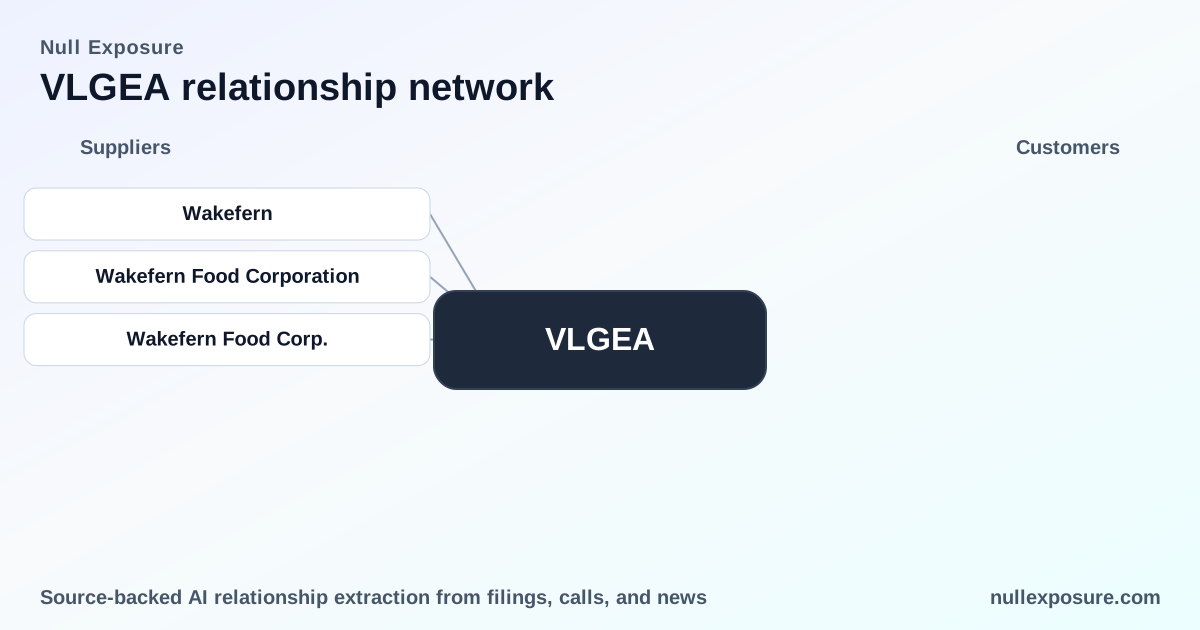
Village Super Market (VLGEA): Wakefern dependency defines the supplier risk profile
Village Super Market operates ShopRite-branded supermarkets as a Wakefern cooperative member and monetizes through retail grocery sales, private‑label programs and patronage dividends tied to Wakefern’s cooperative economics. Village sources substantially all merchandise through Wakefern, collects patronage dividends and rebate flows from the cooperative, and earns retail margin and dividends to shareholders. For investors assessing supplier concentration and operational leverage, Wakefern is both the engine of Village’s scale and the primary systemic supplier risk. For supplier-relationship due diligence and counterparty insight visit https://nullexposure.com/.
Wakefern: the cooperative relationship that powers Village’s business
Wakefern Food Corporation functions as Village’s principal supplier, merchandising partner and cooperative backstop. Village is the second‑largest member of Wakefern and holds a 12.9% ownership interest in the cooperative as of July 26, 2025, which aligns Village’s economics with Wakefern’s patronage and rebate decisions (Village FY2025 10‑K). Village is contractually obliged to source a very large share of its Wakefern‑offered SKUs—an 85% minimum purchase obligation is documented—making Wakefern both a critical distribution partner and framework supplier for Village (constraints and FY2025 10‑K). This structure concentrates procurement power and creates a direct margin transmission mechanism: changes in Wakefern rebates, patronage dividends or pricing flow straight to Village’s gross margin.
For ongoing supplier monitoring and relationship scoring, check https://nullexposure.com/ — we track cooperative dependencies and rebate volatility.
All documented Wakefern references in Village’s public record (by source)
Below I list every relationship record surfaced in the data payload with a plain‑English summary and the reporting source so you can trace each reference back to the primary disclosure or press coverage.
- Village’s FY2025 10‑K states its 12.9% ownership interest in Wakefern as of July 26, 2025, confirming equity alignment with the cooperative (Village 10‑K, FY2025).
- The FY2025 10‑K identifies Village as the second largest member of Wakefern Food Corporation, highlighting its scale inside the cooperative (Village 10‑K, FY2025).
- A Globe and Mail press release reporting Village’s FY2025 results lists Wakefern‑related risks—including higher costs and disruptions to Wakefern operations—as principal risk factors for Village’s outlook (GlobeNewswire coverage, FY2025).
- A TradingView/Zacks note on Village’s Q4 results attributed gross margin compression to reduced rebates from Wakefern and cost inflation, linking cooperative rebate dynamics to profitability (TradingView/Zacks, FY2025 Q4 commentary).
- A GlobeNewswire summary of Village’s Q1 FY2026 release mentioned increased costs from the company’s principal supplier, Wakefern, as a driver of margin pressure (GlobeNewswire via Manila Times, FY2025/FY2026 reporting).
- A Yahoo Finance recap of Village’s quarter recapped gross margin narrowing and reduced Wakefern rebates as contributors, reinforcing media coverage of cooperative rebate sensitivity (Yahoo Finance, FY2025 Q4).
- A third‑party SEC‑filing host reproduced Village’s FY2026 10‑Q language that Village purchases substantially all of its merchandise from Wakefern, underlining near‑exclusive sourcing (10‑Q reproduction, FY2026).
- A StockTitan news aggregation noted patronage dividends, rebates and warehouse assessment charges from Wakefern as recurring P&L drivers referenced in Village updates, which emphasizes the recurring cash‑flow mechanics tied to Wakefern (StockTitan, FY2026).
- A Globe and Mail FY2025 press release repeated that lower patronage dividends and rebates from Wakefern subtracted from margins, quantifying the immediate profit impact (Globe and Mail press release, FY2025).
- A TradingView/Zacks FY2025 Q1 note reiterated that lower patronage dividends and other Wakefern rebates shaved margin percentage points, corroborating the cooperative’s direct effect on Village’s margin line (TradingView/Zacks, FY2025 Q1).
- A TradingView Zacks FY2026 Q2 write‑up attributed contraction in margin to lower patronage dividends and rebates from Wakefern, again connecting rebate variability to sequential margin movement (TradingView/Zacks, FY2026 Q2).
- Kalkine Media described Wakefern’s role: Village operates ShopRite‑branded stores under a membership agreement with Wakefern, which provides procurement, distribution and brand programs to members (KalkineMedia, FY2026 coverage).
- A StockTitan reproduction of Village’s 10‑Q noted reliance on Wakefern for merchandising, sourcing, services and receivable relationships, while also mentioning ongoing litigation tied to Wakefern’s acquisition of Morton Williams (StockTitan SEC filing summary, FY2026).
- Supermarket News’ coverage from FY2020 recapped that Village, as a ShopRite operator and Wakefern member, saw a material sales uplift in FY2020 tied to cooperative scale, illustrating historical contribution of the Wakefern partnership to sales growth (Supermarket News, FY2020).
- A Globe and Mail FY2025 press release (duplicate reporting) again noted reduced patronage dividends and rebates from Wakefern as a margin headwind in the quarter (Globe and Mail press release, FY2025).
- A TradingView FY2025 filing summary underscored Village’s use of Wakefern membership to capture economies of scale, reinforcing the cooperative’s strategic role in cost structure and sourcing (TradingView, FY2025).
What the constraints tell investors about Village’s operating model
- Contracting posture (framework): Village operates under a cooperative framework that enforces a minimum purchase obligation—85% of Wakefern‑offered items—which locks in procurement concentration and reduces supplier flexibility (constraint evidence).
- Relationship role (distributor): Village’s public filings characterize Wakefern as the source of substantially all merchandise, placing Village in a distributor/retailer role tightly integrated with a single supplier network (constraint evidence and 10‑Q language).
- Concentration and criticality: Wakefern is a single critical counterparty whose pricing, rebate policy and distribution performance directly determine Village’s gross margin and working capital dynamics; Village’s ownership stake aligns incentives but does not eliminate the concentration risk.
- Maturity and governance: The cooperative arrangement is structurally mature—long‑standing membership, equity interest and patronage mechanics—but the relationship is active and litigated in places (Morton Williams dispute), which signals governance friction even inside an ownership relationship.
Investor implications and next steps
- Positive: Cooperative membership gives Village scale and consistent supply, and Village’s 12.9% stake aligns economic incentives with Wakefern, supporting stable access to private‑label and distribution benefits.
- Negative: High supplier concentration and rebate volatility are the single largest operational risk for Village’s margins; reductions in patronage dividends or changes in Wakefern pricing policy compress margins directly.
- Operational watchlist: Monitor Wakefern rebate trends, patronage dividend announcements, warehouse assessment changes and the outcome of the Morton Williams litigation; all are immediate margin drivers.
For more supplier‑level intelligence and to track counterparty exposure across portfolios, visit https://nullexposure.com/.
Village’s business is profitable and levered to cooperative economics, but investors must price a single‑counterparty concentration premium into VLGEA until there is evidence of diversified sourcing or structural changes to the Wakefern relationship. For tailored diligence or to subscribe to ongoing supplier monitoring, go to https://nullexposure.com/.