Veralto (VLTO) — Supplier relationships that shape recurring water analytics and insurance exposure
Veralto operates a vertically integrated water-services business that monetizes through contract-based water supply, treatment solutions, and progressively by embedding analytics and instrumentation into customer workflows. The company captures value from hardware and consumables, recurring service agreements, and higher-margin analytics after the recent In‑Situ acquisition; its financial profile (roughly $5.5B revenue, $1.36B EBITDA, EV/EBITDA ~17.4) supports a premium growth multiple but requires careful supplier and insurance counterparty scrutiny. For investors evaluating supplier risk and contract exposure, the material relationships below illuminate both strategic expansion and operational concentration. Learn more about supplier intelligence at https://nullexposure.com/.
How Veralto makes money and why suppliers matter
Veralto combines engineered water solutions with ongoing monitoring and service contracts. Revenue mixes hardware sales, consumables, service contracts and an increasing share of analytics/monitoring revenue — a shift that raises lifetime customer value but also increases dependency on specialized instrumentation vendors and analytics providers. The company’s margins (operating margin ~22.7%, net margin ~17.1%) indicate strong operating leverage, but supplier choices — for instrumentation, data services, and insurance administration — materially influence both margin stability and tail risk.
The corporate profile shows institutional ownership concentration (roughly 98% institutions) and a market cap north of $22B, which increases scrutiny on procurement governance, vendor concentration, and contingent liabilities. For a deeper look at Veralto’s supplier footprint and risk posture, visit https://nullexposure.com/.
Two relationships that matter: what the public record shows
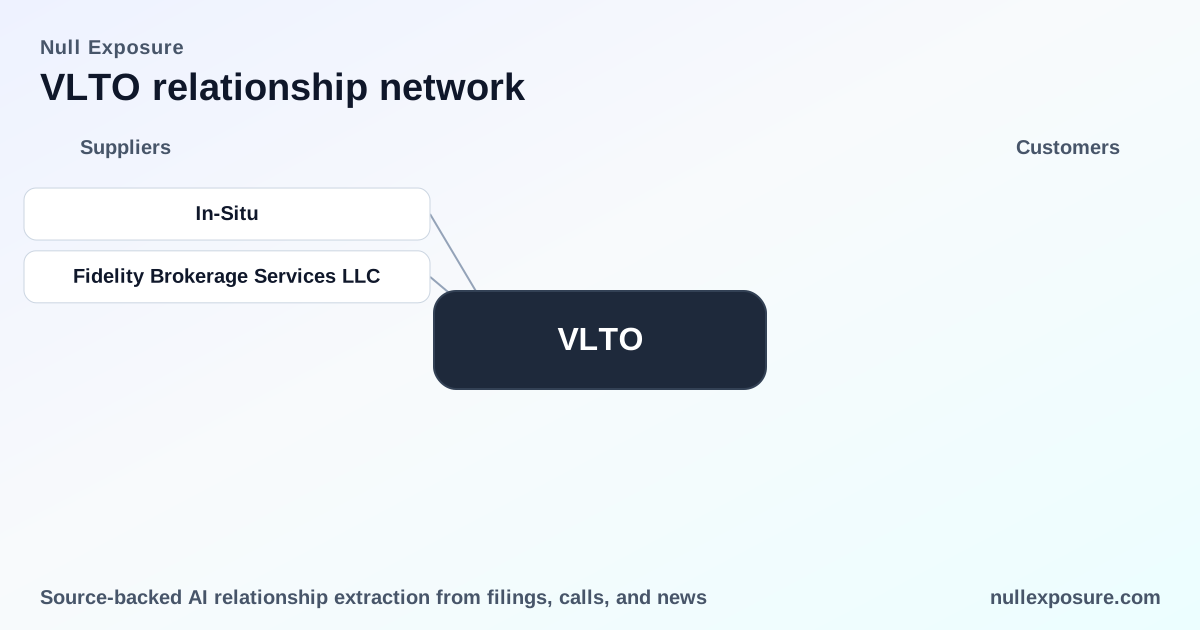
Below I cover every relationship surfaced in the public record provided for supplier analysis.
In‑Situ: strategic acquisition to extend analytics capability
Veralto completed the acquisition of In‑Situ, a provider of environmental water and hydrology analytics solutions, in FY2026. This deal bolsters Veralto’s capability to sell monitoring hardware bundled with analytics and recurring data services, accelerating the shift toward higher-margin annuity revenue tied to instrument fleets and telemetry. (Source: Sahm Capital news report, February 10, 2026 — acquisition announcement reproduced online.)
Fidelity Brokerage Services LLC: broker‑dealer disclosure in an SEC filing
A reproduction of a Veralto SEC filing in FY2026 lists an aggregate amount of 1,435,157.82 and identifies Fidelity Brokerage Services LLC as the broker‑dealer associated with that entry. This is a standard broker identification in filings and signals typical capital markets and custody relationships rather than an operational vendor tie. (Source: SEC filing reproduced on StockTitan, March 2026.)
What the constraints reveal about Veralto’s operating model
The uncovered constraints give clear signals about cost allocation, insurance centralization, and spend scale — all relevant to supplier risk assessment and contracting posture.
- Insurance is centrally administered and material. Company disclosures state that Danaher administered multiple insurance programs on Veralto’s behalf (workers’ compensation, property, cargo, auto, crime, fiduciary, product, general and D&O). That naming indicates third‑party or legacy administrative arrangements for a range of risk categories rather than a loose patchwork of local policies; this centralization reduces insurer proliferation but creates a concentration point around the administrator’s performance and cost allocation.
- Allocated insurance/medical spend is large. Veralto reported medical insurance program expense allocations from Danaher of roughly $88 million (2023) and $87 million (2022) — a spend band consistent with the $10M–$100M bucket flagged in the filings. This level of allocated spend is material to operating cash flow and signals significant cost exposure through shared programs, which is important when modeling SG&A and fringe benefits as fixed versus variable costs.
- Relationship role is service‑provider in nature. The vendor/allocator role indicated in the disclosures is that of a service provider administering benefits and insurance — a supplier function with contractual obligations, indemnities, and pricing that can affect earnings volatility.
These constraints are company‑level signals about Veralto’s contracting posture: procurement for insurance and benefits is centralized and significant; supplier concentration exists for administrative services; and related costs are material to operating performance.
Implications for investors and operator diligence
Investors and operators should draw three practical conclusions from the relationship and constraint set.
- Strategic acquisitions increase operational integration risk. The In‑Situ buy accelerates recurring analytics revenue but requires integration of product roadmaps, supply chains for instrumentation, and customer service processes — all supplier‑sensitive areas where delivery failures would affect churn and margin.
- Insurance administration is a single point of potential disruption or cost escalation. The Danaher‑administered programs and high allocated medical spend imply that changes in administration, underwriting cycles, or allocation methodology could produce step changes in operating expenses; model sensitivity to insurance cost escalation accordingly.
- Capital markets relationships are routine but visible. The Fidelity broker entry is a standard custody/transactional relationship; it is not an operational vendor risk but it flags where institutional flows are routed and how filings disclose brokered transactions.
Risk profile: where to look deeper in due diligence
- Assess integration milestones and cross‑sell targets from the In‑Situ acquisition to judge whether the analytics revenue ramp is realistic and margin accretive.
- Review contract terms and termination provisions for the insurance administration arrangement with Danaher (or any successor administrator) to understand timing of potential cost pass‑throughs and allocation mechanics.
- Evaluate vendor concentration for instrumentation components tied to the In‑Situ product line; supplier single‑sourcing here would be an important operational risk.
For a full supplier risk scan and to monitor how these relationships evolve, visit https://nullexposure.com/.
Bottom line and next steps
Veralto is executing a clear move up the value chain by embedding analytics and services into its water platform, which supports higher gross and operating margins. The company’s supplier profile shows strategic expansion (In‑Situ) alongside material administrative concentration (insurance administration and allocated medical spend) — an attractive revenue mix but one that elevates vendor and allocation risk. Investors should model the upside from analytics growth and stress-test insurance allocation volatility when valuing the business.
If you’re evaluating counterparty risk or preparing operational diligence on VLTO, review supplier disclosures and insurance contracts first; for ongoing supplier intelligence and alerts, explore the platform at https://nullexposure.com/.