VeriSign (VRSN): Critical Internet Infrastructure, Recurring Monopoly Cash Flow
VeriSign operates and monetizes an essential slice of the internet: it runs the .com registry and core DNS/root services while selling managed DNS and DDoS mitigation to enterprises. The business converts scarcity and scale into predictable, high-margin recurring revenue—VeriSign collects registry fees and service subscriptions that generate steady cash flow and strong operating leverage. For investors and operators evaluating supplier exposure, this is a relationship driven by contractual longevity and infrastructure criticality rather than transactional product sales.
Learn more at https://nullexposure.com/.
How VeriSign makes money and why that matters to suppliers and customers
VeriSign’s commercial model is straightforward: registry contracts and security services produce recurring fees, and the company exhibits high margins and cash conversion. The firm reported roughly $1.66 billion in trailing twelve‑month revenue with a net margin around 50%, and a market capitalization near $22.36 billion, indicating strong profitability and valuation multiples rooted in predictable cash flows. These economics make VeriSign a supplier that commands premium pricing for services that are both critical and hard to substitute.
Beyond financials, the operating model is defined by long-duration agreements and concentrated responsibilities: VeriSign’s role as the .com registry and operator of core DNS infrastructure creates a supplier relationship with high criticality, concentrated contract exposure, and long contract maturity, all of which are central to counterparty risk and procurement strategy.
The single documented counterparty action: brokerage sale recorded in FY2026
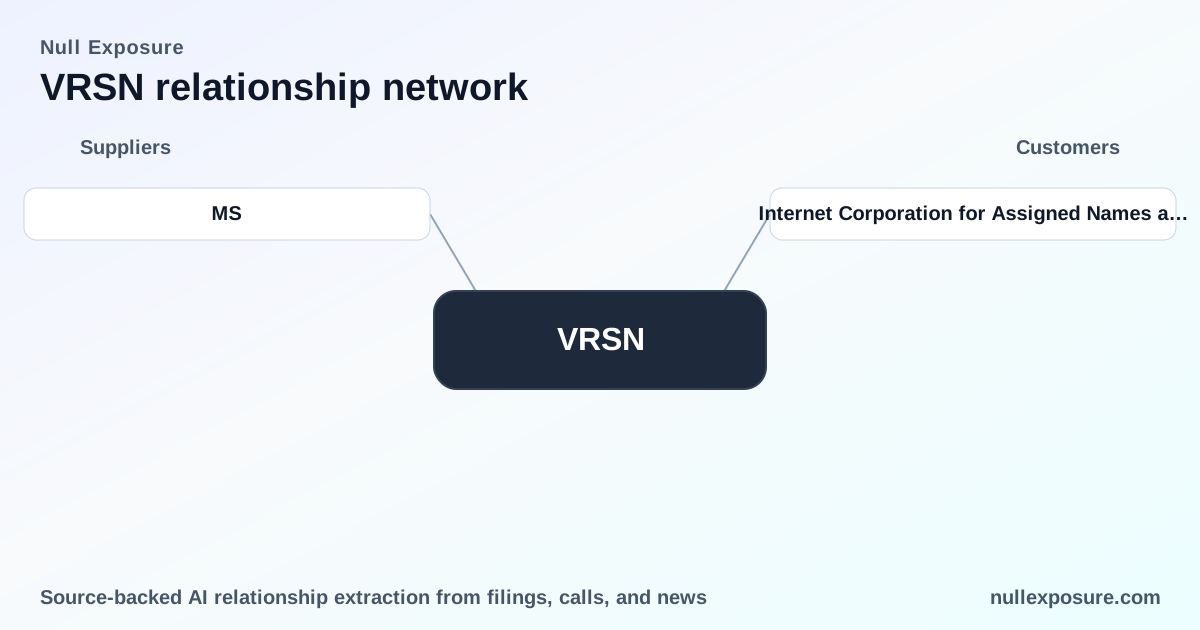
Morgan Stanley Smith Barney LLC
- Morgan Stanley Smith Barney LLC executed a small sale of VeriSign shares—498 shares (aggregate market value $115,426.44) sold on March 3, 2026—as recorded in an SEC reporting extract captured on March 10, 2026. The position size is negligible relative to VeriSign’s roughly 91.7 million shares outstanding, so this action is operationally immaterial to the company’s supply relationships or governance. Source: an SEC filing posted via StockTitan reporting service (March 2026).
What the contractual evidence tells suppliers about VeriSign’s posture
A constraint excerpt in recent filings states: “The Company has an agreement with Internet Corporation for Assigned Names and Numbers (ICANN) to be the sole registry operator for domain names in the .com registry through November 30, 2030.” This sentence is a company-level signal that shapes how counterparties should model risk and negotiating leverage.
Key operating-model characteristics derived from that contract and public financials:
- Contracting posture — Long-term and defensive. The ICANN contract runs through 2030, meaning VeriSign operates with a multi-year, regulatory-anchored franchise rather than a short-term vendor relationship. This favors stability in revenue forecasts for suppliers and customers.
- Concentration — Single-registry reliance. Holding the sole operator role for .com concentrates regulatory and operational exposure; any supplier or partner must price for the dependency on a central, single-party registry function.
- Criticality — Systemic provider. VeriSign supplies infrastructure whose interruption has outsized impacts on internet availability. For procurement and risk teams, that elevates service-level expectations, continuity planning, and incident response coordination.
- Maturity — Predictable cash flows, established contract lifecycle. The contract horizon and long historical stewardship of the namespace make the revenue base mature and forecastable, enabling longer supplier payment terms or multi-year arrangements where justified.
Implications for investors and procurement teams
For investors assessing equity or credit risk:
- Stability of cash flows is core to valuation. Long-term registry contracts and recurring security services underpin the company’s high margins and justify premium multiples relative to pure software peers.
- Regulatory and contract renewal risk is the primary governance lever. The termination or adverse modification of the ICANN contract would be binary and value-determinative; otherwise, operating performance correlates with domain growth and enterprise demand for DNS/security services.
For procurement and vendor managers evaluating partnerships:
- Treat VeriSign as a strategic supplier. Contract negotiation should focus on continuity guarantees, escalation procedures, and co‑ordinated incident response rather than price alone.
- Model single‑point exposure into sourcing. Because VeriSign controls .com registry operations, redundancy planning should emphasize downstream DNS resilience and contractual remedies.
If you want a structured view of supplier criticality and exposure for portfolios or vendor lists, explore actionable supplier intelligence at https://nullexposure.com/.
Relationship-level takeaway and context
The lone recorded relationship action—Morgan Stanley Smith Barney LLC’s small offload in March 2026—does not alter the strategic supplier profile described above. It is a routine brokerage transaction reported to regulators and carries no operational signal about VeriSign’s service capabilities or contractual standing. The company-level evidence (the ICANN contract to 2030) is the decisive input for supplier risk assessment. Source: StockTitan SEC filing summary (March 2026); Verisign company filings regarding the ICANN agreement (public filings).
Final recommendations for investors and operators
- Prioritize contract and regulatory tracking. The shape and timing of the ICANN contract (expires 2030) dictate long-term revenue risk; monitor renewal negotiations and regulatory statements closely.
- Stress-test continuity plans with VeriSign as a central node. Given the infrastructure role, ensure recovery playbooks explicitly include VeriSign service interruptions.
- Value the franchise on recurring revenue and margin durability. For investors, discount-rate and growth assumptions should reflect steady domains growth and modest cyclicality in enterprise DNS/security spend.
For a deeper supplier-risk briefing or to see more supplier relationship summaries, visit https://nullexposure.com/.