ViaSat (VSAT): Supplier relationships, strategic constraints, and what investors should price in
Viasat operates and monetizes a vertically integrated satellite broadband and communications business: the company builds and sells terminals and modems, leases satellite capacity, and delivers recurring network services to mobility, defense and consumer customers. Revenue is derived from recurring bandwidth contracts and connectivity services, one‑time terminal and equipment sales, and long‑dated satellite construction commitments that convert capex into future service capacity. For investors, the core valuation drivers are network utilization and contract-backed recurring revenue versus the cycle and concentration risk of satellite manufacturing and launch partners. Learn more about underlying data and supplier exposure at https://nullexposure.com/.
Where the supplier picture matters to equity investors
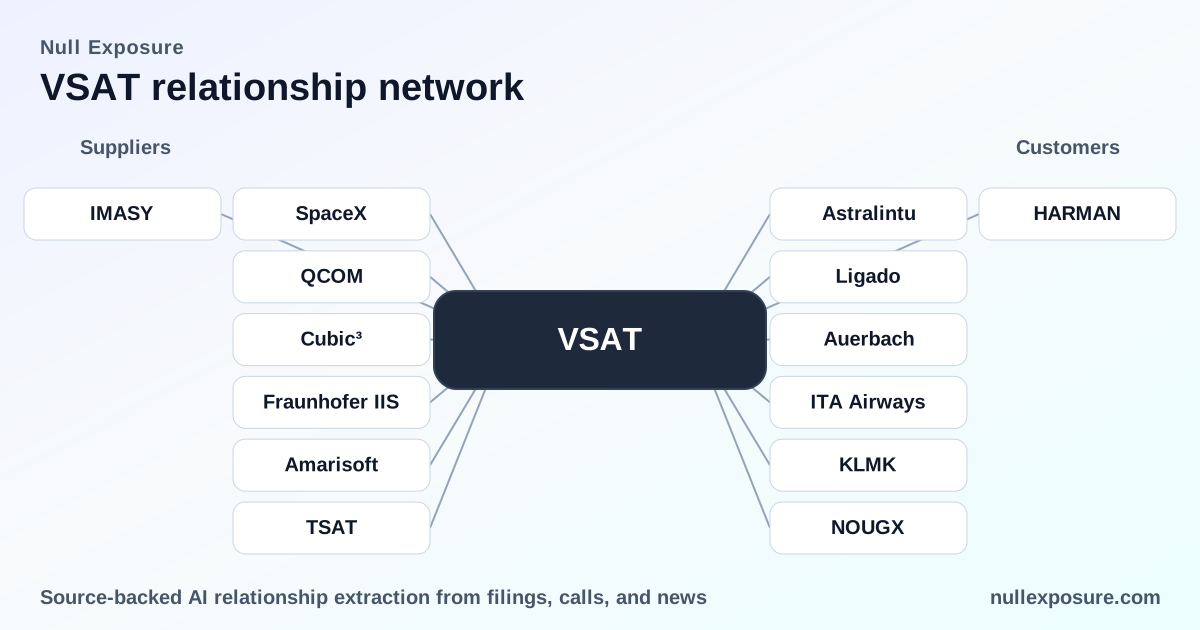
Viasat’s supplier relationships are not peripheral procurement notes: they are central to capacity, time‑to‑market, and margin trajectory. The company’s public disclosures and press coverage in FY2026 reveal a mix of strategic technology partners (Qualcomm, Fraunhofer IIS), demonstration and commercialization allies (Cubic³, Amarisoft), multi‑orbit capacity partners (Telesat, Inmarsat), and operational launch dependencies (SpaceX). Combined with company disclosures about contract manufacturers and satellite construction commitments, these relationships create a profile of high capital intensity, multi‑year contractual obligations, and concentrated supplier risk.
According to Viasat’s FY2026 filings and public comments, management expects multi‑year incentive payments tied to satellite performance through fiscal 2028, and the company discloses reliance on contract manufacturers and sole‑source suppliers — signals that influence contracting posture, supplier concentration, and budget certainty. For a deeper supplier risk view and to track evolving partner mentions, visit https://nullexposure.com/.
Company‑level constraints that shape the business model
The public documents and transcripts give clear, company‑level signals rather than isolated anecdotes:
- Long‑term contracting posture: Viasat is contractually committed to monthly in‑orbit satellite performance incentive payments through fiscal 2028, which embeds fixed, multi‑year cash outflows linked to satellite performance and lifespan.
- Concentration of manufacturing: The company relies on a limited number of contract manufacturers and sole‑source suppliers, creating supplier concentration risk for terminals and satellite hardware.
- High capital commitments: Disclosures flag multi‑year satellite construction and purchase commitments consistent with a >$100M spend band signal, underscoring capex intensity and schedule sensitivity.
- Selective immateriality: Some ancillary agreements (for example tied to the Link‑16 divestiture) were disclosed as not significant to consolidated financials, indicating the company judges certain post‑transaction contracts to be non‑material to near‑term results.
Collectively, these constraints indicate a business that is capital intensive, reliant on a small supplier set for critical hardware, and exposed to launch and in‑orbit performance timing risk, while retaining recurring revenue upside if network utilization and service contracts scale.
The partner list — what each relationship actually says to an investor
SpaceX
Viasat referenced an upcoming Flight 3 integration and an anticipated Falcon Heavy launch with service entry by late summer, demonstrating a direct dependence on SpaceX launch scheduling to bring new capacity online. (InsiderMonkey, Q3 FY2026 earnings call transcript — March 2026)
Source: https://www.insidermonkey.com/blog/viasat-inc-nasdaqvsat-q3-2026-earnings-call-transcript-1690846/
Qualcomm Technologies, Inc.
Viasat is participating in a demo that integrates its satellite network with Qualcomm’s Snapdragon Auto 5G Modem‑RF Gen 2, indicating a strategic push to blend terrestrial 5G and satellite connectivity for automotive and edge markets. (StockTitan press report, FY2026)
Source: https://www.stocktitan.net/news/VSAT/viasat-and-cubic3-to-demonstrate-advanced-satellite-voice-call-amhmajvef8a6.html
Cubic³
Cubic³ is a technology partner on the same satellite voice‑call demo, supplying a connectivity platform and hybrid eSIM functionality tied into Viasat’s network—an example of ecosystem collaboration to capture auto and mobility use cases. (StockTitan press report, FY2026)
Source: https://www.stocktitan.net/news/VSAT/viasat-and-cubic3-to-demonstrate-advanced-satellite-voice-call-amhmajvef8a6.html
Fraunhofer IIS
Fraunhofer IIS provided the NESC voice codec used in the demo, highlighting that Viasat is using established codec standards and third‑party IP to optimize quality for voice over satellite links. (StockTitan press report, FY2026)
Source: https://www.stocktitan.net/news/VSAT/viasat-and-cubic3-to-demonstrate-advanced-satellite-voice-call-amhmajvef8a6.html
Amarisoft
Amarisoft supplied technical support for the demo integration, underscoring Viasat’s reliance on specialist telecom software providers to integrate radio and core network functions for hybrid satellite‑cellular solutions. (StockTitan press report, FY2026)
Source: https://www.stocktitan.net/news/VSAT/viasat-and-cubic3-to-demonstrate-advanced-satellite-voice-call-amhmajvef8a6.html
Telesat
Viasat described plans to replicate successful maritime multi‑orbit configurations with Telesat, signaling cooperative use of different orbital assets (GEO + LEO/MEO) to improve coverage and resiliency for mobility customers. (InsiderMonkey, Q3 FY2026 earnings call transcript — March 2026)
Source: https://www.insidermonkey.com/blog/viasat-inc-nasdaqvsat-q3-2026-earnings-call-transcript-1690846/
Inmarsat
Viasat’s SEC filing and related commentary list multiple GEO satellites under development and reference Inmarsat’s L‑band GEO satellites, indicating industry‑wide capacity planning and potential adjacency or comparative benchmarking with Inmarsat’s safety service satellites. (SEC 10‑Q summary published via TradingView, FY2026)
Source: https://www.tradingview.com/news/tradingview:554d141df2e37:0-viasat-inc-sec-10-q-report/
Investment implications: positioning and risks
- Growth driver: The Qualcomm/Cubic³/Fraunhofer/Amarisoft demo underscores a strategic push into hybrid 5G‑satellite services for automotive and mobility, a higher‑margin recurring revenue vector if commercialized broadly. This is a positive structural growth signal.
- Execution and timing risk: SpaceX launch scheduling and manufacturer dependence inject calendar risk into capacity rollouts; missed launches or in‑orbit underperformance would compress revenue ramp timing and increase substitute procurement costs.
- Capital intensity and supplier concentration: Long‑term incentive payments and >$100M construction commitments lock cash flows into capex and performance obligations, while reliance on a limited set of contract manufacturers concentrates operational risk.
- Mitigants: Multi‑orbit collaborations with Telesat and interoperability demos with major chipset vendors increase optionality and reduce single‑orbit exposure, improving resilience for mobility customers.
Key takeaway: Viasat’s business combines durable recurring revenue potential with concentrated supplier and capex execution risk; investors must price both the upside of commercialization of hybrid services and the downside of schedule or supplier disruption.
For a consolidated, continuously updated view of supplier exposure and to track partner changes in real time, visit https://nullexposure.com/.
Bottom line and next steps for due diligence
Viasat’s FY2026 disclosures and public partner announcements present a clear strategic posture: scale recurring, network‑based revenue while managing significant manufacturing and launch dependencies. Investors should focus diligence on (a) the timing and performance of upcoming satellite launches, (b) contractual terms and counterparty concentration with manufacturers, and (c) commercialization evidence for hybrid 5G‑satellite services.
If you want an investor‑grade supplier risk profile and ongoing monitoring for Viasat or other communications suppliers, start your analysis at https://nullexposure.com/.