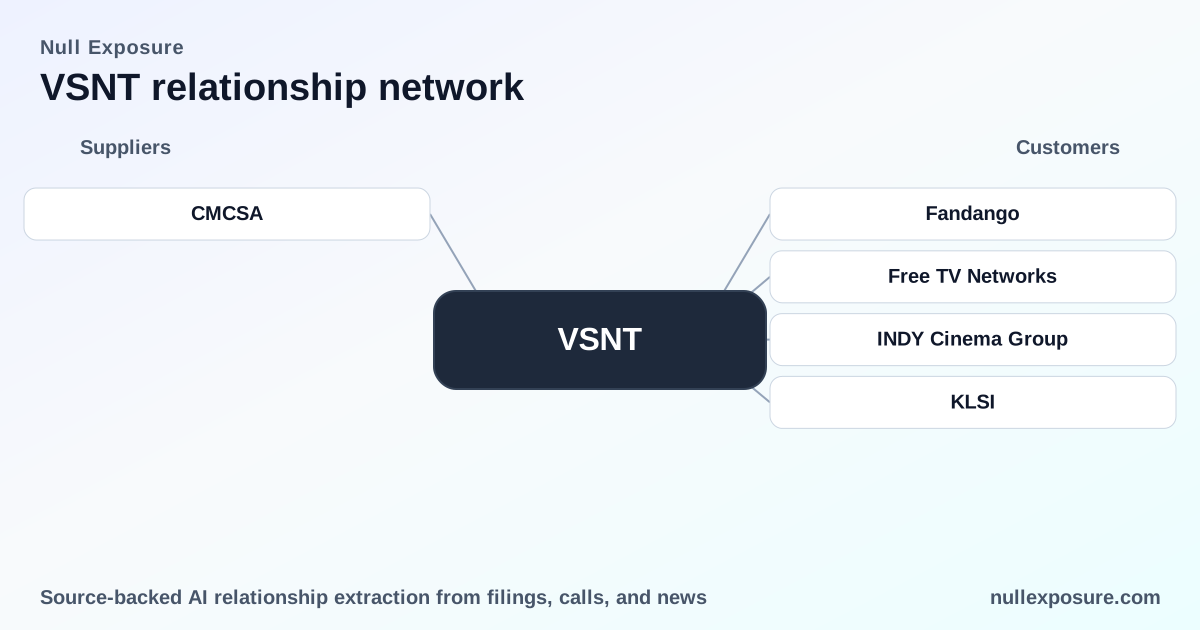
Versant Media Group (VSNT) — supplier relationship profile and investor implications
Versant Media Group operates a portfolio of cable television networks and digital platforms and monetizes through a mix of distribution/carriage agreements, advertising sales, and platform-level commercial partnerships. The company reported trailing revenue of $6.801 billion and EBITDA of $2.572 billion (latest quarter 2025-09-30), giving investors a clear view of a cash-generative media business built on content distribution and ad monetization. For a broader supplier-risk analysis and comparative supplier profiles, see https://nullexposure.com/.
How the business runs and where supplier risk matters
Versant’s operating model is anchored on two commercial levers: content supply and distribution economics. Content gets packaged into channels and digital properties; downstream carriage agreements with distributors and advertising partners translate that content into recurring fees and variable ad revenue. Financials show healthy gross margins and material EBITDA, implying scale in negotiating carriage and advertising terms (Revenue TTM $6.801B; Gross Profit TTM $3.905B; EBITDA $2.572B).
That structure creates supplier dynamics that investors should internalize:
- Contracting posture: The company operates with industry-standard long-term carriage and licensing contracts rather than ad-hoc spot deals; this gives predictable revenue but locks in counterparty negotiation dynamics.
- Concentration: Public data do not disclose acute single-supplier lock-ins; however, concentration risk sits in distribution partners and major network/content providers.
- Criticality: Content and news-gathering relationships are operationally critical — disruptions in sourcing or distribution have immediate monetization impact.
- Maturity: Supplier relationships are mature and embedded in legacy cable economics while increasingly strained by digital distribution shifts.
For further context across suppliers and to track changes in these relationships over time, consult https://nullexposure.com/.
Supplier relationships flagged in the available coverage
The available supplier-scope feed returned a single notable relationship signal involving NBC News / Comcast. Below is the relationship as reported in media coverage.
NBC News (Comcast, inferred symbol CMCSA) — what the coverage says
Variety reported in 2025 that MSNBC will reduce its reliance on the NBC News newsgathering apparatus and has been hiring its own journalists under chief Rebecca Kutler, signaling an organizational shift in how news content is sourced and produced. This development connects to the NBC News organization, which is part of Comcast’s media assets (inferred symbol CMCSA). (Variety, 2025; article indexed March 2026: https://variety.com/2025/tv/news/msnbc-new-name-ms-now-1236491621/)
This single-sentence action — internalizing newsgathering capability — has two investor-relevant dimensions:
- Operational: Shifting editorial and sourcing roles can change supplier spend profile if Versant works with NBC News for content sharing, licensing, or syndication.
- Strategic: The move reflects broader media consolidation of news operations and direct investment in owned content creation, which influences how third-party networks negotiate content access and carriage.
What this relationship means for Versant as a supplier partner
The flagged NBC News item is not presented as an explicit contractual supplier tie to Versant, but it is material in the broader competitive and operational landscape for any network operator. For investors evaluating Versant supplier risk, translate the media movement into concrete considerations:
- Content sourcing risk: If major content providers reallocate resources internally, third-party networks can face shifting availability or pricing for syndicated or licensed content.
- Negotiation posture: Versant’s scale (market cap ~$4.73B; EBITDA ~$2.57B) gives it bargaining power, but evolving competitor strategies at Comcast/NBC create negotiating variability for news and live-event content.
- Operational flexibility: Versant’s ability to pivot its sourcing, bolster in-house content creation, or expand digital partnerships will determine exposure to upstream supplier changes.
Key takeaway: the Variety report signals a shift in how a major industry player organizes news production — an industry-level dynamic that affects content sourcing economics for networks like Versant.
Company-level supplier constraints and operating signals
There were no explicit supplier constraint excerpts returned in the feed for Versant. As a company-level signal this absence indicates:
- No disclosed single-vendor constraint in the provided materials, so investors should not assume a documented supplier lock-in based on this feed alone.
- Standard industry contracting posture: Versant’s business aligns with long-term carriage and licensing frameworks typical of cable networks and digital platforms.
- Maturity of supplier relationships: The firm runs established commercial relationships that are likely negotiated at scale rather than on an ad-hoc basis.
- Critical dependency remains on content and distribution partners; disruptions there would be operationally meaningful even if not explicitly documented in supplier constraints.
Investors should treat these as operating signals to validate against contractual schedules and counterparties in formal filings and supplier rosters.
Investor implications and risk checklist
- Content supply is a strategic exposure. Changes in how large content owners (e.g., Comcast/NBC) organize newsgathering can shift licensing dynamics. Monitor announcements from major networks for sourcing shifts.
- Negotiate with scale. Versant’s margins and EBITDA suggest negotiating strength, but digital disruption compresses leverage in some content categories.
- Operational continuity matters. Supplier operational changes (reorganizations, insourcing) translate quickly into revenue mix and cost structure changes for distributors and network operators.
- Due diligence: Validate supplier terms, exclusivity windows, and termination clauses in contracts that are not visible in this feed.
For focused tracking of supplier relationships and to see how these dynamics evolve against financials, visit https://nullexposure.com/ for ongoing supplier intelligence.
Actionable next steps for investors and operators
- Review Versant’s latest public filings and schedules for carriage and licensing agreements to quantify counterparty exposure. For streamlined supplier monitoring and comparative profiles, visit https://nullexposure.com/.
- Integrate media-coverage signals (like the Variety item on NBC/MSNBC) into counterparty risk models and update scenario analyses for content interruption or pricing pressure.
Bold, proactive supplier oversight will preserve the revenue stability investors expect from a scaled media operator like Versant.