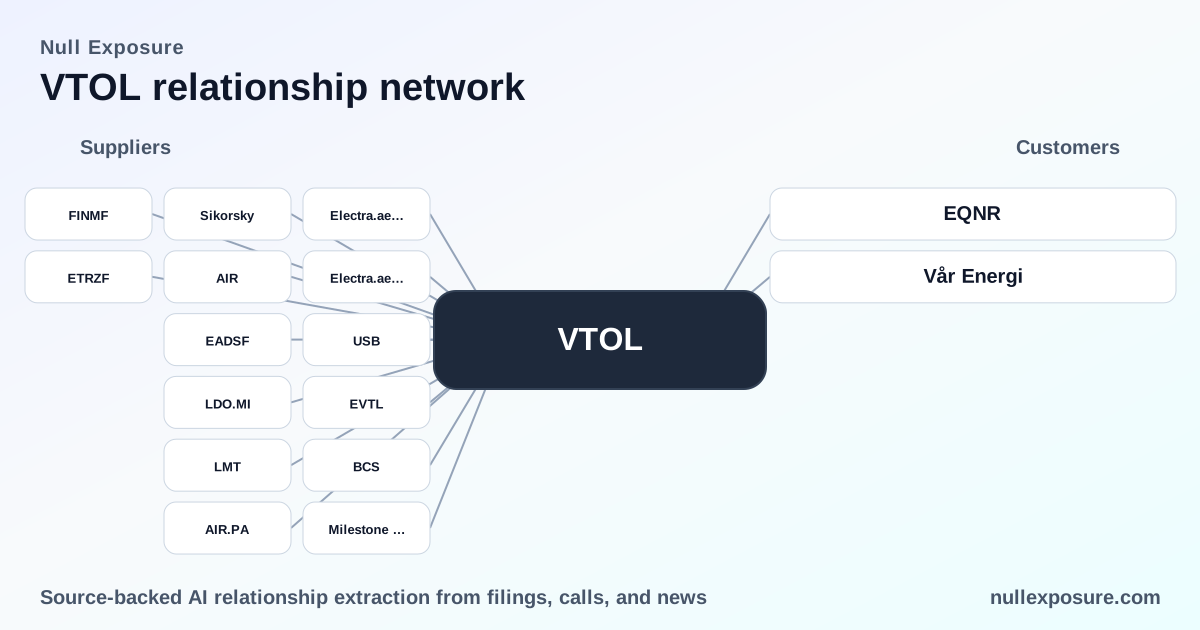
Bristow Group (VTOL): Supplier map, strategic posture and what investors need to know
Bristow Group operates as a global provider of vertical flight services, monetizing through long-term offshore aviation contracts, aircraft leasing and charter operations, and increasingly through strategic aircraft pre-delivery and lease commitments that position the company in the emerging short-range electric/ hybrid-vertical market. Revenues derive from contract-backed flight operations and asset-backed leasing while balance-sheet activity (debt refinancing, secured notes) underpins fleet renewal and new-technology commitments. Learn more about how we track supplier exposures at https://nullexposure.com/.
Context first: Bristow is a dollar-scale operator (Market Cap ~$1.26B, Revenue TTM $1.49B, EBITDA $225M) with a legacy turbine helicopter fleet and an explicit strategic pivot into new short-range electric/hybrid aircraft through binding pre-delivery agreements. That combination creates a mixed profile of cash-generative operations plus growth optionality tied to an immature supply chain for next-generation aircraft.
The strategic implications of recent supplier agreements
Bristow’s supplier relationships split into three functional buckets: (1) next‑generation aircraft suppliers (Electra, Vertical), where the company is placing binding pre-delivery deposits and seeking first-delivery positions; (2) traditional OEM and lessors (Airbus, Leonardo, Sikorsky, Milestone), which supply and lease conventional helicopters that support existing cash flows; and (3) financial counterparties (U.S. Bank Trust Company, Barclays) that structure secured debt and asset-based facilities critical to funding fleet renewal and PDPs. This multi-channel approach signals a company simultaneously running a mature operating franchise while investing in a technology transition.
Explore supplier risk scoring and relationship detail at https://nullexposure.com/.
Supplier relationships that matter — company-by-company notes
-
Electra.aero / Electra: Bristow signed a Pre-Delivery Payment (PDP) deposit agreement for five EL9 hybrid‑electric aircraft delivery slots (including the first off the production line) with options on 45 further aircraft, subject to certification and industry-standard PDP terms (Jan 21, 2026). This establishes Bristow as a launch customer for Electra’s EL9 and ties future capacity to Electra’s certification and production cadence (Bristow press release, Jan 21, 2026 — https://www.bristowgroup.com/news-media/press-releases/detail/590/; reporting on the announcement via Finviz, Jan 2026 — https://finviz.com/news/282158/bristow-signs-launch-agreement-with-electra-to-secure-first-delivery-slot-for-el9-aircraft).
-
Vertical Aerospace: Bristow is listed among customers in Vertical’s pre‑order base for the Valo demonstrating Bristow’s diversification into different eVTOL platforms and reinforcing a multi‑vendor sourcing stance for next‑generation aircraft (Bristow press release covering Vertical’s presentations, 2026 — https://www.bristowgroup.com/news-media/press-releases/detail/591/).
-
Milestone Aviation Group: Bristow has leased Airbus H160 medium‑twin helicopters from Milestone, receiving the first two of five H160s as part of a leasing arrangement that augments Bristow’s medium‑twin capacity (Raymond James initiation coverage citing Milestone lease delivery, Mar 2026 — https://www.marketscreener.com/news/raymond-james-initiates-coverage-on-bristow-group-with-outperform-rating-60-price-target-ce7e5ddedc80f726).
-
Airbus: Airbus is a supplier to Bristow’s turbine fleet (H160 deliveries) and remains a core OEM for medium‑twin aircraft supporting current operations, with public reporting noting H160 deliveries to Bristow as part of the Milestone leasing program (MarketBeat and Marketscreener coverage, Mar 2026 — https://www.marketscreener.com/news/... ; https://www.marketbeat.com/instant-alerts/...).
-
Leonardo: Leonardo‑built aircraft (AW189) feature in Bristow’s described fleet mix, representing another traditional OEM relationship that underpins offshore lift capacity (MarketBeat filings and coverage noting fleet composition, 2026 — https://www.marketbeat.com/instant-alerts/...).
-
Sikorsky (Lockheed Martin): Sikorsky S‑92s are part of Bristow’s heavy‑lift fleet, indicating enduring supplier relationships with legacy OEMs for sectors where turbine performance and regulatory maturity remain critical (MarketBeat alerts describing fleet composition, 2026 — https://www.marketbeat.com/instant-alerts/...).
-
U.S. Bank Trust Company: Bristow executed a senior secured notes indenture with U.S. Bank Trust Company as trustee in connection with its refinancing and secured notes offering, a structural financing counterparty relationship that affects debt servicing and collateral arrangements (TradingView coverage of material agreements, 2026 — https://www.tradingview.com/news/tradingview:8c57394381133:0-bristow-group-signs-multiple-material-agreements/).
-
Barclays Bank: Bristow amended and restated an ABL (asset-based lending) facility with Barclays, signaling active balance‑sheet management and reliance on bank liquidity to support fleet and working capital needs (TradingView summary of the Barclays ABL amendment, 2026 — https://www.tradingview.com/news/tradingview:8c57394381133:0-bristow-group-signs-multiple-material-agreements/).
How these relationships constrain and define Bristow’s operating model
-
Contracting posture: Bristow uses a mix of long‑term service contracts and binding PDP deposit agreements for new aircraft, showing a hybrid posture that balances operational revenue certainty with contingent capital commitments for future fleet transitions.
-
Concentration and criticality: The operating model is highly mission‑critical to offshore customers; fleet composition across multiple OEMs reduces single‑supplier concentration for current operations but creates concentration risk around certification timelines for next‑generation platforms.
-
Maturity: The legacy helicopter business is mature and cash‑generative (Revenue TTM ~$1.49B, EBITDA ~$225M), while eVTOL/hybrid relationships represent immature growth optionality dependent on third‑party certification and scale production.
-
Financing and liquidity posture: Recent secured notes and ABL amendments show active leverage and liquidity management, with financing counterparties structurally tied to fleet renewal and PDP obligations (public reporting of a $500M senior secured notes offering discussed in market coverage, Mar 2026).
No explicit contractual constraints were disclosed in the supplier relationship summaries beyond the PDP subject-to-certification language; absent additional constraint excerpts, these operational signals are company‑level.
Explore a consolidated supplier risk view and modelled exposures at https://nullexposure.com/.
Investment implications — what to watch and how to act
-
Catalyst profile: Near-term performance will be driven by traditional fleet utilization and cash generation; medium-term upside is tied to Electra and other eVTOL certification and delivery milestones. Investors should treat the Electra PDPs as strategic option value rather than immediate revenue.
-
Balance‑sheet sensitivity: The company’s reliance on secured notes and an ABL facility creates sensitivity to interest rates and collateral valuations; monitor covenant metrics and upcoming maturities.
-
Operational risk: Continued operations depend on reliable OEM support for legacy helicopters (Airbus, Leonardo, Sikorsky) and on successful integration of leased assets (Milestone H160s) into service lines.
For a deeper supplier-level exposure report and scenario analysis, visit https://nullexposure.com/.
Conclusion: Bristow combines a stable, contract-backed helicopter services franchise with an explicit, financed push into next‑generation short‑range aircraft. That duality creates a clear risk/reward tradeoff — steady cash flows today vs. execution-dependent optionality tomorrow. Monitor certification timelines, lease deliveries, and financing covenant health as primary indicators of whether the strategic pivot delivers shareholder value.
If you want a tailored briefing on Bristow’s supplier exposures and how they affect credit and equity risk, request a custom report at https://nullexposure.com/.