VTP as a Supplier: What investors and operators need to know
Thesis: VTP operates as an ETF product vehicle that monetizes through an expense ratio—the public record links VTP to Vanguard’s Total Inflation‑Protected Securities ETF offering, which targets TIPS and carries a 0.05% management fee that generates steady, scale-driven revenue for the sponsor and its service providers. This supplier relationship is product- and distribution‑centric: the economic model is fee-based, visibility is market-driven, and operational risk is concentrated around fund governance, liquidity, and provider continuity.
For a concise supplier-risk readout and ongoing monitoring, visit https://nullexposure.com/.
How VTP fits into the market: simple economics, high dependency on distribution
VTP in practice is an ETF wrapper for Treasury Inflation‑Protected Securities. The sponsor collects an ongoing expense ratio as the core monetization lever; all other revenue streams (securities lending, cash management) are supplemental and scale-dependent. For counterparties and operators, that structure implies a contracting posture that is commercially straightforward—fee-for-service rather than complex revenue sharing—but commercial importance is high because ETF sponsors control listing, distribution, and market‑making arrangements that directly affect flows and liquidity.
The record for VTP in this review contains no supplier constraints excerpts. At the company level this is itself a signal: the dataset provides no documented contractual terms, concentration metrics, or service-level criticality statements to inform counterparty diligence. Operational implications: investors must assume they will need to source contractual detail through formal diligence rather than rely on the vendor record alone.
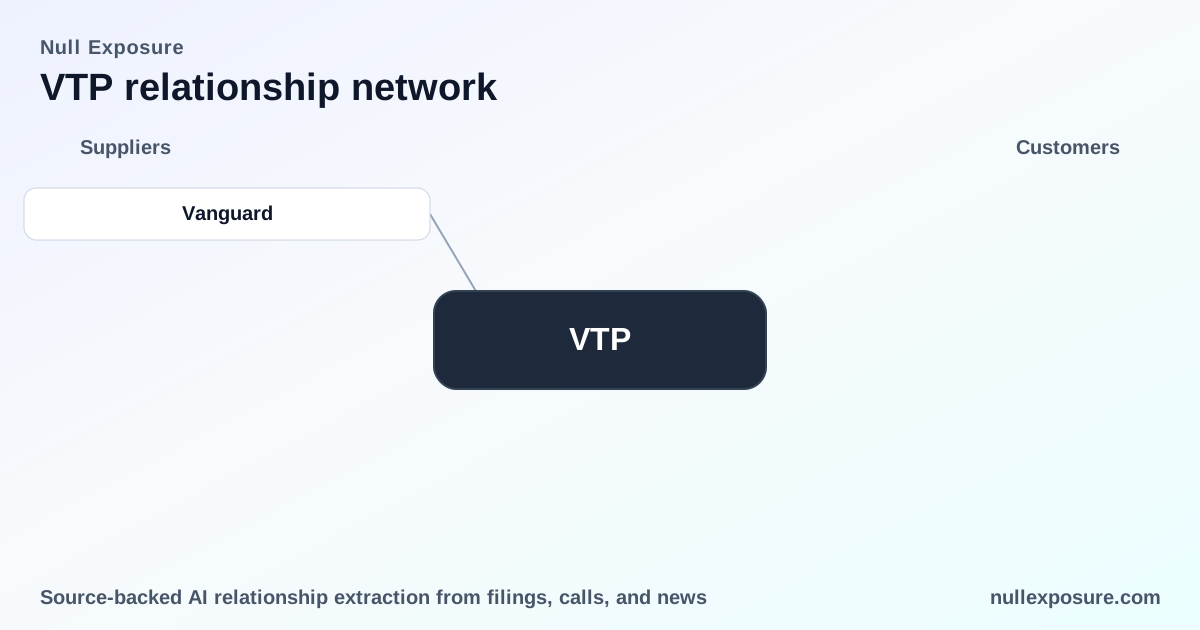
The single documented relationship: Vanguard
Vanguard — Vanguard Total Inflation‑Protected Securities ETF (VTP) is the sponsor/product linked to the VTP ticker; the product targets TIPS and carries a 0.05% expense ratio, positioning it as a low‑cost option for inflation protection that will appeal to long‑term buyers. A news report by Benzinga covering new ETFs recorded this product in FY2025 and was captured in our collection in March 2026. (Benzinga, FY2025 / captured March 2026.)
- Vanguard is the listed sponsor and distribution engine for VTP; the sponsor’s economics are directly tied to the 0.05% fee stream and asset‑gathering success. (Benzinga, FY2025 / captured March 2026.)
Takeaway: Vanguard’s role is foundational—sponsor, distributor, and the primary counterparty for fund governance—so any supplier due diligence for VTP must prioritize Vanguard’s operational controls, liquidity arrangements, and compliance framework.
For a broader vendor view and ongoing supplier alerts, see https://nullexposure.com/.
Why each relationship matters for investors and operators
Even when a record lists only one counterparty, that single relationship can be decisive. Vanguard’s control of listing, NAV calculation oversight, and distribution means concentration risk is real: a sponsor action or operational outage would directly impact liquidity, spreads, and investor redemption experience for VTP holders. From an operator standpoint, this is not a fragmented supplier ecosystem—it's a concentrated, high‑criticality relationship.
Key operational characteristics to consider:
- Contracting posture: sponsor‑led, standardized issuer agreements; commercial terms are typically public but governance documents (trust agreements, transfer agency arrangements) require direct access.
- Concentration: current results show a single documented supplier relationship with Vanguard; that elevates counterparty concentration as a principal risk factor.
- Criticality: sponsorship and distribution are mission‑critical functions that influence liquidity, fee capture, and investor flows.
- Maturity: Vanguard is a mature, institutional sponsor, which reduces some execution risk but does not eliminate systemic or market‑structure risk.
Risk and portfolio implications investors should bake in now
- Fee compression is structural. At 0.05%, VTP is positioned at the low end of ETF fees for inflation‑protected exposure; this helps attract assets but constrains margin for third‑party service providers that rely on a slice of that fee.
- Liquidity is functionally dependent on sponsor and market makers. Sponsor support for authorized participants and primary‑market mechanics will determine how the product behaves in stress.
- Single‑relationship footprint increases due‑diligence burden. With only Vanguard documented as the supplier, operational risk concentrates and requires direct verification of agreements, continuity plans, and collateral arrangements.
Practical next steps for investors and ops teams
- Request sponsor‑level contractual extracts (trust agreement, transfer agency, authorized participant arrangements) to validate SLAs and settlement mechanics.
- Confirm securities‑lending policies, cash‑management counterparties, and revenue‑share arrangements to quantify ancillary revenue flows.
- Stress‑test liquidity assumptions under redemption scenarios given sponsor‑controlled creation/redemption mechanics.
If you want a structured supplier risk brief or automated monitoring for VTP and similar products, start here: https://nullexposure.com/.
Final assessment: focused exposure, manageable economics, but concentrated operational risk
VTP represents a low‑fee, inflation‑protected ETF backed by Vanguard as sponsor; the economics are predictable and scale‑sensitive, and the product’s success depends on asset inflows and market liquidity. The public record for supplier relationships in this review lists only Vanguard, and the dataset contains no supplier constraints excerpts—a company‑level signal that requires investors to pursue direct contractual due diligence rather than relying on the summarized record.
Bold summary takeaways:
- Revenue model: ongoing expense ratio (0.05%) is the primary monetization engine.
- Supplier concentration: single documented sponsor relationship (Vanguard) increases operational concentration risk.
- Due diligence requirement: absence of recorded constraints means obtaining contractual and operational detail directly from the sponsor is essential.
For tailored supplier analysis and to set up continuous monitoring on VTP and peer products, visit https://nullexposure.com/.