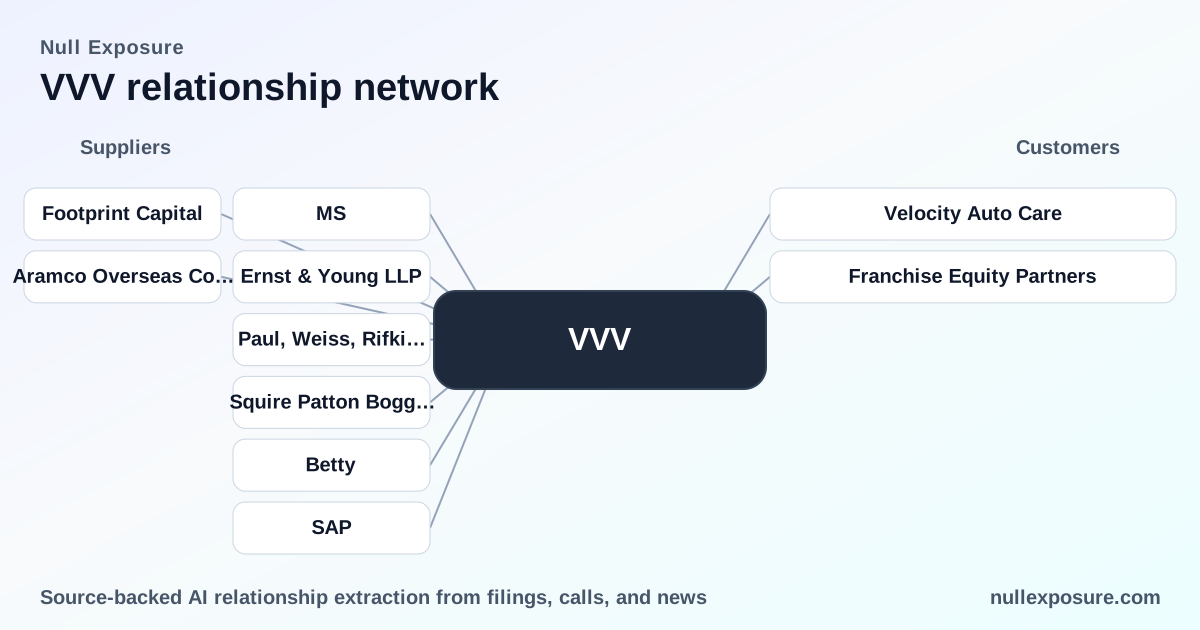
Valvoline Inc. (VVV) — Supplier relationships, constraints, and operational implications for investors
Valvoline operates a vertically integrated retail and product business: it manufactures and distributes engine and maintenance fluids, operates and franchises service centers, and monetizes through product sales, service revenue, and franchise/refranchise transactions. The company’s near‑term topline is supported by recurring lubricant sales and growing service-channel revenue, while recurring long‑term supply arrangements and strategic advisors underpin M&A and governance activity. For investors evaluating supplier and partner risk, the combination of concentrated sourcing for lubricants, an active M&A and refranchising program, and an ERP modernization program are the principal operational themes to monitor. For a deeper supplier-risk profile and tailored exposure analysis, visit https://nullexposure.com/.
How Valvoline’s supplier posture shapes cash flow and operational risk
Valvoline’s commercial model relies on both product revenue (manufactured or sourced lubricants) and service revenue from its stores and franchises. The company’s operating model therefore ties procurement directly to retail availability and customer experience: if product sourcing is concentrated or governed by long-term arrangements, supply continuity and pricing terms become financially material. Concurrently, an active corporate advisor roster signals ongoing corporate activity that can change capital allocation and strategic direction.
- Contracting posture: Public disclosures identify long‑term supply agreements for lubricants, indicating strategic, durable procurement relationships rather than spot purchases.
- Concentration and criticality: When a single supplier covers substantially all lubricant needs for retail operations, the vendor becomes a critical operational dependency and a meaningful financial counterparty.
- Maturity and transition risk: Implementation of core ERP systems and regular engagement of legal and financial advisors reflect a company in transition — operationally modernizing while executing M&A and refranchising moves.
For a practical supplier-risk scorecard and ongoing monitoring, see our platform at https://nullexposure.com/.
Every named relationship and what it signals to investors
Morgan Stanley & Co. LLC (FY2025)
Morgan Stanley acted as financial advisor to Valvoline in the acquisition of Oil Changers Inc. from Greenbriar Equity Group, indicating the company’s continued use of top-tier investment banking capacity for deal execution and capital strategy. This engagement underlines management’s willingness to use strategic acquisitions to expand service-channel scale. Source: MarketScreener coverage of the transaction reported March 10, 2026.
Ernst & Young LLP (FY2026)
Shareholders ratified Ernst & Young LLP as Valvoline’s independent registered public accounting firm for fiscal 2026, a governance outcome that reinforces external financial oversight and audit continuity following recent corporate actions. Source: Globe and Mail press release summary published March 10, 2026.
Paul, Weiss, Rifkind, Wharton & Garrison LLP (FY2025)
Paul Weiss served as Valvoline’s legal advisor on the Oil Changers acquisition, demonstrating the use of a leading transactional law firm to manage deal structuring, regulatory and documentation complexities. Source: MarketScreener transaction report, March 10, 2026.
Squire Patton Boggs LLP (FY2025)
Squire Patton Boggs also acted as legal counsel to Valvoline on the same acquisition, indicating layered legal support—likely to cover specialized regulatory or operational areas associated with the transaction. Source: MarketScreener transaction report, March 10, 2026.
Betty (marketing agency) (FY2026)
Valvoline launched an “instant transfer” portal campaign developed in partnership with Betty, a Quad agency, signaling a push toward culturally relevant, performance-driven consumer marketing to drive retention and acquisition in the retail channel. Source: PR/FinancialContent release dated January 6, 2026.
SAP (FY2026)
Management reported that the first phase of SAP was implemented in 2024, which reflects a multi-year ERP modernization program aimed at consolidating operations, improving inventory and procurement visibility, and enabling scale. The SAP rollout is a critical operational lever for supply-chain efficiency. Source: Q1 2026 earnings call transcript published on InsiderMonkey.
Footprint Capital (FY2024)
Footprint Capital served as financial advisor to Valvoline in connection with refranchising 38 company stores and welcoming a new franchise partner, highlighting the company’s active capital and franchise optimization strategy. Source: PR Newswire announcement regarding the refranchise transaction, FY2024.
Aramco Overseas Company B.V. (FY2024)
Following the sale of Valvoline’s Global Products segment, the buyer—Aramco Overseas Company B.V.—entered a long‑term supply agreement to provide lubricants post‑sale, which preserves product continuity for Valvoline’s stores while transferring manufacturing ownership. This arrangement converts an in‑house manufacturing exposure into a strategic supply relationship. Source: QZ earnings report summary referencing the post‑sale supply agreement, FY2024.
What the constraints tell us about Valvoline’s operating model
Company-level constraints extracted from recent filings and disclosures present a clear operational profile:
- Long-term supply agreements are material. Filings state Valvoline sources substantially all lubricant and certain ancillary products for its stores through a long-term supply agreement, which signals a durable procurement structure that reduces short-term purchasing volatility but increases vendor concentration risk.
- Buyer and manufacturer roles exist concurrently. Valvoline remains a buyer of finished lubricants under supply contracts even as it historically performed manufacturing functions, reflecting a shift from vertically integrated production to outsourced supply with retained retail distribution.
- Operational criticality of the supplier relationship. When a single supplier covers “substantially all” product needs, supply continuity, pricing renegotiation windows, and contract renewal terms are direct levers on gross margin and store operations.
Taken together, these constraints point to a mature, strategic sourcing posture that locks in supply but concentrates counterparty risk — a dual-edged feature for investors evaluating resilience versus leverage.
For a scenario-based analysis of counterparty failure or contract re-pricing, check our modeling tools at https://nullexposure.com/.
Investment implications and what to watch next
Valvoline’s supplier and advisor roster creates a readable playbook for investors:
- Monitor the long‑term supply agreement lifecycle and pricing mechanics with Aramco/VGO equivalents for indications of margin pressure or renegotiation risk.
- Track SAP rollout milestones and supply‑chain KPIs (inventory turn, fill rates) as proxies for operational improvement from the ERP program.
- Watch advisory engagements—investment banks and law firms—as leading indicators of further M&A or refranchising that could materially change capital structure and working capital dynamics.
- Evaluate marketing partnerships and their effectiveness in driving retention and same-store trends in conjunction with service revenue growth.
Key takeaway: Valvoline’s model balances stability from long-term sourcing with concentrated counterparty exposure; operational modernization and ongoing M&A activity will determine whether that balance enhances margins or elevates supply and integration risk.
Explore tailored counterparty exposure reports and alerts at https://nullexposure.com/ to stay ahead of supplier-driven earnings or liquidity events.
Bottom line
Valvoline’s supplier landscape is shaped by long-term, high‑criticality supply contracts, a deliberate shift away from owned manufacturing toward strategic external supply, and active use of financial, legal, and marketing partners to execute growth and efficiency initiatives. Investors should treat supplier contract terms, SAP implementation outcomes, and the cadence of franchise transactions as the primary operational variables that will drive near-term cash flow and valuation. For continuous monitoring and deeper supplier relationship analytics, visit https://nullexposure.com/.