VYGR supplier map: what Voyager Therapeutics’ partner set tells investors
Voyager Therapeutics is a clinical-stage gene therapy company that develops AAV-based and other genetic modalities for severe neurological indications. The company monetizes through collaborations and license options with biopharma partners, licensing of intellectual property, and ultimately through product sales if clinical programs reach commercialization; near-term revenue streams derive principally from collaboration milestones and potential licensing receipts while R&D and manufacturing remain outsized cost centers. For investors, the critical read is that Voyager’s supplier posture is highly outsourced and collaboration-driven, which concentrates operational risk even as it preserves capital intensity. Learn more about supplier exposure and counterparty risk at https://nullexposure.com/.
The two named partners and what they mean for operations
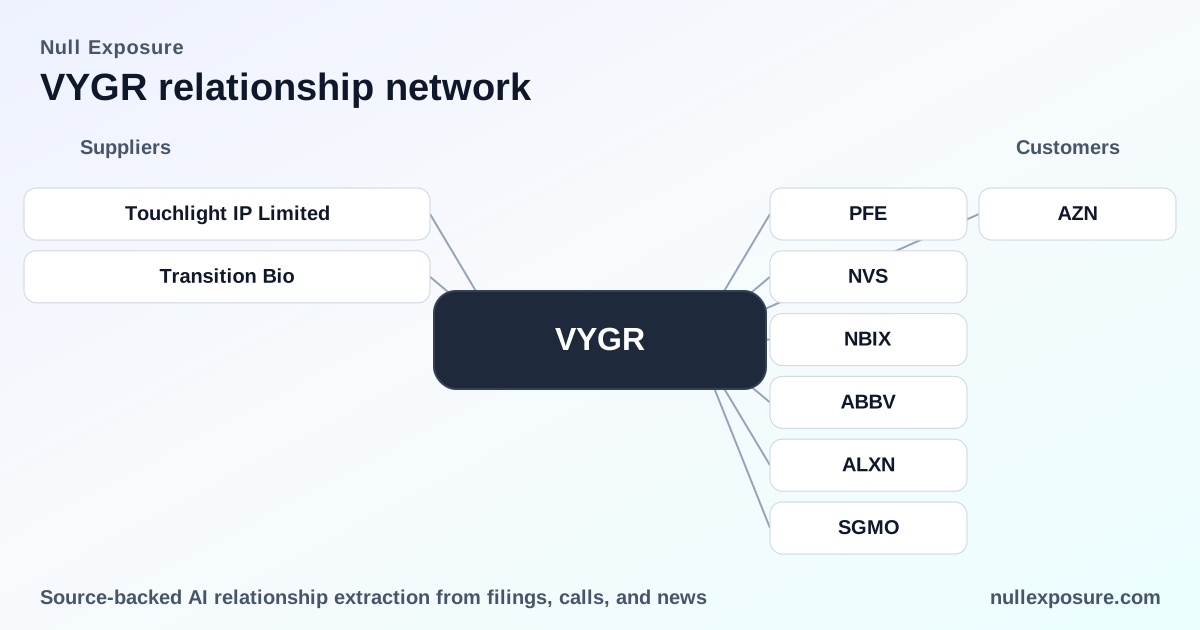
Voyager’s secured supplier and collaboration footprint in the records reviewed is compact: Touchlight IP Limited (a DNA technology licensor/manufacturer) and Transition Bio (a small-molecule collaboration/licensing partner). Each relationship plays a distinct role in Voyager’s R&D engine and potential commercialization path.
Touchlight IP Limited — DNA prep license for historical use
Voyager executed a license agreement with Touchlight on November 3, 2022 to authorize historical use of a specific DNA preparation process. This is a licensing relationship tied to a manufacturing/process capability that supports Voyager’s gene therapy work. According to the company’s FY2024 10‑K filing, the Touchlight License Agreement governs authorized historical use of that DNA preparation process (FY2024 10‑K).
Source: Voyager Therapeutics FY2024 10‑K filing (license dated November 3, 2022).
Transition Bio — collaboration with an option to license small molecules for ALS and FTD
Voyager announced a collaboration with Transition Bio in which Voyager holds an option to license Transition Bio’s small molecules targeting ALS and FTD, aligning with Voyager’s clinical focus on neurological diseases. The commercial construct is option-and-license style collaboration rather than an outright acquisition of assets. A GlobeNewswire release covering Voyager’s Third Quarter 2025 results (Nov 10, 2025) describes the collaboration and Voyager’s option to license (Q3 2025 results).
Source: GlobeNewswire press release, Voyager Reports Third Quarter 2025 Financial and Operating Results (Nov 10, 2025).
What these relationships reveal about Voyager’s operating model
Voyager runs an outsourced R&D and manufacturing model with strategic licensing and collaboration plays to extend its pipeline coverage without carrying full in‑house chemistry or large-scale manufacturing capacity.
- Contracting posture: Voyager uses long-term contractual commitments where necessary (the company discloses a multi-year lease obligation of approximately $35.4 million over seven years), and it executes licenses and option arrangements to secure technology and program rights without heavy upfront fixed costs. This signals a capital-light approach to platform access paired with longer-term real estate or facility commitments.
- Concentration and criticality: Company disclosures identify dependence on third-party manufacturers—specifically sole suppliers for certain vectors—which establishes a single-point operational dependency and raises supplier concentration risk.
- Service maturity: The firm currently relies on third parties not only for manufacturing but for ancillary services such as regulated waste disposal, indicating a mature outsourcing posture across the product lifecycle rather than ad hoc external support.
- Commercial posture: Collaborations like the Transition Bio option provide optionality to convert preclinical or small-molecule assets into clinical programs, shifting some development and regulatory execution risk to partners while preserving upside for Voyager.
Key investor implications — concentrated suppliers amplify operational risk
Investors must weigh upside from collaboration-driven pipeline expansion against clear supplier and operational exposures:
- Single-supplier risk for critical vectors imposes execution risk on clinical timelines; delays or manufacturing failures at these vendors translate immediately into program delays and incremental capital needs.
- Licensing and option structures concentrate revenue optionality; while less capital intensive, these arrangements compress near-term revenue visibility and place a premium on successful milestone achievement or downstream licensing events.
- Lease commitments are material to cash runway planning. The disclosed $35.4M obligation over seven years should be considered when modeling expense cadence and cash needs alongside ongoing R&D burn (Voyager reported negative EBITDA and continuing operating losses in its public financials).
- Operational outsourcing reduces fixed-cost flexibility but limits capital expenditures. That trade-off supports R&D throughput but amplifies counterparty selection and contract negotiation as drivers of program success.
Tactical diligence checklist for partners and investors
Before committing capital or expanding supplier exposure, evaluate these items:
- Confirm redundancy plans for sole-source vectors and the life‑cycle status of those suppliers’ facilities and regulatory certifications.
- Review license granularity with Touchlight: whether use is limited to historical processes or includes future modifications and scale-up rights.
- Understand option economics in the Transition Bio deal: upfronts, option exercise triggers, milestone splits, and downstream royalty structures.
- Stress-test cash runway against the disclosed lease obligation and projected milestone receipt timelines.
See a deeper counterparty risk analysis and supplier mapping at https://nullexposure.com/.
Final read: balance optionality with concentrated supplier risk
Voyager’s model delivers strategic optionality through collaborations and licenses while retaining a capital-efficient footprint. However, the combination of sole-source manufacturing dependencies and long-term contractual obligations represents a material operational lever that investors must price into valuations and downside scenarios. Active monitoring of manufacturing partner performance and contractual milestones will determine whether collaboration optionality converts into durable enterprise value.
For ongoing updates on supplier relationships, risk scoring, and practical due diligence guidance, visit https://nullexposure.com/.
Source summary (compact):
- Touchlight IP Limited: license agreement authorizing historical use of a DNA preparation process, disclosed in Voyager’s FY2024 10‑K.
- Transition Bio: collaboration with an option to license small molecules for ALS and FTD, disclosed in Voyager’s Q3 2025 results press release (GlobeNewswire, Nov 10, 2025).
Explore more supplier intelligence and relationship monitoring tools at https://nullexposure.com/.