VYNE Therapeutics: supplier relationships, licensing posture, and material dependency risks
VYNE Therapeutics is a small-cap dermatology-focused pharmaceutical company that monetizes through development-stage assets and licensing of BET-inhibitor programs, relying on third-party manufacturers and service providers to carry preclinical and clinical work while it advances lead candidates toward partnering or commercialization. The company's revenue base is minimal and its market capitalization is concentrated, so supplier arrangements and licensing economics drive both near-term liquidity and long-term value realization. For a focused supplier-risk dossier and ongoing monitoring, see https://nullexposure.com/.
How VYNE operates and where the money flows
VYNE is a clinical-stage biotech with limited product revenue (Revenue TTM ≈ $570k) and negative operating margins, which creates dependence on milestone-driven payments, licensing economics and capital markets activity to fund operations. The company licenses core chemistry from a third party and outsources essentially all manufacturing and clinical services, so its path to commercial revenue depends on successful trials, milestone schedules and third-party capacity. These structural choices concentrate operational risk even as they cap fixed overhead and accelerate clinical throughput.
Public supplier and partner relationships — what they mean for investors
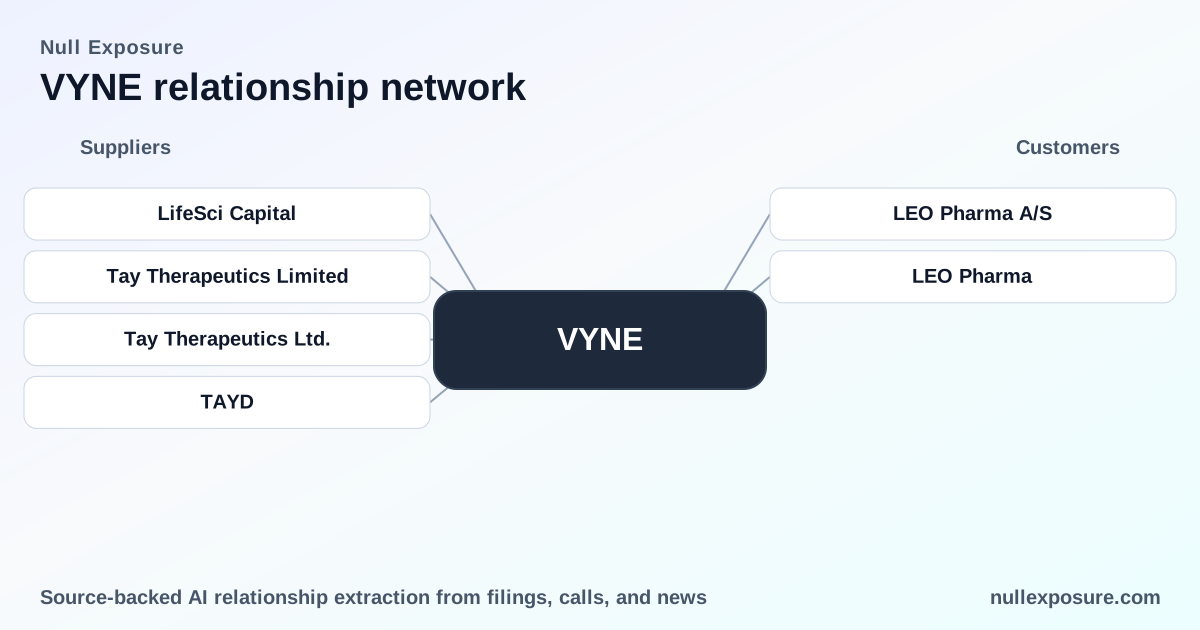
VYNE’s public disclosures and press coverage show direct linkages to advisory, licensing and payment relationships that shape near-term costs and strategy.
LifeSci Capital — adviser engaged for strategic review
VYNE retained LifeSci Capital as a financial advisor to support a strategic review process, which signals management is actively evaluating financing, partnering or corporate transactions to preserve runway or accelerate value capture (GlobeNewswire press release, Nov 6, 2025).
Tay Therapeutics Limited — origin of core BET platform (licensee relationship)
VYNE holds rights to small-molecule BET inhibitors that were licensed from Tay Therapeutics Limited, giving the company exclusive development and commercialization rights for the licensed program and defining its product pipeline’s origin and upstream economics (CityBiz report, fiscal 2024).
Tay Therapeutics Ltd. — confirmed exclusive worldwide rights in filings
VYNE’s SEC-related disclosures reiterate that it has exclusive worldwide rights to develop and commercialize the licensed BET inhibitors from Tay, anchoring the company’s value proposition in the Tay-originated InhiBET™ platform (TradingView summary of the SEC 10‑K, FY2026).
Tay (TAYD) — milestone payments and expense flow
VYNE recorded a roughly $1.0 million milestone payment made to Tay in Q3 2025 under an amendment to the VYN202 license agreement, and noted offsetting clinical expense reductions tied to Phase 1 activity; this confirms direct cash transfer exposure to the licensor and milestone-driven expenditure dynamics (GlobeNewswire financial results, Q3 2025).
Contracting posture, concentration and criticality — company-level signals
- Contracting posture: outsourced and license-centric. VYNE relies on third parties for manufacturing, clinical operations and key IP, adopting a low-capex model that shifts execution risk onto partners while preserving balance-sheet flexibility. Public statements confirm that all raw materials, active ingredients and finished products for trials are produced by contract manufacturers.
- Concentration risk is high. Company disclosures warn that a supply interruption from a single approved manufacturer would create a significant disruption because the number of manufacturers with necessary capabilities is limited. That elevates operational risk in trial continuity and time-to-market.
- Critical supply relationships drive near-term viability. Given small revenue and negative operating cash flow, supplier and licensor commitments are critical to delivery of clinical milestones and to avoid dilution or emergency financing.
- Maturity: relationships are active and execution-focused. VYNE lists active engagements with CROs, investigative sites, cybersecurity consultants and a chief information consultant, reflecting ongoing trial activity and operational support rather than dormant partnerships.
What investors should watch next
- Cash flow and milestone cadence. The Q3 2025 milestone payment to Tay demonstrates recurring cash flow implications from the license; upcoming milestone triggers or missed milestones will materially affect cash requirements and valuation (GlobeNewswire, Q3 2025).
- Manufacturing continuity and qualification. Any disruption at a contracted manufacturer would be material given the limited pool of qualified suppliers; investors should prioritize updates on secondary suppliers and inventory buffers.
- Strategic review outcomes. The engagement of LifeSci Capital for a strategic review is a clear signal that management is evaluating alternatives for capital or strategic transactions; monitor for announcements on financing, licensing deals, or M&A processes (GlobeNewswire, Nov 6, 2025).
- Clinical progress on VYN201/VYN202. Clinical expense reductions and trial timing directly affect P&L and cash burn; progress or setbacks in Phase 1 programs will change the risk-reward calculus materially (company filings and press coverage, FY2025–FY2026).
For a prioritized supplier risk scorecard and ongoing alerts on these counterparties, visit https://nullexposure.com/.
Practical implications for operating partners and counterparties
- Counterparties should require clear change-of-control and supply-continuity clauses given the concentration of manufacturing. Contract terms that secure second-source qualification timelines and milestone payment schedules will mitigate the most immediate execution risks.
- Commercial partners evaluating VYNE should model license economics and milestone timing explicitly; the company’s value is heavily dependent on license-triggered cash flows and third-party execution.
- Service providers in cybersecurity and clinical operations face active, ongoing engagements—contract terms should reflect both operational tempo and the potential need for rapid scale-up if trials accelerate.
Bottom line — read supplier signals as strategic levers
VYNE's business model is classic asset-stage biotech: licensed core IP, outsourced execution, and milestone-driven financing. That structure preserves upside if clinical programs progress but concentrates downside on manufacturing continuity, licensor economics and the availability of external capital. The LifeSci engagement, the Tay license structure and the documented milestone payment are the near-term levers that will determine whether VYNE can convert scientific assets into commercial value (GlobeNewswire; CityBiz; SEC 10‑K summaries, FY2025–FY2026).
For continued coverage and a supplier-centric risk monitor tailored to investors and operators, return to https://nullexposure.com/.