Waldencast Acquisition (WALD): Supplier relationships, strategic posture, and investor takeaways
Waldencast Acquisition Corp operates as a special-purpose acquisition company that monetizes by completing an initial business combination and capturing upside through post-transaction equity ownership, while generating interim administrative fees and sponsor-sourced financing. The company’s commercial footprint today is transactional and advisory-driven — payments to sponsor affiliates and retained advisors fund operations until a deal closes and any long-term revenue profile takes hold. For investors and operators evaluating WALD as a supplier counterparty, the critical signals are its short-term contracting posture, heavy use of service-provider relationships, modest operating spend, and engagements with high-profile financial advisors. Learn more on the firm and comparable supplier intelligence at https://nullexposure.com/.
Quick read: what WALD contracts and pays for today
WALD’s cost base is concentrated in administrative support, office services, and advisory fees while its transactional ambitions center on completing a business combination that transfers economic ownership to public shareholders. For the year ended December 31, 2021, the company recognized $100,000 in administrative service fees, and it has a documented non-interest-bearing sponsor loan used to cover IPO-related costs. These are company-level operating realities that define supplier importance and duration.
Who WALD is working with (and what that means)
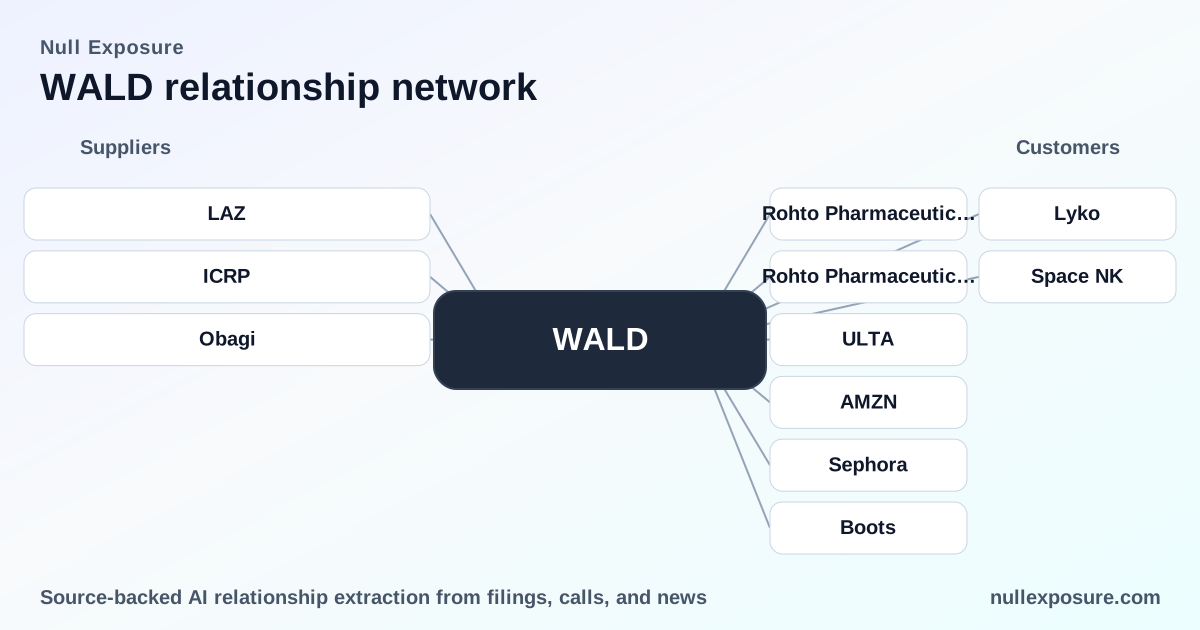
Lazard — retained for strategic evaluation
WALD has retained Lazard as its financial advisor to support board-level evaluation of potential pathways for the company. Financial press coverage captured the board’s decision to engage Lazard in FY2025. This is a classic SPAC play: engaging a top-tier advisor elevates strategic optionality and signals the company is actively preparing for major transaction scenarios (QuiverQuant, March 10, 2026).
ICR — investor and media communications support
WALD lists ICR as its investor and media contact point, indicating outsourced communications and IR support. The company’s investor and media contact lines were published in a FY2025 filing/press release, consistent with a supplier posture that outsources market-facing communications to specialists (QuiverQuant, March 10, 2026).
Obagi — product sale accounting review triggered a shareholder probe
Public filings and related legal notices identify Obagi in the context of accounting analysis tied to the sale of certain Obagi products in the Vietnam market; that matter drew investor-attorney interest and public scrutiny in FY2023. This relationship has attracted external review and litigation attention, elevating potential compliance and reputational risk that operators should monitor (GlobeNewswire, August 22, 2023).
How the relationship signals translate into operating constraints
WALD’s supplier posture and contractual constraints create a predictable operating profile:
- Short-term contracting posture: The sponsor provided a short-term, non-interest-bearing promissory note to fund IPO costs, indicating reliance on short-duration, sponsor-backed financing rather than long-term supplier contracts. This constrains supplier negotiations toward low-duration, low-commitment arrangements.
- Service-provider reliance: The company explicitly pays affiliate and third-party providers for office space, administrative and support services on a monthly fee basis, which positions those suppliers as operationally critical for day-to-day functioning but not revenue-generating long-term partners.
- Low-to-moderate spend concentration: Publicly disclosed operating costs include a $100k administrative fee recognized in 2021, placing WALD in a modest spend band where suppliers are important operational vendors but not strategic revenue drivers.
- North American operational footprint: Executive offices are maintained in White Plains, NY, and related service arrangements are described in U.S. terms, signaling a North American operational focus even though corporate addresses include international listings.
These are company-level signals; they describe WALD’s contracting posture, supplier criticality, concentration, and maturity as an acquirer vehicle rather than an operating conglomerate.
Risk and valuation implications for supplier and investor relationships
WALD’s supplier mix and disclosed relationships drive several investor-relevant conclusions:
- Advisory engagements increase execution risk but improve deal quality: Retaining Lazard legitimately raises the bar on transaction sourcing and diligence, but generates advisory spend and lengthens timeline to monetization. Investors should value the company’s retained expertise while accounting for advisory fees and deal cadence.
- Outsourced IR/communications reduces fixed HR overhead but introduces single-vendor dependency for market messaging; ICR’s role makes market perception highly dependent on that supplier’s execution.
- Regulatory and accounting scrutiny tied to third-party product sales (Obagi case) elevates governance and compliance risk, particularly if legacy product-market relationships carry unresolved revenue recognition questions. The Obagi-related review in 2023 is a material reputational and potential financial contingency to watch (GlobeNewswire, August 22, 2023).
For supplier managers, these points translate into negotiating levers: insist on flexible, short-term agreement terms, explicit liability carve-outs for compliance exposures, and clear exit rights should the company pivot or consummate a business combination.
Learn more about assessing supplier risk when counterparties are acquisition vehicles at https://nullexposure.com/.
Practical implications and next steps for investors and operators
- For investors: Treat WALD as a transaction-first vehicle with limited recurring supplier commitments; value the company on potential post-combination equity upside and monitor advisor and IR engagements as signals of deal progress. Track Lazard engagement updates and any follow-ups to the Obagi accounting review for material changes to risk or valuation.
- For supplier operators: Price services for short tenors, include protective covenants for fee timing and scope creep, and require clear audit and access rights where revenue recognition or product sales could trigger compliance inquiries.
- For governance teams: Ensure third-party oversight and reporting lines are robust given the company’s outsourcing posture and the presence of financial advisors and IR firms.
Final action: if you need ongoing supplier-monitoring or a tailored counterparty risk summary for WALD, start here: https://nullexposure.com/. For deeper diligence packages and a supplier-risk roadmap specific to SPAC counterparties, visit https://nullexposure.com/ for subscription options.
Closing: the bottom line for WALD counterparties
WALD operates as a short-duration acquisition vehicle that relies on high-quality financial advisors and outsourced service providers while keeping operating spend modest. The key relationship signals — Lazard (advisory), ICR (communications), and the Obagi accounting review — define near-term execution priorities and risk vectors. Investors should price advisory costs and timeline uncertainty into models; suppliers should price flexibility and contractual protections into proposals. Monitor advisor activity and any regulatory follow-ups to the Obagi matter for the next, potentially value-driving events.