Webster Financial (WBS‑P‑F) — supplier relationships and what they mean for investors
Webster Financial Corporation’s Depositary Shares Series F (WBS‑P‑F) represents a claim on a well‑established regional bank embedded in a period of strategic consolidation. The company monetizes through traditional banking revenues—commercial lending, mortgage origination and servicing, deposit gathering and wealth management—while unlocking value via targeted acquisitions and platform buys that expand deposit channels and fee income. For holders of the preferred shares, the critical lens is how these supplier and advisor relationships influence funding stability, deal execution and the survivability of dividend characteristics through a takeover cycle. Explore the full supplier profile at https://nullexposure.com/.
Why these suppliers matter: a concise investment thesis
Webster’s recent activity shows two simultaneous themes: deposit growth through platform acquisitions and corporate‑transaction support from top‑tier advisors. Platform purchases (HSA/medical deposit platforms and a national deposit manager) directly augment low‑cost funding and fee streams, while retained advisors and legal counsel underpin a high‑value sale process that realigns ultimate ownership. These relationships are not peripheral: they are operational levers and execution partners that change Webster’s risk profile and capital allocation.
Explore detailed relationship data and deal timelines at https://nullexposure.com/ to validate assumptions against source documents.
Operating model signals investors should track
- Contracting posture: Webster contracts with specialist platforms and high‑end advisors, indicating a proactive, acquisitive posture that uses third parties to scale deposits and services rather than building everything internally.
- Concentration and criticality: The mix of platform vendors and elite advisors implies low vendor concentration in advisory services but elevated criticality for specific platforms (e.g., deposit‑placement networks) that handle billions of FDIC‑backed deposits.
- Maturity and reliability: Roles like J.P. Morgan and Wachtell Lipton signal transactional maturity and access to institutional capital markets capabilities; platform partners reflect commercial maturity if they already manage large pools of insured deposits.
- Data coverage gap: There are no explicit third‑party constraint records in the available supply‑side metadata, which is a company‑level signal that formalized supplier constraint reporting was not captured here and direct diligence remains necessary for counterparty concentration and contractual terms.
Mid‑report action: review counterparty contract scopes and deposit‑placement mechanics on the company record at https://nullexposure.com/ before sizing exposure.
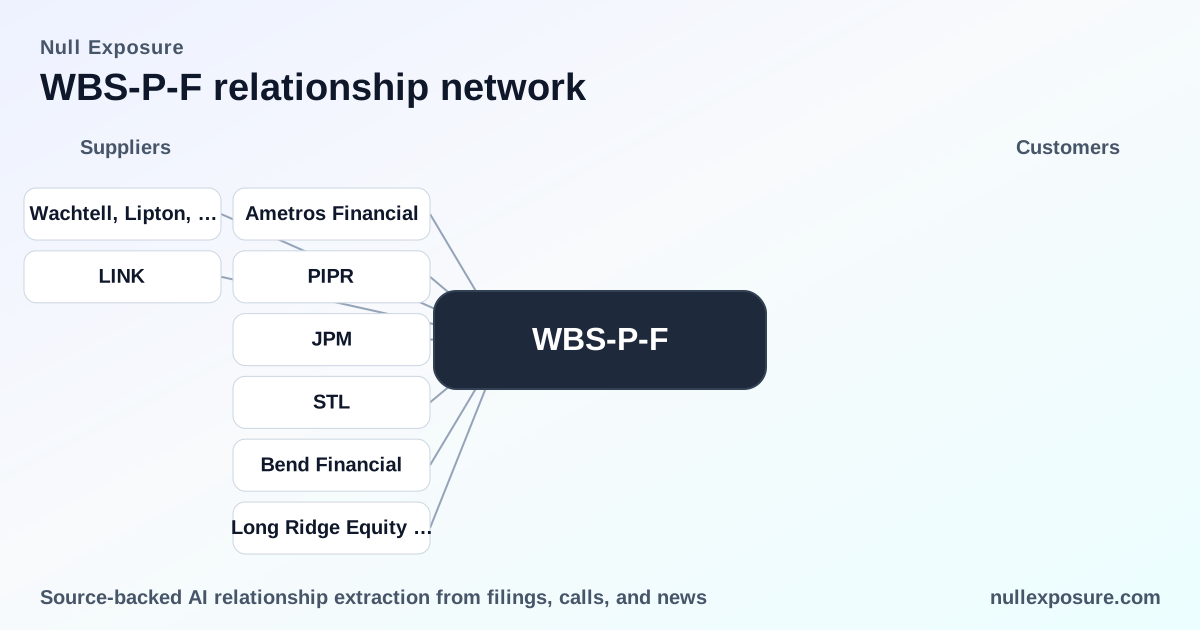
Relationship map: counterparties and what they mean for Webster shareholders
Ametros Financial
Webster’s parent agreed to acquire Ametros Financial for $350 million to gain custody and administration of medical‑settlement funds, expanding a niche deposit and cash‑management franchise. According to American Banker (article first seen 2026‑03‑10): https://www.americanbanker.com/news/webster-bank-makes-deal-for-more-medical-related-deposits.
Piper Sandler & Co. (PIPR)
Piper Sandler served as a financial advisor to Webster in the strategic sale process to Banco Santander, lending boutique investment‑banking execution capacity to the transaction. According to WestfairOnline (first seen 2026‑03‑10): https://westfaironline.com/fairfield/banco-santander-buys-webster-financial-for-12-3b/.
J.P. Morgan Securities LLC (JPM)
J.P. Morgan acted as lead financial advisor and provided a fairness opinion to Webster, supplying the institutional capital‑markets imprimatur required for a high‑value acquisition. According to WestfairOnline (first seen 2026‑03‑10): https://westfaironline.com/fairfield/banco-santander-buys-webster-financial-for-12-3b/.
Wachtell, Lipton, Rosen & Katz
Wachtell Lipton served as legal advisor to Webster in the sale process, indicating the company retained elite M&A counsel to navigate transaction structuring and fiduciary compliance. According to WestfairOnline (first seen 2026‑03‑10): https://westfaironline.com/fairfield/banco-santander-buys-webster-financial-for-12-3b/.
Sterling Bancorp (STL)
Webster completed a whole‑bank acquisition of Sterling Bancorp in February 2022, a previous consolidation that increased franchise scale in the New York market and foreshadowed Webster’s continued roll‑up strategy. According to American Banker (article first seen 2026‑03‑10): https://www.americanbanker.com/news/webster-bank-makes-deal-for-more-medical-related-deposits.
Bend Financial
Webster acquired Bend Financial, a cloud‑based health‑savings account platform, to bolster HSA Bank’s client experience and deposit stickiness—an explicit push into fee‑driven, technology‑enabled deposit channels. According to American Banker (article first seen 2026‑03‑10): https://www.americanbanker.com/news/webster-bank-makes-deal-for-more-medical-related-deposits.
Long Ridge Equity Partners
Webster purchased a platform from funds managed by Long Ridge Equity Partners, a private‑equity firm specializing in fintech and financial services, signalling use of PE‑owned asset buys to accelerate capability rather than internal development. According to American Banker (article first seen 2026‑03‑10): https://www.americanbanker.com/news/webster-bank-makes-deal-for-more-medical-related-deposits.
interLINK (LINK)
Webster completed the purchase of interLINK, a platform that managed $9 billion in FDIC‑backed deposits, materially expanding the bank’s ability to source insured deposits at scale. According to American Banker (article first seen 2026‑03‑10): https://www.americanbanker.com/news/webster-bank-makes-deal-for-more-medical-related-deposits.
Investment implications and risk checklist
- Deposit profile shift: The platform acquisitions (interLINK, Ametros and HSA related buys) materially increase low‑cost, FDIC‑backed deposits, improving funding resilience and reducing net interest expense pressure. That reduces credit risk but increases operational reliance on third‑party platforms.
- Transaction execution risk: Use of J.P. Morgan, Piper Sandler and Wachtell Lipton indicates high‑stakes M&A execution; fairness opinions and elite legal counsel reduce transactional execution risk but also signal a definitive change of control event (Banco Santander’s acquisition) that will alter governance and dividend policy for depositary shares.
- Concentration and counterparty dependency: Proprietary platforms that handle large pools of deposits are critical suppliers; loss of access or contract renegotiation could create funding churn. Active diligence on contract terms, indemnities and transition rights is required.
- Preferred security considerations: For holders of WBS‑P‑F, a change in parent ownership typically triggers review of dividend treatment and redemption rights; confirm how depositary shares convert, are treated in the Banco Santander purchase and the timetable for any redemption or exchange.
What operators and investors should do next
- Prioritize contractual diligence on deposit‑placement and HSA platform agreements, focusing on tenure, termination rights and service continuity for interLINK, Bend and Ametros.
- Validate the sale mechanics and treatment of depositary shares in the Banco Santander transaction using the lead advisory and legal filings referenced above.
- Monitor integration plans and any regulatory filings that could alter capital structure or preferred dividend policy.
Final resource: to examine source articles and track updates to Webster’s supplier map, visit https://nullexposure.com/. For an immediate audit of counterparty concentration and deal documentation, go to https://nullexposure.com/ and request the full relationship dossier.
Conclusion: Webster’s supplier network is a deliberate mix of platform acquisitions to scale deposits and elite advisors to monetize strategic exits—a combination that has reduced funding risk while concentrating operational dependence on third‑party platforms and accelerating a corporate sale that redefines shareholder outcomes.