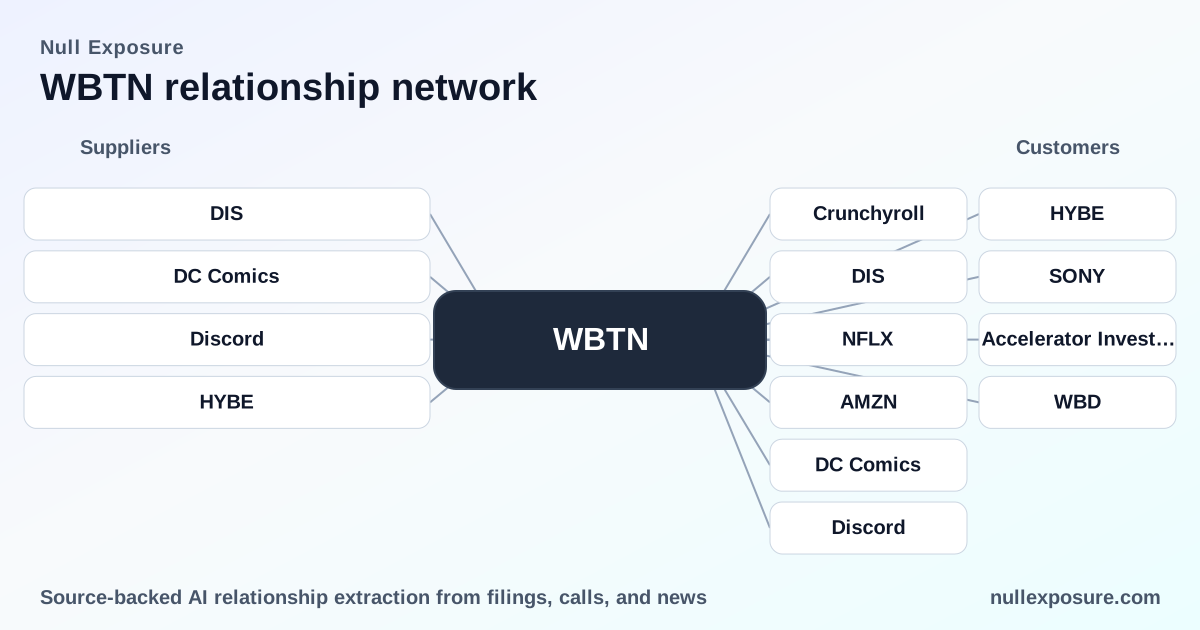
WEBTOON (WBTN): Supplier relationships that shape content commercialization
WEBTOON Entertainment operates a global digital comics platform that monetizes through content licensing, creator-driven publishing, and cross-media adaptations supported by strategic partner deals. The company captures revenue from its large library and creator community by converting IP into licensed projects and distribution partnerships, while relying on platform economics and third-party distribution channels for scale. For a deeper supplier-risk and partner-opportunity read, visit https://nullexposure.com/.
How WEBTOON makes money and why suppliers matter
WEBTOON's business model is built on three interlocking commercial engines: a creator marketplace that supplies raw content, platform distribution that aggregates audiences, and licensing/partnership channels that convert stories into monetizable media. Content supply is the product — creators and publishers deliver serial IP; platform and distribution partners expand reach; and licensing partners convert popular titles into film, TV, music, and merchandising revenue. The company’s income statement reflects this mix: steady revenue run-rate with negative EPS and operating margins, underscoring the growth-and-investment phase of monetization (Revenue TTM ~$1.38bn; diluted EPS TTM -2.66).
Visit https://nullexposure.com/ for portfolio-level supplier intelligence tied to these commercial flows.
Strategic partner spotlight: Disney
WEBTOON signed a multi-year collaboration with The Walt Disney Company to launch a standalone platform hosting roughly 35,000 Disney-sourced titles, including Marvel, Star Wars, Pixar and 20th Century Studios content, alongside original WEBTOON material. This arrangement is a direct line to long-tail IP and a potentially material user-acquisition driver given Disney’s franchise depth (reported in early 2026; see Korea Herald and Pulse MK coverage: https://www.koreaherald.com/article/10652959, https://pulse.mk.co.kr/news/english/11978260). Industry commentary projects this collaboration to accelerate engagement among mobile-native demographics and expand WEBTOON’s addressable, monetizable audience (analysis reported by Simply Wall St in March 2026: https://simplywall.st/stocks/us/media/nasdaq-wbtn/webtoon-entertainment/news/a-look-at-webtoon-entertainment-wbtn-valuation-after-securit).
Takeaway: Disney provides scale and marquee IP that materially increases content inventory and monetization options.
Content partnerships and cross-media channels: DC Comics
DC Comics is listed among WEBTOON’s content partners and adaptation collaborators, illustrating the company’s role as an IP conduit to streaming and entertainment companies (announced in an investor release November 2025: https://www.globenewswire.com/news-release/2025/11/13/3187069/0/en/WEBTOON-Entertainment-Inc-to-Participate-in-Upcoming-Investor-Conferences.html). DC’s participation demonstrates WEBTOON’s reach into established comic-book franchises and studio-level licensing pipelines.
Takeaway: Relationships with legacy comic brands broaden licensing prospects and downstream adaptation economics.
Community and engagement partner: Discord
WEBTOON identifies Discord as a strategic content partner, reflecting a distribution and community engagement strategy that leverages third-party social platforms to deepen fandom and retention (company investor release, Nov 2025: https://www.globenewswire.com/news-release/2025/11/13/3187069/0/en/WEBTOON-Entertainment-Inc-to-Participate-in-Upcoming-Investor-Conferences.html). Discord’s role is focused on audience interaction rather than primary content supply, increasing marginal utility from existing IP.
Takeaway: Community platforms like Discord amplify engagement and extend monetization lifetime of titles through fan-driven activity.
Entertainment and talent collaboration: HYBE
HYBE is named as a content partner, signaling strategic ties to music, talent IP and K-content ecosystems that can fuel cross-media adaptations and promotional synergies (investor release, Nov 2025: https://www.globenewswire.com/news-release/2025/11/13/3187069/0/en/WEBTOON-Entertainment-Inc-to-Participate-in-Upcoming-Investor-Conferences.html). HYBE collaborations provide pathways into music-driven promotions, artist tie-ins, and regional marketing leverage in K-content markets.
Takeaway: HYBE relationships add promotional platforms and talent pipelines valuable for IP amplification across media.
What these relationships imply about operating constraints and risk posture
WEBTOON’s supplier graph reveals a platform that sits at the intersection of creator supply, channel distribution, and studio licensing. From company disclosures and related excerpts, several company-level signals are clear:
- Creators are the primary supply base and range from individuals to professional publishers. Company filings describe a creator population that spans hobbyists to professional authors, which reduces supplier concentration risk but increases governance complexity for content quality and rights management.
- Contracting posture mixes publisher- and studio-style licensing with transactional platform economics. WEBTOON both licenses IP from large studios (e.g., Disney, DC) and contracts with individual creators to host and monetize works, combining long-term licensing commitments with high-volume creator agreements.
- Distribution dependencies are material and mature. The company recognizes app-store platform fees and uses NAVER’s cloud infrastructure for content delivery in key markets, indicating dependency on major platform and cloud providers for distribution and scaling.
- Buyer and financial control signals exist in historic corporate transactions. Prior share repurchase/classification actions involving Munpia and Cloudary illustrate active corporate governance and balance-sheet maneuvering that affect strategic asset ownership and supplier relationships.
- Operational maturity is mixed. Strong content partnerships and global distribution indicate commercial maturity on the licensing front, while negative EPS and operating margin show the business remains in an investment phase requiring continued monetization ramp and cost discipline.
Risk implications: High reliance on large-partner licensing deals concentrates downside if flagship agreements change; conversely, a broad creator base mitigates vendor concentration but raises IP clearing and quality-control costs.
For a practitioner-grade supplier risk review and deeper partner scoring, see the WEBTOON supplier dossier at https://nullexposure.com/.
Investment-oriented conclusions and next steps
WEBTOON’s supplier ecosystem positions the company as a content aggregator and IP gatekeeper that converts creator output into licensed, cross-media value. The Disney collaboration is the single most transformative supplier relationship listed, expanding installed IP inventory and accelerating user acquisition, while partnerships with DC, Discord, and HYBE add depth across adaptation, community, and talent channels. Company-level constraints show a diversified creator base, dependence on platform distribution, and active corporate governance—all factors that shape supplier risk and commercial upside.
Act now to quantify counterparty concentration and contractual tenure for your model: assess the revenue attribution of studio partnerships versus creator-originated content. For tailored supplier risk scoring and exposure mapping, visit https://nullexposure.com/ to request the full WEBTOON supplier analysis.
Close your diligence loop with prioritized questions: What portion of growth will Disney-driven titles contribute to paying users? How are rights and revenue splits structured with major studios versus independent creators? For vendor-specific risk reports and scenario modeling, start a subscription at https://nullexposure.com/.