WESCO International (WCC): Supplier Map, Contracts, and Strategic Implications
WESCO International operates as a global business-to-business distributor of electrical, communications, and construction materials, monetizing through product sales, logistics and supply-chain services, negotiated supplier rebates, and value-added solutions to commercial and industrial customers. Revenue derives from both volume-driven product margins and recurring service contracts, while working-capital dynamics and supplier arrangements influence free cash flow and margin resilience. For deeper supplier intelligence and contract-level signals, visit https://nullexposure.com/.
How WESCO actually buys and pays — the operating model that matters to investors
WESCO runs a hybrid procurement model: broad supplier coverage with concentrated spend. The company buys from more than 35,000 suppliers (predominantly in North America) but channels roughly two-thirds of purchases through a smaller set of preferred partners. This generates scale benefits while leaving exposure to supplier consolidation and key-vendor negotiation risk.
Key company-level operating model characteristics:
- Contracting posture: WESCO uses a mix of framework agreements and short-term invoice settlement. The company reports more than 470 preferred-supplier commercial agreements that account for approximately 66% of purchases, while invoice payment obligations are typically settled within 45 to 180 days of invoice date. These terms create predictable payment cycles but sustain working-capital funding needs on the buyer side.
- Concentration and criticality: The top ten suppliers accounted for approximately 30% of purchases in 2024, with no single supplier exceeding 6% of total purchases; this is material concentration without single-vendor criticality—a profile that supports negotiating leverage but requires active supplier risk management.
- Geography and sourcing: Suppliers are located predominantly in North America, though manufacturing footprints are global, which leaves WESCO exposed to cross-border supply disruptions and transit cost variability while benefiting from proximity to core end markets.
- Maturity and program evolution: The company finalized termination of a supplier finance program in Q4 2024 and settled obligations under that program, indicating a shift in third-party financing posture and simplification of counterparty exposures.
These characteristics translate directly into working-capital sensitivity and margin stability considerations for investors: framework agreements stabilize unit economics, short invoice cycles concentrate cash-conversion volatility, and supplier concentration creates discrete but manageable counterparty risk.
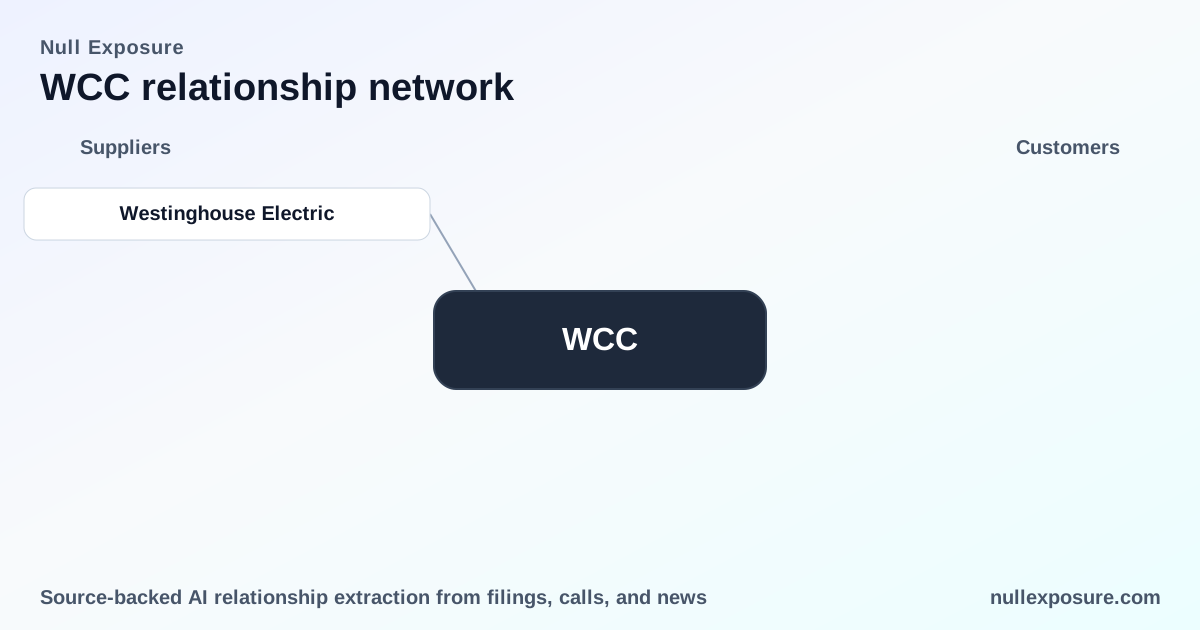
Relationship roundup: Westinghouse Electric
WESCO’s corporate history traces back to the distribution arm of Westinghouse Electric; the connection highlights an origin in legacy industrial supply chains and underpins long-standing relationships in electrical distribution. A Benzinga news brief referencing corporate history reiterated this provenance in March 2026 (FY2026 commentary). Source: Benzinga, March 10, 2026 — https://www.benzinga.com/insights/news/26/03/51036198/engaging-in-insider-activity-indraneel-dev-at-wesco-international-exercises-options-worth-0
What the supplier constraints imply for contract and financing strategy
WESCO’s supplier disclosures and contract excerpts reveal a procurement posture that balances scale purchasing with flexible payment mechanics. The combination of framework contracts and short invoice settlement windows creates predictable supply lines while imposing working-capital requirements that historically have been managed with third-party finance — a lever the company has recently de-emphasized.
- Short-term payment cadence (45–180 days) produces a clear cash-conversion rhythm that investors can model into FCF sensitivity, and it magnifies the impact of revenue seasonality on liquidity. The company discloses that invoices are paid in full on original due dates regardless of supplier uptake of early-payment options.
- Framework agreements covering roughly 66% of purchases deliver margin consistency and rebate visibility; supplier volume rebates are captured in other receivables based on forecasted purchases and contract provisions, which affects the composition of working capital on the balance sheet.
- Material but diversified supplier concentration (top 10 ≈ 30%) signals both bargaining power and focal points for supply disruption stress-testing; no single supplier breaches a 6% threshold, which limits catastrophic vendor dependency.
- Termination of a supplier finance program in Q4 2024 reduces reliance on third-party payment structures and simplifies counterparty exposures, but it also shifts working-capital management responsibilities more squarely onto the company and its banking partners.
For buy-side analysts and operators, these constraints frame the principal levers: optimize rebate capture under framework deals, tighten forecast accuracy to reduce receivable volatility, and stress-test liquidity under 45–180 day payment cycles.
If you want granular supplier-level exposure data and contract signals to model these levers, explore the platform at https://nullexposure.com/.
Operational and market risk vectors investors should weigh
WESCO’s business model is resilient but sensitive to a limited set of operational risks:
- Working-capital volatility: Short invoice cycles and rebate accounting create quarter-to-quarter swings in cash flow; management of payables and receivables is operationally critical and determinative of free-cash-flow trajectories.
- Price and input inflation: Distribution margins compress during input cost surges unless framework pricing and supplier rebates reset quickly.
- Concentration exposures: Top-ten supplier weight (≈30%) demands active vendor risk monitoring, contingency sourcing, and contractual protections.
- Financing posture: The termination of a supplier finance program reduces financing complexity but increases direct funding responsibility for payables; liquidity buffers and committed credit capacity therefore matter more.
Investment implication: WESCO offers stable industrial distribution cash flow with meaningful operating leverage to trade-cycle recovery, but investors must model supplier contract mechanics and working-capital dynamics to capture valuation upside or downside.
Actionable takeaways for investors and procurement operators
- Model 45–180 day payment windows into FCF and liquidity stress tests; short-term timing drives cash-conversion risk.
- Prioritize the 470 preferred-supplier framework when forecasting rebate flow and gross-margin stability—two-thirds of purchases sit under these agreements.
- Stress-test top-ten supplier scenarios: a 30% concentration split is material enough to affect procurement continuity but diversified enough to avoid single-vendor failure.
- Factor in program changes: post-Q4 2024 supplier-finance termination shifts funding needs; assume more direct balance-sheet funding in near-term models.
For more actionable supplier intelligence and contract-level exposure analytics, visit https://nullexposure.com/ to get started.
WESCO’s supplier landscape is a study in disciplined distribution: broad supplier reach, concentrated negotiated spend, and short-cycle cash flows. These elements define the company’s operating leverage and the primary areas where management execution will translate to investor returns. For further supplier relationship analysis and to interrogate contract signals influencing WESCO’s cash flow profile, go to https://nullexposure.com/.