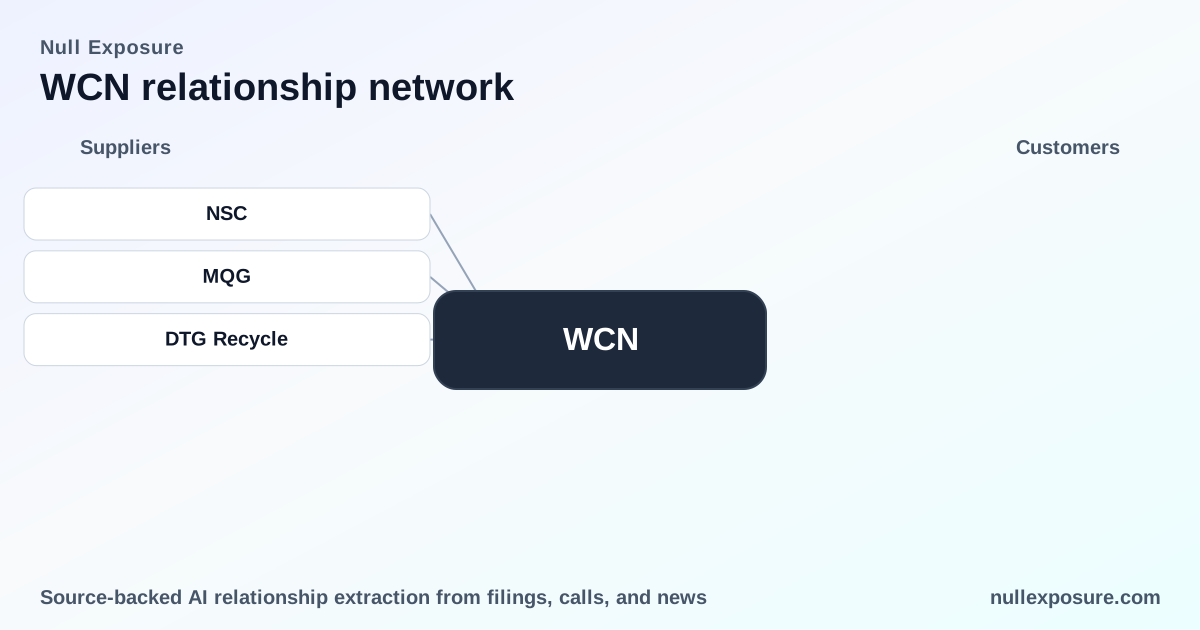
Waste Connections (WCN) — supplier relationships, exposure and strategic implications
Waste Connections runs a capital-intensive, regionally scaled waste collection and disposal platform that monetizes through recurring collection contracts, transfer and landfill operations, and targeted M&A. The company's operating cash flow is driven by durable customer contracts, regulated disposal franchises and volume-sensitive pricing, while procurement exposure — notably fixed-price fuel commitments and surety bonds — creates predictable cost and counterparty relationships that directly affect operating margins.
If you are evaluating counterparties to Waste Connections for procurement or investment decisions, start with these supplier relationships and the company-level contracting characteristics outlined below. For a data-driven supplier intelligence view, visit https://nullexposure.com/.
Quick read: what matters to investors and operators
Waste Connections shows a buyer posture with significant fixed-price fuel commitments and a documented reliance on large financial counterparties for hedging and surety capabilities. Contract size is bimodal: the company reports material multi-year fuel obligations measured in millions of gallons (hundreds of millions of dollars) alongside small, routine purchase lines. These characteristics signal both scale in commodity procurement and operational reliance on external surety and financial institutions. According to the company filing for year-end 2025, unconditional fuel purchase obligations totaled 56.2 million gallons, representing $173.6 million remaining against those fixed-price contracts.
Learn more about mapped supplier exposure and how it affects enterprise risk at https://nullexposure.com/.
How Waste Connections contracts and where risk concentrates
Waste Connections operates with a contracting posture that favors long-term, fixed-price commitments for fuel and uses third-party financial institutions for hedges and surety bonds. This structure supports cost predictability but concentrates counterparty and commodity risk:
- Contracting posture (long-term): The company discloses fixed-price fuel contracts that extend through September 30, 2029, indicating multi-year procurement commitments that lock in supply and price exposure.
- Counterparty profile (large enterprises): Financial counterparties to hedges and surety arrangements are described as highly rated institutions, indicating the company sources credit support from major financial players.
- Materiality and spend concentration: Company statements treat these arrangements as immaterial to reported financials for 2025, while also documenting a significant outstanding fuel purchase obligation ($173.6 million) — a sign of high-dollar, concentrated commodity spend that is nevertheless considered non-disruptive to liquidity on current measurement.
- Role and criticality: Waste Connections acts as a buyer in these relationships — procuring fuel and surety — and relies on these inputs for fleet operations and regulatory compliance at landfill sites.
- Maturity: The most explicitly dated contract exposure is the fuel portfolio running to 2029, giving investors a clear forward horizon for commodity exposure management.
These operating model signals are company-level: they describe procurement scale, counterparty quality and the strategic role of these suppliers rather than tying a given constraint to any single named partner.
Relationship roll call: the counterparties you’ll see discussed
Norfolk Southern — long-term operational linkage
Waste Connections stated in its FY2026 earnings commentary that it has a very long-term agreement with Norfolk Southern that the combined company would honor, indicating a durable contractual relationship tied to rail logistics or transfer services (InsiderMonkey Q4 2025 earnings call transcript, March 2026: https://www.insidermonkey.com/blog/waste-connections-inc-nysewcn-q4-2025-earnings-call-transcript-1695293/). This relationship underscores the importance of rail logistics to Waste Connections’ networked transfer and disposal footprint.
Macquarie — seller of an asset to Waste Connections / deal exit
Multiple merchant and news outlets reported that Macquarie exited its investment in DTG Recycle through sales to the founder and Waste Connections, signaling transactional interaction between Macquarie, DTG Recycle and Waste Connections during FY2026 (Finviz news snippets, March 2026: https://finviz.com/news/299674/waste-connections-wcn-reports-next-week-wall-street-expects-earnings-growth). The reporting reflects an M&A-style relationship where Macquarie acted as an institutional seller and Waste Connections participated on the buy-side.
DTG Recycle — transaction-level tie to Waste Connections
News coverage indicates DTG Recycle was sold with involvement from Waste Connections and the founder, representing an acquired or affiliated recycling capability that connects Waste Connections to downstream processing or asset consolidation in FY2026 (Finviz coverage, March 2026: https://finviz.com/news/305162/waste-connections-wcn-reports-earnings-tomorrow-what-to-expect). This positions Waste Connections to broaden recycling services and integrate complementary operations.
What these relationships imply for procurement risk and opportunity
- Operational criticality: Contracts tied to Norfolk Southern reflect logistical backbone services; disruption would have immediate operational impact on transfer and disposal throughput. Rail agreements are core to network efficiency.
- M&A-led integration: The Macquarie → DTG Recycle disclosures show Waste Connections strategically uses acquisitions to expand service lines and internalize capabilities, reducing third-party processing dependency over time.
- Counterparty credit and stability: The company’s use of highly rated financial institutions for hedges and surety suggests low credit risk in counterparties and a deliberate procurement choice to protect balance-sheet liquidity.
- Spend profile nuance: Public filings show both large ($173.6M) multi-year commodity commitments and much smaller purchase obligations (e.g., single-line items around $173,644), indicating the procurement ledger includes both high-dollar strategic contracts and routine operational purchases.
Midway check: if you need a structured supplier risk map or a prioritized exposure list for WCN’s counterparties, the team at NullExposure maintains roll-ups and scoring—see https://nullexposure.com/ for engagement options.
Investment implications and action items for operators
- For investors: Waste Connections' procurement model delivers predictability through fixed-price fuel contracts and reduces operational credit exposure via high-quality financial counterparties, supporting margin stability; monitor contract expiries into 2029 and the evolution of recycling integrations (e.g., DTG Recycle) for upside to cost or revenue mix.
- For operators and suppliers: If you are a potential vendor, prioritize capabilities in rail logistics, fuel supply with term certainty, and surety/insurance services, because these categories drive operations and are actively contracted.
- Key risk to watch: While company filings treat supplier arrangements as immaterial to 2025 financials, the concentration of spend in fuel and the forward-dated nature of fuel contracts means commodity price moves and contract renewals will drive near-term margin sensitivity.
Before you make procurement or capital allocation decisions tied to Waste Connections, review their full supplier terms and the specific contracts referenced in the FY2025/2026 disclosures; for tailored supplier intelligence and exposure scoring, visit https://nullexposure.com/.
Bold takeaway: Waste Connections runs a highly contractual procurement profile with large, long-dated fuel commitments and strategic M&A activity that both concentrate spend and create opportunities to internalize service lines — a profile that favors counterparties with scale, financial strength and logistics capability.