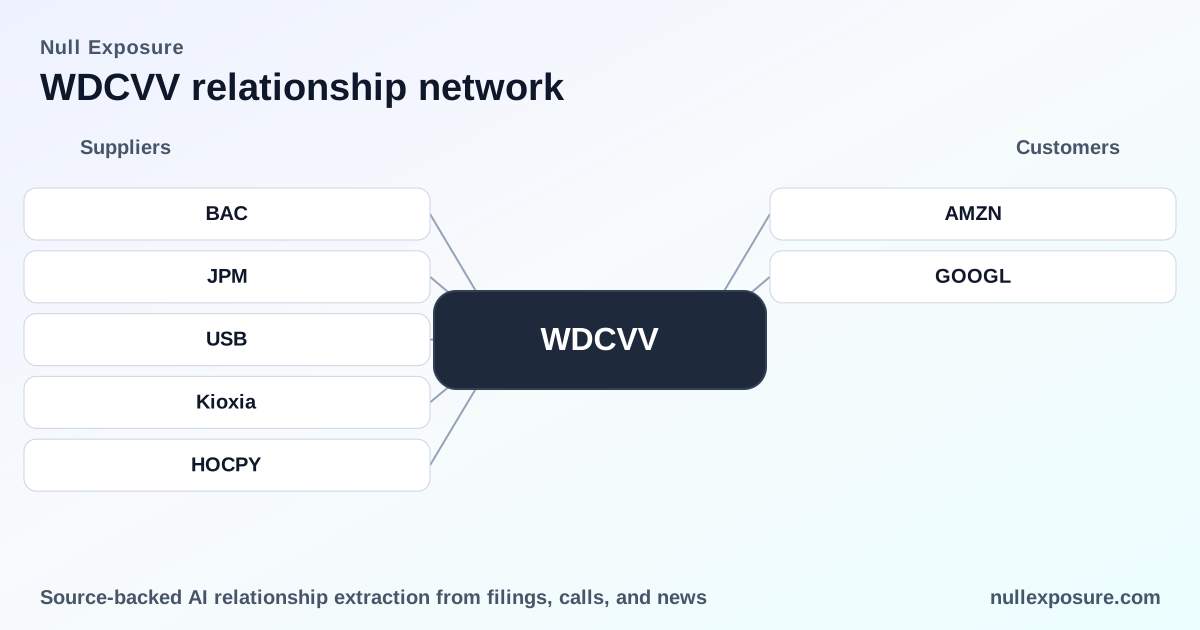
Western Digital (WDCVV) — Supplier and capital-market counterparties that shape the transition to AI and HAMR storage
Western Digital monetizes by designing, manufacturing and selling storage devices and solutions while actively managing its capital structure through equity and debt transactions; the company generates value through product sales (including SSD and advanced HDD technologies) and through balance-sheet actions that free liquidity or transfer risk. For investors and supply-chain operators, the immediate picture is one of strategic supplier partnerships for next‑generation storage media paired with large-bank engagement for capital-market execution. Learn more about how these relationships affect operational resilience and investor thesis at https://nullexposure.com/.
Why suppliers and banks matter for valuation and operations
Western Digital’s supplier relationships determine product capability and time-to-market for high-growth segments like AI storage, while its banking counterparties determine execution risk and refinancing capacity. When production ramps and capital transactions align, valuation upside is meaningful; when they diverge, execution risk increases. This piece lays out every relationship surfaced in recent coverage, explains the operational implications, and flags the two structural themes investors should monitor.
Full relationship run-down — what the reporting shows
-
BofA Securities — American Bazaar Online reported on February 18, 2026 that Western Digital planned to swap 5.8 million shares as part of a settlement with affiliates of its lenders, and that BofA Securities was acting as a lead bookrunner to offload those shares on behalf of affiliates. According to American Bazaar Online, February 18, 2026.
-
J.P. Morgan — The same American Bazaar Online coverage names J.P. Morgan as a co-lead bookrunner in the share-for-debt exchange, underscoring that global investment banks are executing the equity settlement. According to American Bazaar Online, February 18, 2026.
-
U.S. Bank, National Association — Reporting notes that Western Digital deposited cash with U.S. Bank as trustee on February 5 to cover redemption price and interest on certain notes, indicating disciplined trustee-led debt servicing. See ts2.tech coverage of Western Digital’s SEC filing and note-redemption activity, March 2026.
-
Kioxia — A StorageNewsletter item from February 13, 2026 documents Western Digital utilizing Kioxia CM7‑V Series NVMe SSDs, signaling an active supplier relationship for high-performance NVMe components in the company’s product stack. StorageNewsletter, February 13, 2026.
-
J.P. Morgan — Ad-hoc-News summarized the transaction structure as an exchange of equity for debt facilitated by financial institutions including J.P. Morgan, reinforcing that the bank’s role extends beyond distribution to settlement mechanics. Ad-hoc-News, March 2026.
-
BofA Securities — The Ad-hoc-News piece also highlights BofA Securities’ role in structuring and facilitating the equity-for-debt exchange, confirming multiple outlets report the same counterparty involvement. Ad-hoc-News, March 2026.
-
Hoya — Analyst and market coverage cited by ts2.tech describes a strategic partnership with Hoya to move HAMR (heat-assisted magnetic recording) to glass substrates, with production ramps expected in the first half of 2027, indicating a concrete supplier/partner pathway for next‑generation HDD technology. See ts2.tech reporting, December 17, 2025.
-
Hoya — A separate ts2.tech summary reiterates Western Digital’s HAMR roadmap with Hoya as a production partner for glass-substrate HAMR, underscoring the continuity of that partnership across analyst write-ups. See ts2.tech coverage, December 17, 2025.
What these relationships tell investors about the operating model
-
Contracting posture: Western Digital contracts with top-tier global banks for capital-market work and with specialized component partners for product technology. The equity-for-debt swap executed through J.P. Morgan and BofA demonstrates active liability management conducted through institutional bookrunners, not private placement channels.
-
Concentration and diversification: Supplier exposure is mixed: Kioxia is implicated as a specific NVMe component supplier, and Hoya is positioned as a strategic partner for HAMR glass-substrate production. That mix implies product diversification (SSD + advanced HDD) but concentrated technical dependencies where specific vendors enable key capabilities.
-
Criticality: Kioxia and Hoya are functionally critical for product roadmaps—Kioxia for high-performance NVMe capacity and Hoya for HAMR substrate advancement—so supplier disruptions at either could directly slow product ramps and revenue capture in AI storage cycles.
-
Maturity and timelines: The HAMR glass-substrate ramp slated for H1 2027 is a multi‑year operational program; this is a transitional maturity profile, not a solved manufacturing state, which heightens the importance of supplier execution through 2026–2027.
Investment implications and risk checkpoints
-
Capital execution risk is front-and-center. The use of J.P. Morgan and BofA as lead bookrunners for an equity-for-debt exchange shifts settlement and distribution risk onto large banks, which reduces bilateral execution risk but concentrates counterparty exposure to the execution quality of those banks. American Bazaar Online and Ad-hoc-News coverage both document bank-led settlement activity.
-
Supply-side technological risk is concentrated but strategic. Kioxia’s NVMe parts and Hoya’s HAMR partnership are enabling technologies for both current revenue and future capacity expansion; StorageNewsletter and ts2.tech highlight those supplier roles.
-
Debt servicing is active and monitored. The tranche of notes with trustee activity and the Feb. 5 cash deposit with U.S. Bank indicates proactive debt servicing, reducing short-term default risk but also reflecting ongoing balance-sheet adjustments reported in March 2026.
Practical calls-to-action for investors and operators
-
For portfolio managers: Monitor delivery milestones from Hoya toward H1 2027 HAMR ramps and order flow from Kioxia-supplied NVMe SKUs, and track bank-led settlement timing for the equity-for-debt exchange. For a consolidated view of counterparty exposure and coverage, visit https://nullexposure.com/.
-
For operations and procurement teams: Prioritize contingency plans for Kioxia and Hoya supply continuity and validate second-source readiness for critical component classes.
-
For credit and risk teams: Incorporate bank execution timelines (J.P. Morgan, BofA) and trustee confirmations (U.S. Bank) into covenant monitoring and liquidity stress tests. Further resources on mapping these exposures are available at https://nullexposure.com/.
Bottom line
Western Digital’s recent coverage paints a clear two‑track picture: capital-market maneuvers handled by J.P. Morgan and BofA are reshaping the balance sheet today, while supplier partnerships with Kioxia and Hoya are determining product capability and time-to-revenue over the next 12–24 months. Investors and operators should treat both tracks as co-equal drivers of downside risk and upside realization. For deeper counterparty mapping and ongoing monitoring tools, visit https://nullexposure.com/ and align diligence with the 2026–2027 production and financing timetable.