Webus International (WETO): Supplier Relationships That Reshape Payments and Distribution
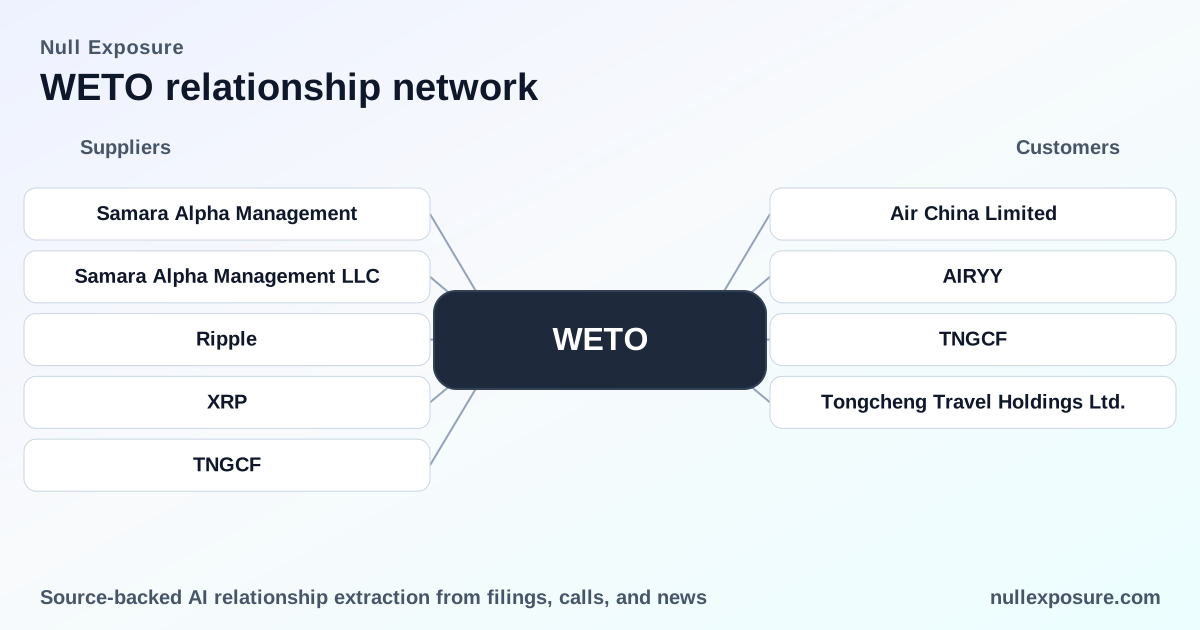
Webus International (NASDAQ: WETO) operates an online travel and mobility platform that monetizes through consumer bookings, B2B service contracts, and strategic integrations that unlock payment rails and customer reach; recent disclosures show the company shifting cash and partnership capital into a blockchain-backed cross-border payments strategy while preserving distribution relationships in China. Investors should view Webus’s supplier posture as a hybrid go-to-market model: platform-driven customer monetization combined with financial infrastructure investments intended to reduce payment friction and increase booking transparency. For a concise overview of supplier risk signals and partner concentration, visit https://nullexposure.com/.
Where Webus is placing strategic bets — and why it matters to partners and investors
Webus has reported negative operating margins and an overall loss profile across trailing figures, yet management is allocating capital to build a Ripple (XRP) reserve and to integrate Ripple’s payment rails into its offering. That capital allocation changes counterparty risk: supplier relationships are both distributional (Tongcheng Travel) and financial/operational (Samara Alpha as an asset manager, and Ripple as a payments partner). The company’s financial fragility—negative EBITDA and recent quarterly revenue decline—raises the stakes on these supplier arrangements because each partner now plays a dual role in growth and liquidity management.
The supplier relationships disclosed in recent reporting
Samara Alpha Management — exclusive digital asset manager mandate (CryptoNews Form 6‑K, Mar 2026)
Webus filed a Form 6‑K describing a strategic agreement with Samara Alpha Management to anchor a blockchain-backed cross-border payments initiative centered on XRP, indicating a top-down commitment to build a token reserve and operationalize crypto payments. According to the Form 6‑K reported in March 2026 and covered by CryptoNews Australia, Samara Alpha will serve as the manager of this initiative and help establish the reserve.
Samara Alpha Management LLC — up to $300 million mandate (Pintu, Mar 2026)
A separate news release reported that Samara Alpha has been granted a mandate of up to $300 million to act as Webus’s exclusive digital asset manager, which positions Samara as the primary steward of funds allocated to the Ripple reserve. Pintu’s March 2026 coverage documents the $300 million mandate and the exclusivity of Samara Alpha’s role.
Ripple integration — payment rail partnership for cross‑border bookings (Yahoo Finance, Mar 2026)
Webus announced plans to integrate Ripple’s payment network to streamline cross‑border payments and improve transparency for chauffeur bookings, effectively tying operational payments to Ripple’s ecosystem to accelerate settlement and reduce FX friction. Yahoo Finance reported the integration in March 2026, noting that Ripple’s rails will be central to Webus’s stated payments strategy.
Ripple reserve and integration — additional reporting (Pintu, Mar 2026)
Pintu’s coverage complements other reports by noting both the establishment of a Ripple (XRP) reserve and the operational plan to use Ripple for cross‑border transactions, reinforcing the company’s dual tactical move to hold crypto assets and route payments through Ripple. Pintu’s March 2026 release reiterates the reserve construction and system integration.
Tongcheng Travel — distribution partnership for branded domestic charter tours (AltcoinBuzz, Mar 2026)
Webus renewed a relationship with Tongcheng Travel, a major Chinese online travel company that provides distribution access to over 240 million users annually; Tongcheng will continue to connect Webus to a large domestic customer base for chartered and branded travel services. AltcoinBuzz reported in March 2026 that the partnership focuses on branded charter tours and extends Webus’s reach into Tongcheng’s massive user base.
What these relationships imply for operational risk and upside
- Financial infrastructure shift: Granting an exclusive asset-management mandate to Samara Alpha and funding a $300 million Ripple reserve represents a meaningful reallocation from pure operating investment into financial instruments and payment rails. This increases Webus’s exposure to crypto market dynamics and a single asset class while aiming to extract operational efficiencies in transaction settlement.
- Distribution concentration and reach: The Tongcheng Travel alliance preserves market access inside China and supplies volume, while the Ripple integration targets cross‑border customers; this combination balances domestic distribution concentration with international payments expansion.
- Execution and maturity considerations: Webus is still loss-making (negative EBITDA and operating margins), so these supplier commitments are highly operational and material to the company’s near-term strategic narrative, but they increase execution risk until the payment system and reserve are proven in live transactions.
Company-level signals and supplier posture
Because no formal constraints were disclosed in the supplier relationship data, the following are company-level characteristics investors should treat as part of the supplier-risk profile:
- Contracting posture: Webus is pursuing exclusive and centralized contracts for critical functions (exclusive digital asset manager for the Ripple reserve), indicating a vendor-concentrated approach for new financial infrastructure.
- Concentration risk: Insider ownership is very high (approximately 74%), and institutional ownership is negligible, which concentrates decision-making and increases the weight of insider-led strategic redirections.
- Criticality: The Ripple integration and the Samara Alpha mandate are critical for Webus’s stated objective to improve cross‑border payment efficiency; failure or delay could materially impact transaction economics and customer trust.
- Maturity and leverage: The company’s negative profitability (negative EBITDA and operating margin) signals that these supplier investments are being made from a weaker operating base, elevating counterparty and liquidity risk if funding does not translate into improved margins.
For a quick comparison of supplier exposure and to benchmark counterparty concentration across travel and fintech suppliers, consult https://nullexposure.com/ — the platform provides structured insight into partner dependencies and supplier criticality.
Investment implications and near‑term watch items
- Success scenario: If the Ripple integration reduces settlement times and foreign-exchange costs as intended, Webus could convert lower payment friction into higher margins and improved unit economics for cross-border bookings.
- Risk scenario: Large allocations to an XRP reserve and an exclusive asset manager increase market exposure to crypto volatility and single-supplier risk; because Webus is currently unprofitable, adverse crypto movements or operational setbacks in integration could stress liquidity.
- Operational milestones to monitor: live transaction volume settled over Ripple rails, size and governance of the XRP reserve, contractual terms with Samara Alpha (fees, exclusivity duration), and measurable contribution from the Tongcheng channel to bookings and revenue.
Final read and next steps
Webus’s supplier moves are strategic and material: the company is betting on a combination of large-distribution partnerships and concentrated financial infrastructure contracts to push growth and operational efficiency. That bet introduces asymmetric supplier risk — sizable upside if payments and reserves succeed, and meaningful counterparty and market risk if they do not. For a practical supplier-risk assessment and to compare Webus against peers on counterparty concentration, visit https://nullexposure.com/ and review our supplier impact tools.
If your analysis requires deeper diligence on the Form 6‑K filing or the public statements referenced here, start at https://nullexposure.com/ for consolidated supplier intelligence and source links.