Weyco Group (WEYS): supplier posture, concentration risks, and what the Horween tie-up reveals
Weyco Group designs and distributes branded footwear — most visibly through the Florsheim name it owns — and monetizes by selling finished shoes through wholesale and retail channels under its brands, with margin capture coming from branded pricing and inventory turns. The company’s mid‑cap footprint (market capitalization roughly $323 million) and steady profitability (2025 revenue $276.2 million; operating margin ~13.2%) put procurement and supplier stability at the center of investment risk and operational leverage. Investors should view Weyco as a brand‑driven retailer whose near‑term performance is sensitive to finished‑goods sourcing and supplier concentration. For a structured view of supplier relationships and risks, see our broader supplier intelligence at https://nullexposure.com/.
How Weyco runs procurement: finished goods, third‑party suppliers, and what that implies
Weyco’s operating model is built on buying finished shoes from outside manufacturers rather than owning significant manufacturing capacity. The company states it purchases finished shoes primarily from suppliers in China and India, with additional sourcing in Cambodia, Vietnam, and the Dominican Republic, which creates an APAC‑heavy supply footprint and exposure to trade, logistics, and labor dynamics in those regions (Weyco annual report / Form 10‑K, 2025). That posture reflects a transactional contracting model — Weyco relies on multiple external producers for finished goods rather than captive factories — which accelerates time‑to‑market for seasonal styles but concentrates execution risk off‑balance sheet.
At the same time, procurement is not fully diversified: Weyco sources from more than 60 suppliers, yet its two largest suppliers each accounted for more than 10% of total inventory purchases in 2024, a structural concentration that elevates supply disruption risk and gives a small number of vendors outsized negotiating leverage (Weyco annual report, 2025). The company also operates under standard public‑company assurance processes — its independent registered public accounting firm provides the attestation required under Item 9A of the Form 10‑K — underscoring conventional governance and financial reporting rigor (Form 10‑K, 2025).
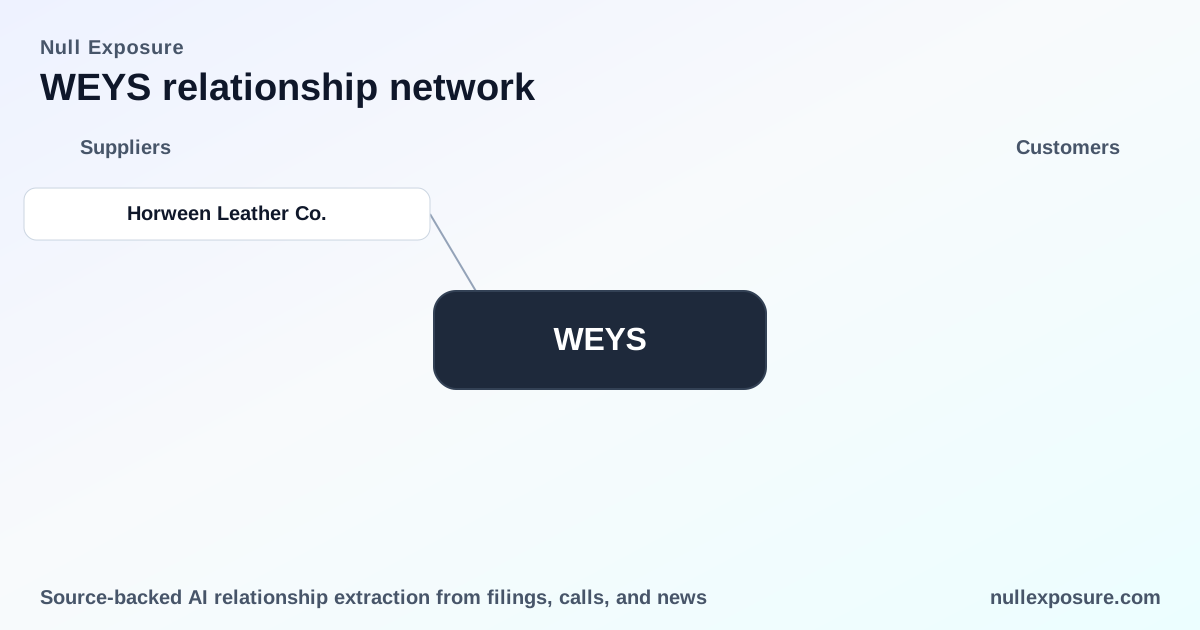
Supplier relationship: Horween Leather Co.
Florsheim, a Weyco‑owned brand, launched an elevated fall product line using premium Essex leather supplied by Chicago‑based Horween Leather Co., integrating Horween’s materials into three core Florsheim styles. This collaboration positions Weyco to trade up on product quality and margin through premium materials for select SKUs. (WWD, March 10, 2026: https://wwd.com/footwear-news/shoe-industry-news/florsheim-horween-leather-shoe-collection-1237983235/)
Takeaway: the Horween collaboration is a brand‑led product move that leverages a specialty supplier for a premium consumer offer; the relationship is product‑level and does not change Weyco’s broader finished‑goods sourcing posture.
What the supplier constraints tell investors (contracting posture, concentration, criticality, maturity)
Treat the constraints as company‑level signals rather than attributes of any single vendor:
- Contracting posture: Weyco’s use of finished‑goods suppliers indicates a marketplace contracting model — the company outsources production and focuses on design, branding, and distribution. That reduces fixed manufacturing capital but increases dependence on third‑party execution and quality control (Form 10‑K, 2025).
- Concentration: Although Weyco works with 60+ suppliers, the fact that two suppliers each comprised more than 10% of inventory purchases in 2024 is material. This is a moderate‑to‑high supplier concentration, creating single‑vendor exposure for a meaningful slice of product flow (Form 10‑K, 2025).
- Criticality: Suppliers deliver finished shoes — these relationships are operationally critical because disruption directly impairs sales and inventory replenishment. Inventory procurement is not a peripheral input; it is the product itself.
- Maturity of sourcing operations: A supplier base of 60+ vendors suggests an established procurement program, but concentration with a few large vendors indicates uneven maturity in supplier diversification.
These structural signals combine: brand strength and stable margins give Weyco optionality in pricing, but supplier concentration and APAC sourcing are the principal operational risks to watch. For a consolidated view of supplier exposures and active tracking, visit https://nullexposure.com/.
Investment implications and checklist for managers and investors
Weyco’s financial position provides context for supplier risk: EV/EBITDA ~6.6 and a trailing P/E ~13.7 indicate the market prices modest growth with reasonable earnings stability; dividend yield (~3.27%) supports an income orientation. Against that backdrop, supplier dynamics affect upside and downside differently.
Key items to monitor:
- Supplier concentration: track the identity, contract length, and geographic location of the top two suppliers that each accounted for >10% of inventory purchases in 2024; loss or renegotiation of a top supplier would be material.
- Geographic and trade exposure: because sourcing is APAC‑centric (China, India, Cambodia, Vietnam), watch tariffs, shipping disruptions, and labor developments that could compress gross margins.
- Product collaborations: premium partnerships like Horween can support higher ASPs and margin expansion if scaled, but they also increase dependency on specialty material suppliers for select SKUs.
- Governance and audit continuity: the attestation by an independent PCAOB‑registered auditor is in place; maintain oversight of audit opinions for any supplier‑related disclosure changes.
Tactical signals that affect valuation
- Inventory and working capital swings tied to supplier lead times have direct P&L implications; longer lead times increase inventory risk and cash conversion cycle pressure.
- Concentrated supplier relationships create optionality for strategic sourcing (consolidation or backward integration) but also give counterparties leverage in negotiations.
- Premium collaborations provide a route to margin improvement without heavy capital spend, especially valuable given Weyco’s asset‑light model.
What to watch next and final guidance
Monitor Weyco’s next quarterly disclosures for updates on supplier mix and any changes to top‑supplier shares of inventory purchases; watch trade developments affecting China and India and follow rollouts from the Horween collaboration to see whether premium SKUs scale beyond a seasonal capsule. If top‑supplier shares shrink and premium collaborations scale, upside to margins and multiple expansion is realistic; if concentration increases or APAC disruptions accelerate, downside to sales and inventory valuation is immediate.
For a deeper read on supplier relationships and active monitoring tools, visit https://nullexposure.com/ — our platform aggregates supplier signals and filings to help investors and operators stress‑test vendor concentration and supply‑chain exposure.
Final takeaway: Weyco is a brand‑led footwear distributor with solid margins and material supplier dependencies; investor returns will track brand execution plus the company’s ability to manage concentrated, APAC‑centric supplier relationships.