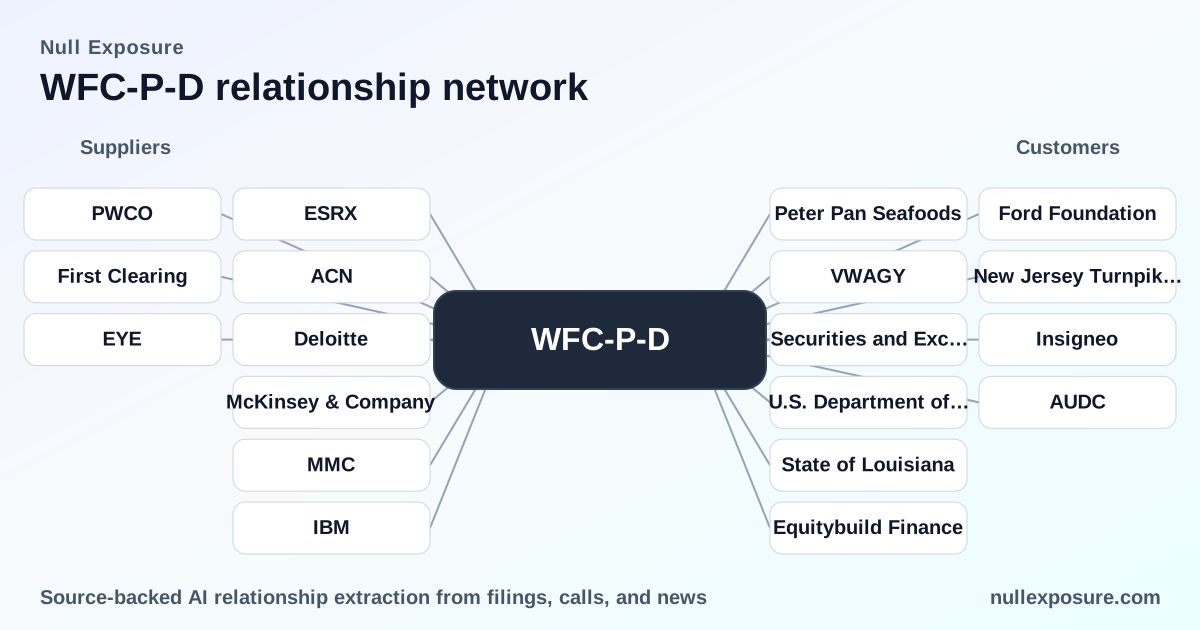
WFC-P-D: Supplier map and what it means for investors and operations
Thesis: Wells Fargo (WFC-P-D is a listed preferred share of Wells Fargo & Company) is a diversified financial-services operator that monetizes through deposit taking, lending, wealth management and fee-based services; the company outsources significant transformation, risk-management and ancillary services to large professional-services and vendor partners, creating a predictable cost base but concentrated operational dependencies that influence execution risk and regulatory exposure. For investors and operator-level managers, the supplier roster shows where execution and governance vulnerability concentrate and where cost-savings or contractual change will have the most immediate financial and franchise-level impact. For a deeper supplier risk scan, visit https://nullexposure.com/.
How Wells Fargo uses external partners to deliver core capabilities
Wells Fargo has a clear operating posture: it retains core balance-sheet functions in-house while outsourcing specialized programmatic work—digital transformation, risk remediation, and benefits administration—to major consultancies and vendors. That approach accelerates change but creates critical vendor chokepoints when those partners lead risk programs or control custody/benefits flows. A 2020-era supplier pattern shows persistent reliance on the global consulting firms and specialist vendors; a more recent operational pivot to cut external consulting spend signals active rebalancing of that stance.
A detailed read of reported engagements shows two practical operating realities: (1) these suppliers are functionally critical to remediation and modernization programs; and (2) procurement and governance choices have direct regulatory and litigation consequences when vendors are used without competitive processes.
The supplier roster, relationship-by-relationship
Express Scripts, Inc.
Wells Fargo contracted with Express Scripts as a pharmacy benefit manager, and plaintiffs alleged fiduciary mismanagement for engaging ESI without a competitive bidding process and on terms that increased drug costs and administrative fees. According to InvestmentNews (March 2026), that claim underpinned an ERISA class action that was dismissed at the pleading stage. Source: InvestmentNews, March 2026 — https://www.investmentnews.com/wirehouses/judge-dismisses-erisa-class-action-over-wells-fargos-prescription-drug-benefit-practices/259922
Accenture
Accenture has been a core digital-transformation and business-process engineering partner for Wells Fargo, handling multiple projects in earlier program waves. Reporting on the bank’s plan to reduce external consulting spend referenced Accenture among the principal suppliers engaged on transformation work. Source: consulting.us (reporting on FY2020 relationship and FY2026 spend actions) — https://www.consulting.us/news/4664/wells-fargo-to-slash-1-billion-from-external-consulting-spend
Deloitte
Deloitte appears alongside Accenture as a principal adviser on business-process and systems work, forming part of the bank’s external delivery ecosystem for change and modernization programs. Source: consulting.us (coverage of the bank’s consulting relationships and planned cuts) — https://www.consulting.us/news/4664/wells-fargo-to-slash-1-billion-from-external-consulting-spend
McKinsey & Company
McKinsey has participated in program work for Wells Fargo in the transformation and strategy domain; reporting lists McKinsey among the firms engaged on strategic and operational initiatives. Source: consulting.us (summary of consulting firms historically engaged by Wells Fargo) — https://www.consulting.us/news/4664/wells-fargo-to-slash-1-billion-from-external-consulting-spend
Oliver Wyman
Oliver Wyman is a named risk-side partner: the firm has been running an operational-excellence program on behalf of Wells Fargo’s chief risk office, positioning it as a direct participant in risk remediation and control-strengthening. Source: consulting.us (FY2020-era reporting on risk-program vendors) — https://www.consulting.us/news/4664/wells-fargo-to-slash-1-billion-from-external-consulting-spend
Promontory Financial Group
Promontory has been engaged by Wells Fargo to support improvements in risk-management processes, a role that places it in the center of regulatory remediation and model/governance updates. Source: consulting.us (reporting on risk-management support relationships) — https://www.consulting.us/news/4664/wells-fargo-to-slash-1-billion-from-external-consulting-spend
PwC
PwC has worked with Wells Fargo on strategic and operational assignments, listed with other global consultancies that have supported program delivery across the bank. Source: consulting.us (listing PwC among external advisers) — https://www.consulting.us/news/4664/wells-fargo-to-slash-1-billion-from-external-consulting-spend
First Clearing
First Clearing is the custodian platform that some advisors moving to Wells Fargo were required to use; industry commentary identified First Clearing as the custody option tied to certain recruitment channels and product flows. Source: AdvisorHub (reporting on advisor team moves to Wells Fargo and custody arrangements, FY2026) — https://www.advisorhub.com/merrill-team-with-1-8-billion-jumps-to-wells-fargo-finet-on-long-island/
EY
EY appears in the same corporate consulting roster as Accenture and Deloitte, participating in transformation and process engagements with the bank. Source: consulting.us (summary of consulting relationships and external spend) — https://www.consulting.us/news/4664/wells-fargo-to-slash-1-billion-from-external-consulting-spend
What these relationships tell investors about contracting posture and risk
- Contracting posture: Wells Fargo has historically used top-tier consultancies and specialist vendors to deliver large-scale, time-bound programs rather than building all capabilities internally. The firm’s public commitment to reduce external consulting spend by up to $1 billion indicates a strategic shift toward internal capacity-building and tighter vendor governance (consulting.us coverage of the FY2020 relationships and subsequent cost program).
- Concentration and criticality: Reliance on a small set of large consulting firms and specialist vendors produces concentrated operational exposure; Oliver Wyman and Promontory’s roles in risk remediation make them critical nodes for regulatory outcomes and remediation timetables.
- Maturity of relationships: The presence of multiple legacy consultancies suggests long-standing engagements that are institutionalized into program delivery, but the bank is actively rebalancing this model to control costs and reduce third-party dependency.
- Governance risk: The Express Scripts ERISA litigation highlights that procurement choices—competitive bidding, fee structures and oversight—translate directly into fiduciary and litigation risk when vendors handle benefits or client-facing flows. Source: InvestmentNews, March 2026 — https://www.investmentnews.com/wirehouses/judge-dismisses-erisa-class-action-over-wells-fargos-prescription-drug-benefit-practices/259922
For tools and structured supplier intelligence, see https://nullexposure.com/.
Investment implications and an operator’s checklist
- Cost-reduction upside: Cutting external consulting spend can free up operating leverage; stakeholders should watch realized savings versus impaired delivery speed on transformation programs. Consulting.us coverage of the bank’s cut plan is the operational signal here. Source: consulting.us — https://www.consulting.us/news/4664/wells-fargo-to-slash-1-billion-from-external-consulting-spend
- Execution risk: Programs led by Oliver Wyman and Promontory are directly tied to regulatory remediation and risk posture; delays or scope changes will influence regulatory capital and reputational outcomes.
- Legal and fiduciary tail risk: The Express Scripts litigation demonstrates that benefits and vendor procurement can create fiduciary exposure and consumer-facing legal risk that have balance-sheet and reputational consequences.
- Custody and distribution friction: First Clearing’s role in custody for certain advisor arrivals introduces operational frictions that affect advisor retention and client experience; this is a commercial rather than purely operational risk. Source: AdvisorHub — https://www.advisorhub.com/merrill-team-with-1-8-billion-jumps-to-wells-fargo-finet-on-long-island/
Final view and next steps for investors
Wells Fargo’s supplier ecosystem is dominated by large consultancies and specialist vendors that execute transformation and risk programs; this creates both scalable delivery capacity and concentrated vendor risk. The bank’s decision to reduce external consulting spend signals a deliberate attempt to reclaim cost and control—but it also re-prioritizes where execution risk will reside going forward.
For practitioners and portfolio teams who need a concise supplier risk briefing and continuous monitoring, explore NullExposure’s supplier intelligence and relationship mappings at https://nullexposure.com/. To commission a tailored supplier impact analysis for WFC-P-D, go to https://nullexposure.com/ and request a focused supplier report.
Key takeaway: vendor relationships are not ancillary — they are a strategic lever for Wells Fargo’s remediation, cost structure and regulatory trajectory.