Wells Fargo (WFC-P-L): Supplier Footprint, Payments Partnerships, and What Investors Should Know
Wells Fargo & Company issues the WFC-P-L security — a 7.50% non‑cumulative perpetual convertible Class A preferred — that sits on the capital structure of a global financial services firm whose core business monetizes through net interest margin on lending, fee income from wealth and payments services, and transaction-related processing revenues. For investors and operations teams evaluating supplier exposure, the critical lens is how Wells Fargo contracts with fintech partners and payments platforms to preserve deposit flows, card spend, and the bank’s fee franchise while protecting regulatory and operational resilience.
Read more supplier intelligence and relationship mapping at https://nullexposure.com/.
Why supplier relationships matter for a preferred security holder
Preferred holders are fixed-income‑like stakeholders with limited upside participation, so operational continuity and counterparty stability translate directly into loss avoidance and dividend reliability. Wells Fargo’s payments integrations — specifically partnerships that enable mobile wallet access and card tokenization — support transaction volumes that feed interchange and servicing fees. Disruption or reputational damage to those integrations would not destroy equity value immediately, but would increase operating volatility and could pressure the bank’s ability to support preferred distributions under stress.
What the records show about supplier links
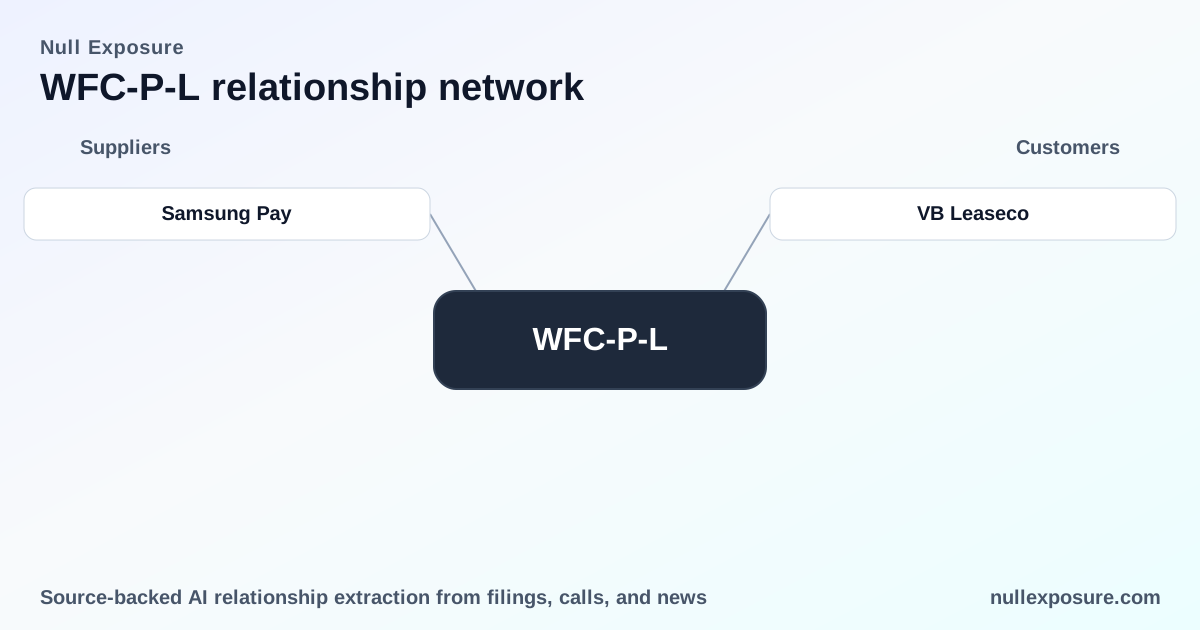
The supplier records for the WFC-P-L scope contain a single documented partner relationship:
- Wells Fargo integrated with Samsung Pay to enable contactless mobile payments for its customers; the program launch was announced in 2016. According to a Wells Fargo newsroom release in 2016, "Samsung Pay Now Available for Wells Fargo Customers" (newsroom.wf.com, FY2016). https://newsroom.wf.com/English/news-releases/news-release-details/2016/Samsung-Pay-Now-Available-for-Wells-Fargo-Customers/default.aspx
This single recorded relationship highlights Wells Fargo’s strategic alignment with major consumer‑facing wallet providers to preserve card usage and maintain fee pools tied to payments.
What that Samsung Pay link signals about Wells Fargo’s operating posture
The Samsung Pay relationship is illustrative rather than exhaustive. A bank that integrates with global mobile wallet providers demonstrates an operational posture that prioritizes digital channels, tokenization, and third‑party payments orchestration. For investors this profile implies:
- Contracting posture: Centralized vendor negotiation and enterprise-wide deployment for payments partnerships, because wallet integrations require bank-wide coordination across card services, risk, and compliance.
- Concentration: Partnerships with large, global wallet providers reduce single‑vendor concentration risk at the consumer interface, but create dependency on a small set of hyperscale platforms for transaction volume.
- Criticality: Payments platform relationships are highly critical to revenue lines driven by card interchange and account activity; outages or de‑lists would reduce transaction economics and could affect liquidity behavior.
- Maturity: The relationship with Samsung Pay dates to 2016 and reflects a mature, production‑grade integration model rather than a proof of concept.
The supplier records contained no explicit contract constraints or limits; there are no contract‑level excerpts in the provided results that name additional obligations or conditionality.
Explore deeper supplier and counterparty mapping on the homepage: https://nullexposure.com/.
Operational and financial risk vectors investors should track
Operational integrations with wallet providers materially change the bank’s attack surface and third‑party oversight requirements. Key risks to monitor:
- Technology resilience: Mobile wallet tokenization and gateway connectivity add latency and dependency on third‑party uptime and software maintenance.
- Regulatory/compliance exposure: Payments partnerships increase AML/KYC and data‑security obligations across jurisdictions, elevating compliance costs and enforcement risk.
- Concentration of consumer touchpoints: Reliance on a few dominant wallet platforms concentrates reputational exposure and bargaining leverage with platform owners.
- Vendor lifecycle and exit risk: Mature integrations reduce implementation risk but raise migration costs if the bank needs to switch providers or renegotiate commercial terms.
Each of these vectors matters to preferred security holders through the channel of earnings stability and operational continuity rather than direct equity dilution.
Practical diligence checklist for investors and operators
When evaluating Wells Fargo supplier exposure as it relates to WFC‑P‑L, prioritize these items:
- Confirm the scope of wallet integrations beyond Samsung Pay, including any active commercial or technology commitments with other global wallets and token service providers.
- Review third‑party risk management disclosures and contract termination clauses that could affect transaction routing or fee capture.
- Monitor operational metrics tied to payments (transaction volumes, authorization success rates, downtime incidents) as leading indicators of revenue stability.
- Track regulatory filings and enforcement actions that reference vendor management or payments operations.
For tailored supplier-risk analysis and relationship mapping, visit https://nullexposure.com/ and request the full supplier profile.
Final takeaways for investors
- Payments partnerships like the Samsung Pay integration are strategically important for Wells Fargo’s card and transaction revenue streams; they support fee generation and customer engagement.
- Supplier criticality is high: interruptions or adverse commercial shifts in payments platforms would increase operating volatility and could translate into stress on distributions to preferred holders in adverse scenarios.
- The provided records list a single wallet partnership, which suggests either highly selective disclosures in this collection or the need to supplement this source with bank filings and vendor registries for comprehensive risk assessment.
If your investment thesis rests on income stability from WFC‑P‑L, prioritize vendor oversight, operational metrics, and regulatory developments tied to payments infrastructure. For deeper, actionable supplier intelligence, go to https://nullexposure.com/ and connect with our research team.