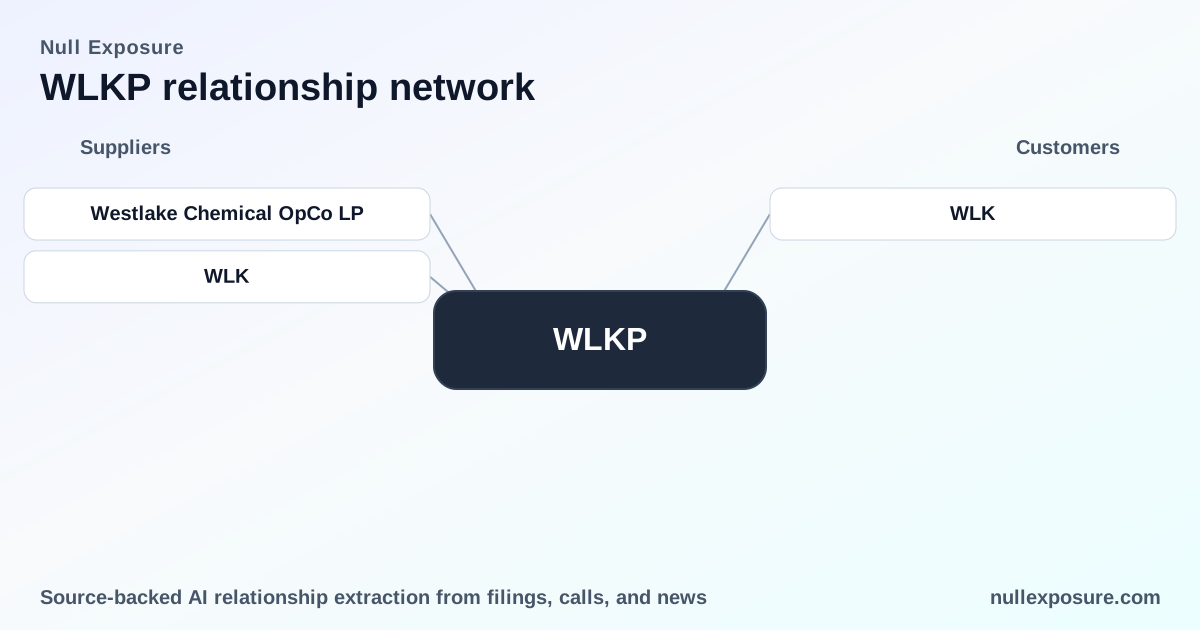
Westlake Chemical Partners (WLKP): Supplier relationships that drive cash flow and operational continuity
Westlake Chemical Partners LP owns and operates ethylene production assets and monetizes through long‑term ethylene sales and fee distributions tied to operating cash flow from those assets. The partnership’s economics depend on stable offtake contracts, secured feedstock supply, and a services/secondment relationship with Westlake affiliates that consolidates operations and cash management. Investors should evaluate these supplier relationships for concentration, contract tenor, and operational criticality when sizing exposure to WLKP. For a concise view of partner linkages and implications, visit https://nullexposure.com/.
What the supplier network looks like in plain terms
WLKP is tightly integrated with Westlake affiliates across three practical vectors: ethylene offtake, feedstock supply, and operational/service arrangements. A renewed ethylene sales contract underpins most of the Partnership’s revenue, while feedstock and utility arrangements with Westlake secure the inputs and labor required to run the plants. Those connections translate to predictable cash flow when markets are stable—and to concentrated counterparty risk when market stress arrives.
The full relationship inventory you need to know
Below I cover every supplier relationship identified in the public information for WLKP and summarize what each relationship contributes to the business.
Westlake Chemical OpCo LP — the primary offtaker for ethylene
Westlake Chemical Partners renewed a critical Ethylene Sales Agreement with Westlake Chemical OpCo LP that locks in the offtake for roughly 95% of ethylene produced by OpCo, with the renewal now running through at least December 31, 2027 thanks to automatic 12‑month renewals and typical termination notice provisions. This contract preserves the Partnership’s revenue base and supports distribution stability. According to a Chemanalyst news report (March 10, 2026), the extension substantially secures the Partnership’s near‑term cash flows.
Westlake Corporation — feedstock seller, service provider, and cash manager
Westlake Corporation supplies ethane and other feedstocks to OpCo under an explicit Feedstock Supply Agreement and also provides comprehensive operating services, utilities, and seconded employees under a Services and Secondment Agreement; WLKP additionally places short‑term cash with Westlake via an Investment Management Agreement. The Partnership reported consolidated cash and investments with Westlake totaling $81 million at the end of Q2 2025, cited on an earnings call transcript. These layers make Westlake both a critical supplier of inputs and the operational counterparty that runs the facilities (InsiderMonkey Q2 2025 earnings call transcript; company filings FY2025).
How the contracts and constraints shape the business model
Company disclosures and third‑party reports paint a clear operating posture:
-
Contracting tenor mixes long and short durations. The Feedstock Supply and Ethylene Sales Agreements are structured as long‑term arrangements with an initial term through December 31, 2026 and automatic 12‑month renewals thereafter, creating multi‑year visibility for outputs and inputs. Separately, the Investment Management Agreement allows cash placements up to nine months’ duration, creating short‑term liquidity exposure to Westlake. These facts come directly from WLKP filings (FY2025) and supporting press coverage.
-
High operational criticality and concentration. Company language specifically flags the need to secure adequate ethane and feedstocks from Westlake or third parties, making feedstock procurement a critical operational vulnerability. Public excerpts show feedstock purchases are a meaningful component of cost of sales (feedstock purchased from Westlake included in cost of sales was reported as $310,856 in disclosed figures).
-
Westlake’s multi‑role amplifies counterparty dependency. Westlake functions simultaneously as seller, service provider, and cash manager—selling ethane, providing utilities and seconded employees, and investing excess cash for the Partnership. That vertical integration improves operational efficiency and coordination but concentrates counterparty risk with a single counterparty cluster (company filings, FY2025).
-
Geography and scale. All operations and sales are in the United States, simplifying regulatory variables but concentrating market and feedstock exposure to North American energy and chemical cycles.
Why these supplier links matter for investors
Positive: Long‑dated renewal mechanics on the ethylene sales agreement materially reduce near‑term revenue risk and support distributions. The services and secondment arrangement aligns operating control with an experienced counterparty, preserving operating margins and efficiency gains.
Negative: Concentration risk is real—WLKP relies on Westlake entities for feedstock, operations, and short‑term cash placement, so any operational disruption or counterparty stress at Westlake would transmit directly to WLKP’s cash flow and distribution capacity. The reported feedstock spend and the $81 million in cash invested with Westlake are tangible exposures.
For deeper due diligence or to model counterparty scenarios across WLKP’s supplier network, explore the platform at https://nullexposure.com/ — the homepage consolidates supplier linkage snapshots and contract signals.
Practical takeaways for portfolio managers
- Treat Westlake affiliates as strategic counterparties rather than simple vendors: they provide both inputs and operating capability. That elevates the impact of any counterparty performance shift.
- Value the contract design: automatic renewal clauses and explicit termination notice periods reduce rollover risk for the Partnership’s core sales contract.
- Stress test for feedstock and service interruption: given the criticality of ethane supply and the secondment model, operational stoppages or a material counterparty credit event have outsized earnings implications.
If you are evaluating WLKP for allocation or as part of a credit screening process, the supplier relationship map is an essential input. For a concise, investor‑oriented report that aggregates these relationship constraints and contract tenors, visit https://nullexposure.com/.
Final verdict and next steps
Westlake Chemical Partners operates a cash‑producing asset base whose stability is tightly coupled to contractual arrangements with Westlake affiliates. The partnership’s business model benefits from long‑term offtake and integrated operational support, but that same integration concentrates counterparty risk and makes supplier performance a primary driver of investor outcomes. Investors should position sizing, covenant scrutiny, and scenario analysis around the health and contractual posture of Westlake counterparties.
For a focused view of WLKP’s supplier exposures and contract signals tailored to investment committees and credit teams, return to https://nullexposure.com/ and request the WLKP supplier relationship brief.