Waste Management (WM) — supplier relationships that shape operations and margins
Waste Management operates a capital-intensive, contract-driven utility for municipal and commercial waste collection, disposal, recycling and environmental services. The company monetizes through recurring collection fees, long-term disposal contracts and value recovery from recycling and energy-from-waste initiatives, while offsetting operating cost volatility through scale and network control of disposal capacity. Supplier relationships are not incidental — they underpin fleet fuel strategy, regulated waste capabilities and third‑party disposal rights, and therefore influence both operating leverage and strategic optionality. For an at-a-glance supplier-risk view and ongoing monitoring, visit https://nullexposure.com/.
Investment thesis up front
WM converts steady volumes into predictable cash flow by tying customer contracts and disposal rights to its regional landfill network and fleet. Long-duration third-party disposal obligations and strategic fuel and service partnerships (e.g., renewable natural gas providers and regulated medical-waste specialists) materially affect unit costs, capital deployment and margin expansion opportunities. WM’s scale gives it leverage in procurement and contracting, but complexity creates supplier concentration and service‑dependency risks that investors need to price.
How WM sources and pays for core inputs
Waste Management’s procurement profile is a mix of bought goods (fuel, parts, tires) and outsourced services (third‑party disposal, specialized processing, and certain fleet fueling operations). The company acts as a large buyer of consumables while simultaneously relying on selected service providers for specialized operations and compliance-sensitive functions. WM reports long-term contractual commitments for disposal volumes, uses external vendors for sensitive customer data processing, and maintains standard procurement categories for fleet parts and supplies — each of these choices shapes its contracting posture, concentration and execution risk.
Clean Energy Fuels — RNG partner keeping WM’s fleet moving
Clean Energy provides operations and maintenance for more than 85 WM renewable natural gas (RNG) fueling stations, supporting roughly 8,000 RNG-powered WM refuse trucks across the U.S. and Canada; the partnership is an established, multi-year relationship. According to a March 2026 Clean Energy release and subsequent earnings commentary, Clean Energy’s services keep WM’s RNG stations operational and fuel supply flowing to a large portion of WM’s dedicated RNG fleet (Clean Energy press materials and earnings transcripts, March 2026).
Source: Clean Energy press release and earnings call coverage in March 2026 (reported by FinancialContent, The Globe and Mail and Rigzone).
Stericycle — expanding into regulated medical waste
Waste Management has announced plans to acquire Stericycle to add regulated medical waste services to its portfolio, a deal positioned to broaden WM’s service set into higher‑margin, compliance‑intensive waste streams. SimplyWallSt summarized the strategic rationale: Stericycle brings regulated disposal capabilities that complement WM’s existing network and open revenue diversification into healthcare and regulated waste (coverage noted March 2026).
Source: SimplyWallSt summary coverage referencing the Stericycle transaction, March 2026.
Every supplier relationship in the record — concise investor notes
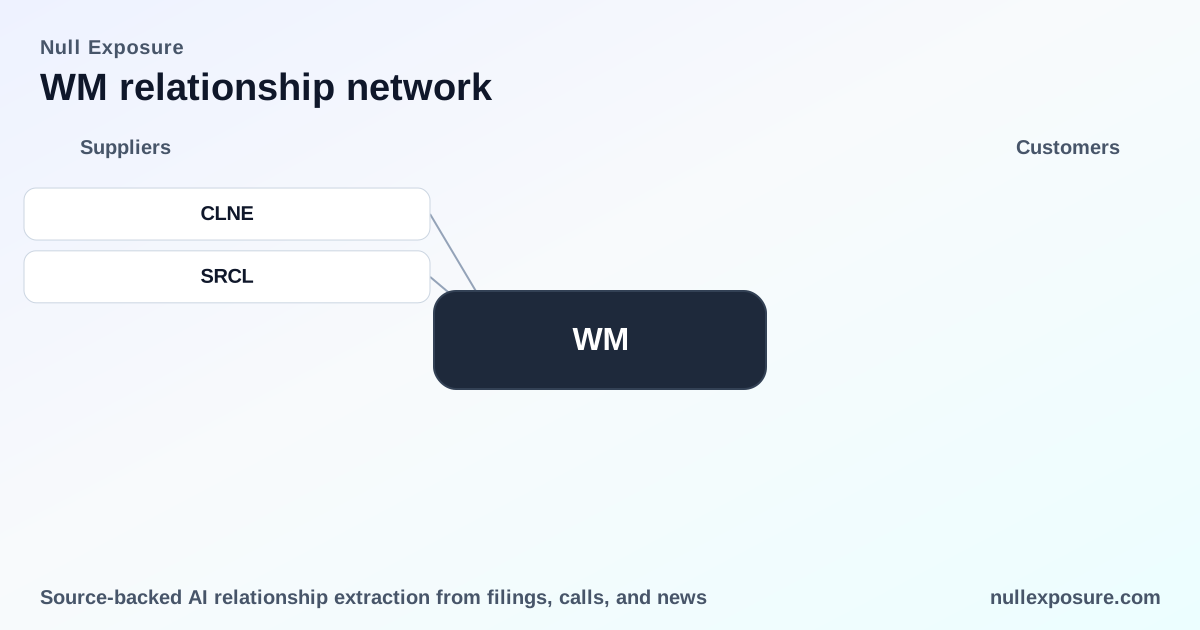
- Clean Energy Fuels Corp. (CLNE): Clean Energy operates and maintains more than 85 WM RNG stations and supports about 8,000 WM refuse trucks with RNG fueling, reflecting a deep operational partnership on low-carbon fleet fuel (Clean Energy press/earnings coverage, March 2026).
- Stericycle (SRCL): WM is acquiring Stericycle to add regulated medical-waste services to its offering, expanding addressable markets and regulatory service capabilities (SimplyWallSt reporting, March 2026).
Contracting posture and constraints that matter to investors
WM’s supplier relationships sit within a framework of long-term obligations and mixed role relationships that create both predictability and structural risk:
- Long-term contracts for disposal volumes — WM discloses multiple agreements that extend into the 2040s and 2050s, which require it to deliver minimum tons to third‑party disposal facilities. This creates predictable throughput commitments but limits flexibility to reroute volumes quickly if economics or regulations change (company disclosures on contract expiries through 2052).
- Third-party service providers for critical, compliance-sensitive functions — WM relies on external vendors for processing and storing sensitive information (examples include PCI-compliant third parties for payment processing), signaling operational criticality and vendor-management risk in areas that are material to customer experience and regulatory compliance.
- Buyer role for consumables and parts — WM purchases fuel, tires, lubricants and spare parts; procurement decisions for these items have direct, recurring impact on operating cost and maintenance cycles, making supplier pricing and continuity important to margin stability.
These constraints should be read as company-level signals that shape supplier sourcing strategy and capital allocation, not as relationship-specific limitations unless explicitly stated by WM.
What these relationships imply for operating and financial risk
WM’s supplier profile has several investment-relevant implications:
- Cost persistence vs. flexibility: Long-term disposal commitments stabilize volume flows and revenue recognition, but reduce the company’s ability to pivot if third-party disposal economics diverge from internal targets.
- Strategic differentiation through services: The Clean Energy partnership and the Stericycle acquisition move WM into vertically linked services — fueling infrastructure and regulated waste handling — that can drive margin expansion if integrated efficiently. These are strategic supplier-to-asset moves rather than simple procurement contracts.
- Concentration on critical third-party services: Reliance on specialized vendors for fuel operations and data-security services increases operational concentration risk; robust vendor oversight and contingency planning will be essential to avoid service disruption.
- Capex and working-capital interplay: Investments in RNG stations and acquired regulated waste assets will require capex and integration spend; the net benefit depends on execution and realized synergies.
Mid-article note — track these exposures
For portfolio managers and operators who need ongoing visibility into supplier-event risk and integration outcomes, NullExposure maintains continuous supplier relationship tracking and alerting. Visit https://nullexposure.com/ for a supplier-risk dashboard and timely signal feeds.
Practical due diligence checklist for investors
- Confirm contract tenors and volume commitments for disposal facilities by region and expiry year.
- Evaluate integration plans and cost-synergy assumptions behind the Stericycle transaction.
- Assess vendor concentration for fleet fueling, payment processing and other compliance‑sensitive services.
- Stress-test margins under higher fuel and parts-cost scenarios given WM’s buyer role for consumables.
Conclusion and next steps
Waste Management’s supplier relationships are strategic levers that affect cost structure, regulatory exposure and growth optionality. Clean Energy’s operational role in WM’s RNG infrastructure and the Stericycle deal for regulated medical waste are two supplier-related moves that materially change WM’s operating footprint and margin profile. Investors should balance the predictability afforded by long-term disposal commitments against the concentration and integration risks inherent in these supplier relationships.
To monitor these supplier relationships and receive focused alerts on contract expiries, new supplier agreements, and transaction integrations, start with NullExposure: https://nullexposure.com/. For tailored supplier-risk reporting for WM and peer companies, visit https://nullexposure.com/ and request a briefing.